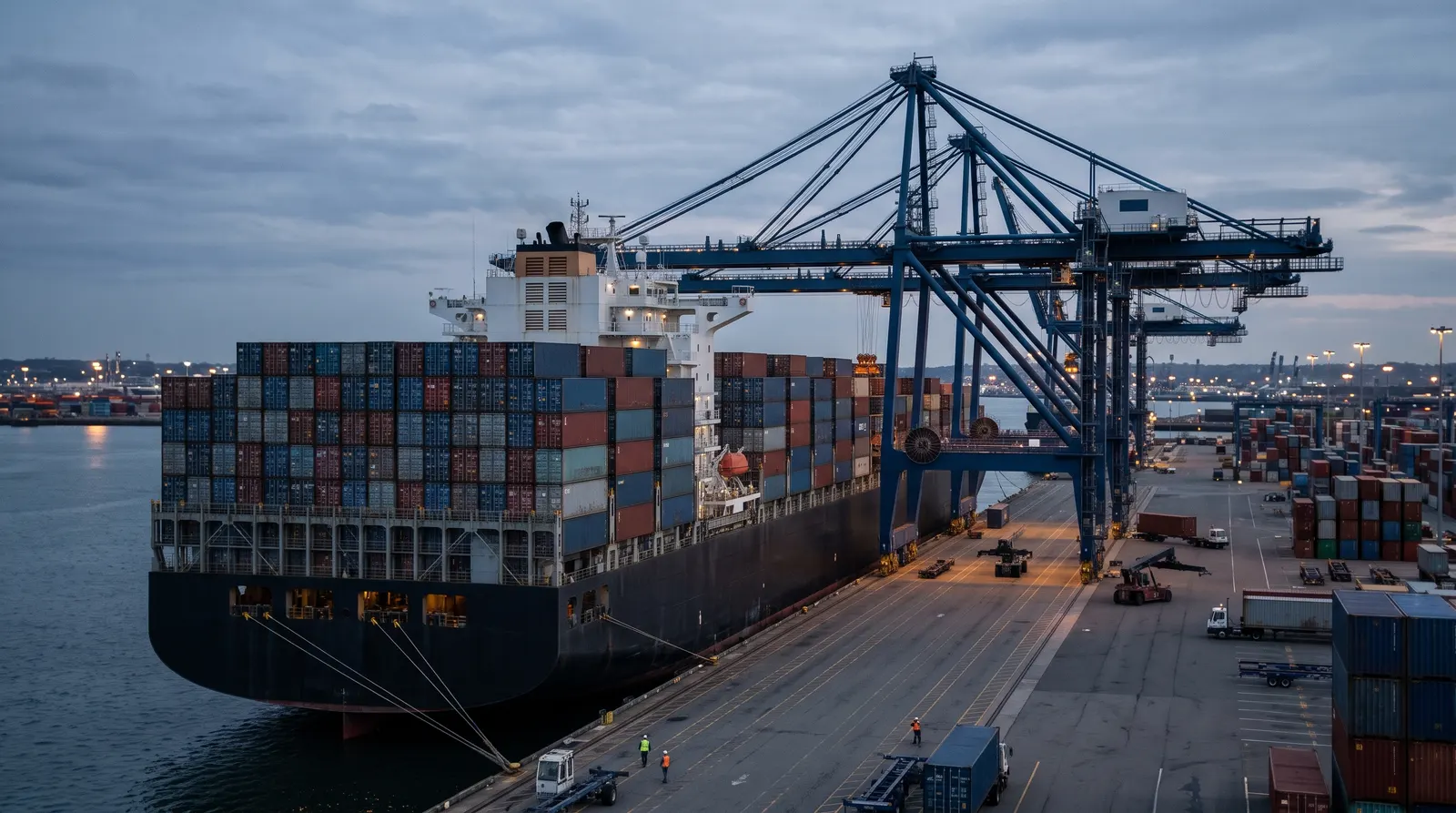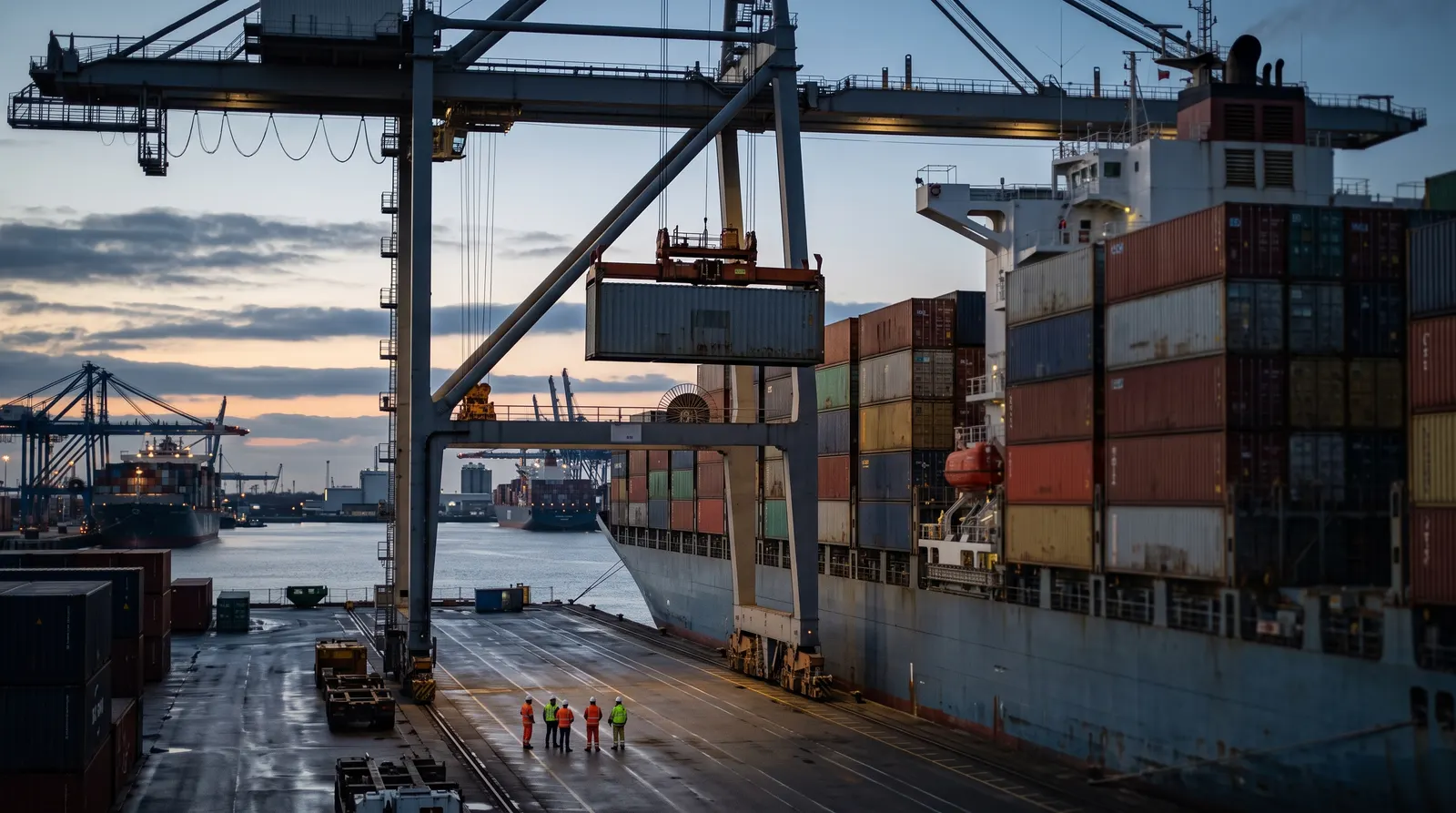
A container is lifted aboard at the origin port, the vessel sails, and somewhere mid-ocean something goes wrong. Who owns the loss? Who was supposed to insure it? Under CFR and CIF, the answers sit in a single clause that many contracts never read closely, and the old way of sorting it out is a chain of emails after the damage is already done.
CFR and CIF are close cousins. The difference is small, but it decides who buys the insurance and who is exposed if there is no claim to make.
What is the difference between CFR and CIF?
The only difference is insurance. Under both terms the seller books and pays the main sea freight to the named destination port, and risk passes to the buyer once the goods are on board at origin. Under CIF the seller must also buy cargo insurance for the buyer's benefit. Under CFR the seller has no such duty.
Both are Incoterms 2020 rules, and both are for sea and inland waterway transport only. Here is the side-by-side view:
| Point | CFR (Cost and Freight) | CIF (Cost, Insurance and Freight) |
|---|---|---|
| Main sea freight paid by | Seller | Seller |
| Cargo insurance bought by | Nobody required; buyer's choice | Seller, for the buyer's benefit |
| Risk passes to buyer | On board the vessel at origin port | On board the vessel at origin port |
| Export clearance | Seller | Seller |
| Import clearance and duties | Buyer | Buyer |
| Destination port charges | Generally buyer, unless the contract says otherwise | Generally buyer, unless the contract says otherwise |
| Suitable for | Sea and inland waterway only | Sea and inland waterway only |
If you want the full ten-term picture, our Incoterms guide covers every rule and where each one hands off.
Where does risk pass under CFR and CIF?
Risk passes at the origin port, not the destination. Once the goods are loaded on the vessel, the buyer carries the risk of loss or damage for the rest of the voyage, even though the seller paid for the freight. This is the part of CFR and CIF that surprises people most.
The word "freight" in the name suggests the seller looks after the cargo until it arrives. It does not. The seller pays for the transport, but the buyer owns the risk during it.
That split between cost and risk is the reason insurance matters here. The buyer is exposed to a loss they did not arrange the carriage for and cannot control. CIF closes that gap by making the seller buy cover. CFR leaves it open.
Who pays for cargo insurance under CIF?
The seller pays the premium, but the buyer is the beneficiary. CIF obliges the seller to arrange insurance at their own cost, with the policy written so the buyer, or anyone else with an insurable interest, can claim directly. The seller's cost is normally built into the price of the goods.
Under Incoterms 2020, CIF sets a floor for that cover:
- Minimum cover: the Institute Cargo Clauses (C), which is the narrowest of the standard clause sets and covers named major perils rather than all risks.
- Insured amount: at least 110 percent of the contract price.
- Currency: the currency of the contract.
- Period: from the point of loading at origin until the goods reach the named destination port.
The buyer can ask for broader cover, such as the Institute Cargo Clauses (A), but the seller is only bound to provide the minimum unless the contract says otherwise. If your goods are fragile, high value, or prone to water damage, write the cover level into the contract rather than relying on the default.
Who pays for cargo insurance under CFR?
Nobody is required to, which is the risk. Under CFR the seller has no duty to insure. The buyer carries the risk from the moment of loading, so any cover is the buyer's own decision and cost, bought separately to protect their own exposure.
Many buyers on CFR do exactly that, and it often works well because they choose the insurer, the clause set, and the insured value themselves. The danger is the buyer who assumes the seller handled it. If no one bought a policy and the container is lost or damaged at sea, the buyer is out the goods with no claim to make against anyone but the carrier, whose liability is typically limited.
A practical rule: under CFR, confirm that you have insurance in place before the goods are loaded, not after you hear of a problem.
How do CFR and CIF compare in practice?
CIF is more convenient, CFR gives the buyer more control. CIF hands the buyer a ready-made policy at the minimum standard. CFR lets a buyer who already insures all inbound cargo keep it all under one arrangement, usually at better terms than a one-off policy bought by a seller.
Consider the trade-offs.
When CIF suits you
- You are importing occasionally and have no standing cargo policy.
- You want one less thing to organise on a shipment.
- You trust the seller to buy a reasonable policy and have written the cover level into the contract.
- A letter of credit requires an insurance document as part of the presentation. Many do, and CIF supplies it by default.
When CFR suits you
- You already hold an annual or open cargo policy covering all your inbound shipments.
- You want broader cover than the CIF minimum without negotiating it with each supplier.
- You want to choose the insurer, so claims go through a party you know.
- You want to see the real cost of insurance rather than have it buried inside the unit price.
A note on the seller's side
For the seller, CIF adds a cost and an administrative step, and the insurance has to be right. A seller who buys the wrong cover, or insures below 110 percent, is in breach of the contract even if nothing goes wrong. CFR is simpler for them, and some prefer it for that reason.
What do CFR and CIF not cover?
Neither term covers anything after the destination port. The seller's obligation ends at the named port for freight, and for CIF the insurance ends there too. Unloading, terminal handling at destination, import clearance, duties, and the final inland leg are all the buyer's job unless the contract allocates them differently.
Common gaps to plan for:
- Destination terminal handling. Check whether it is included in the seller's freight price or charged to the buyer on arrival. The Incoterms rules leave room for either, so agree it in the contract.
- Import customs and duties. These belong to the buyer. Customs assesses them at entry, and they are separate from the freight price.
- Demurrage and detention. Once the container arrives, free time runs under the carrier's terms, and delays in collecting or returning it fall on the buyer. If you ship full containers, our Ocean FCL page shows how those moves are handled.
- Containerised cargo. For containers, Incoterms 2020 users often prefer CIP or FCA, because the goods are handed to the carrier at a terminal long before they are loaded on the vessel. CFR and CIF fit bulk and break-bulk cargo more naturally.
That last point matters. Because risk passes only when goods are on board, a container sitting in the origin terminal remains the seller's risk, with no clear line for the buyer's cover to start.
How do you choose between CFR and CIF?
Decide who is better placed to buy the right cover, then write it down. If the buyer has a standing policy, CFR is usually cleaner. If the buyer has none, or a letter of credit needs an insurance certificate, CIF is safer. Either way, name the cover level and insured value in the contract.
A short checklist before you sign:
- Is there a cargo policy already in place? If yes, CFR avoids paying twice.
- Does the payment method need an insurance document? If yes, lean toward CIF.
- How valuable or fragile is the cargo? If high, specify broader cover than the CIF minimum.
- Is the cargo containerised? If so, consider whether CIP or FCA match the real handoff better.
- Who handles destination charges? Settle it in writing so there is no dispute on arrival.
Insurance terms are set by the insurer, so the exact scope, exclusions, and claim process depend on the policy you end up with. If you want to understand the options for your own cargo, the cargo insurance page explains how cover is arranged alongside a shipment.
How Holo Cargo helps
On a CFR or CIF shipment, our operators check that the contract terms match the booking: who is paying freight, who is insuring, and who is clearing at each end. Cargo insurance is quoted as a separate line from freight, on insurer-determined terms, and we are never a party to the policy. Customs filings go through experienced customs brokerage partners, who verify documents and classification before filing.