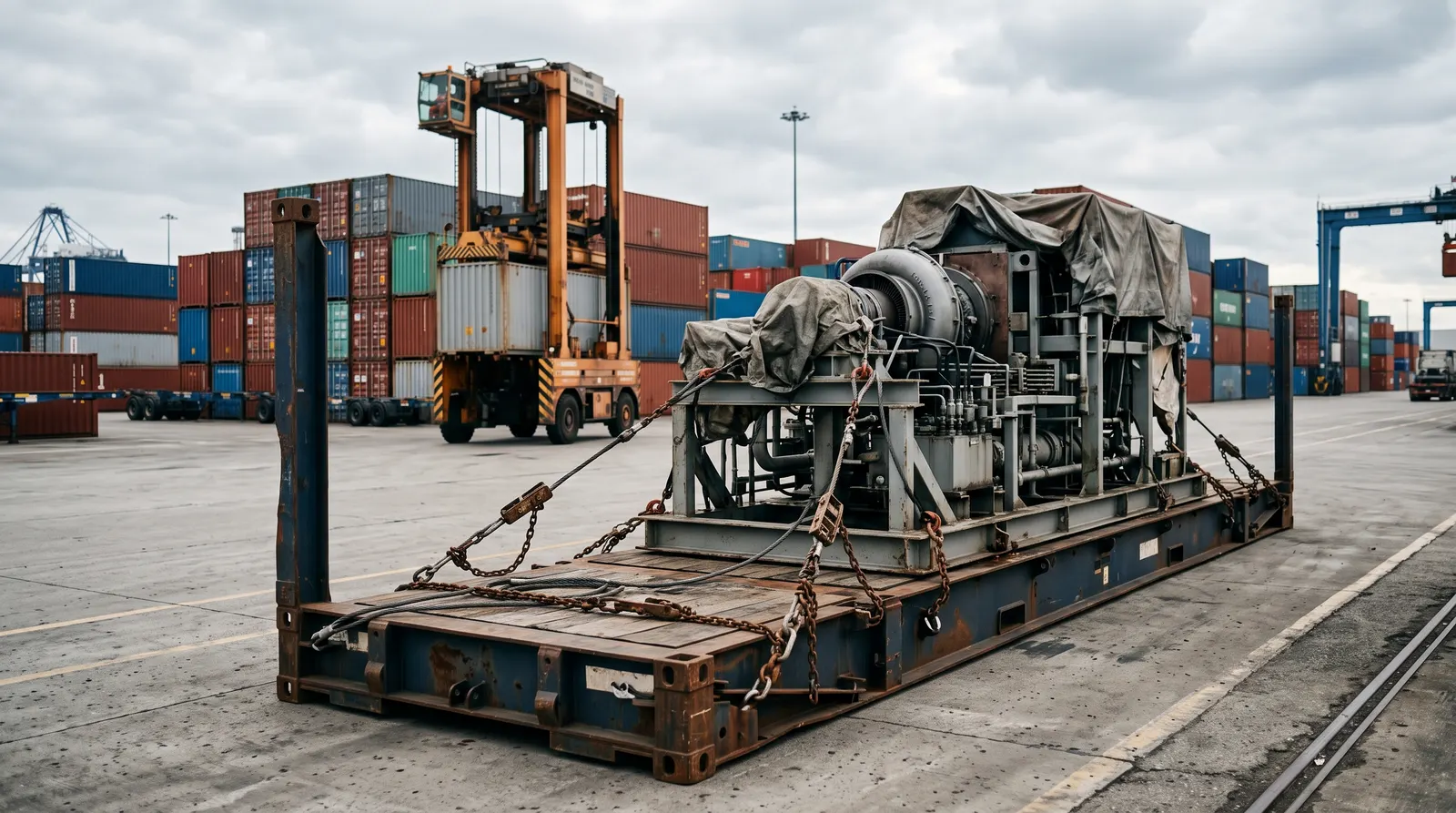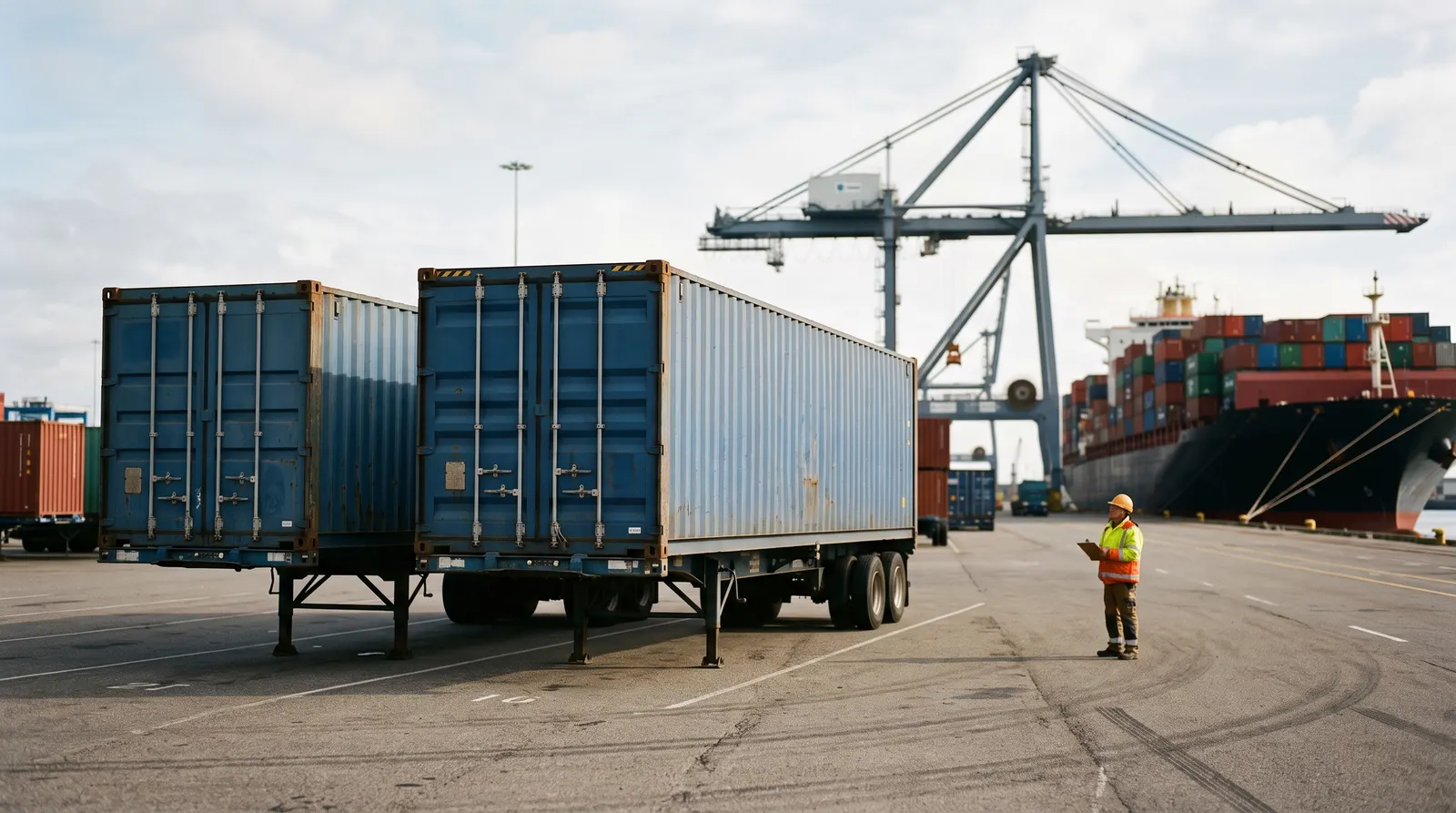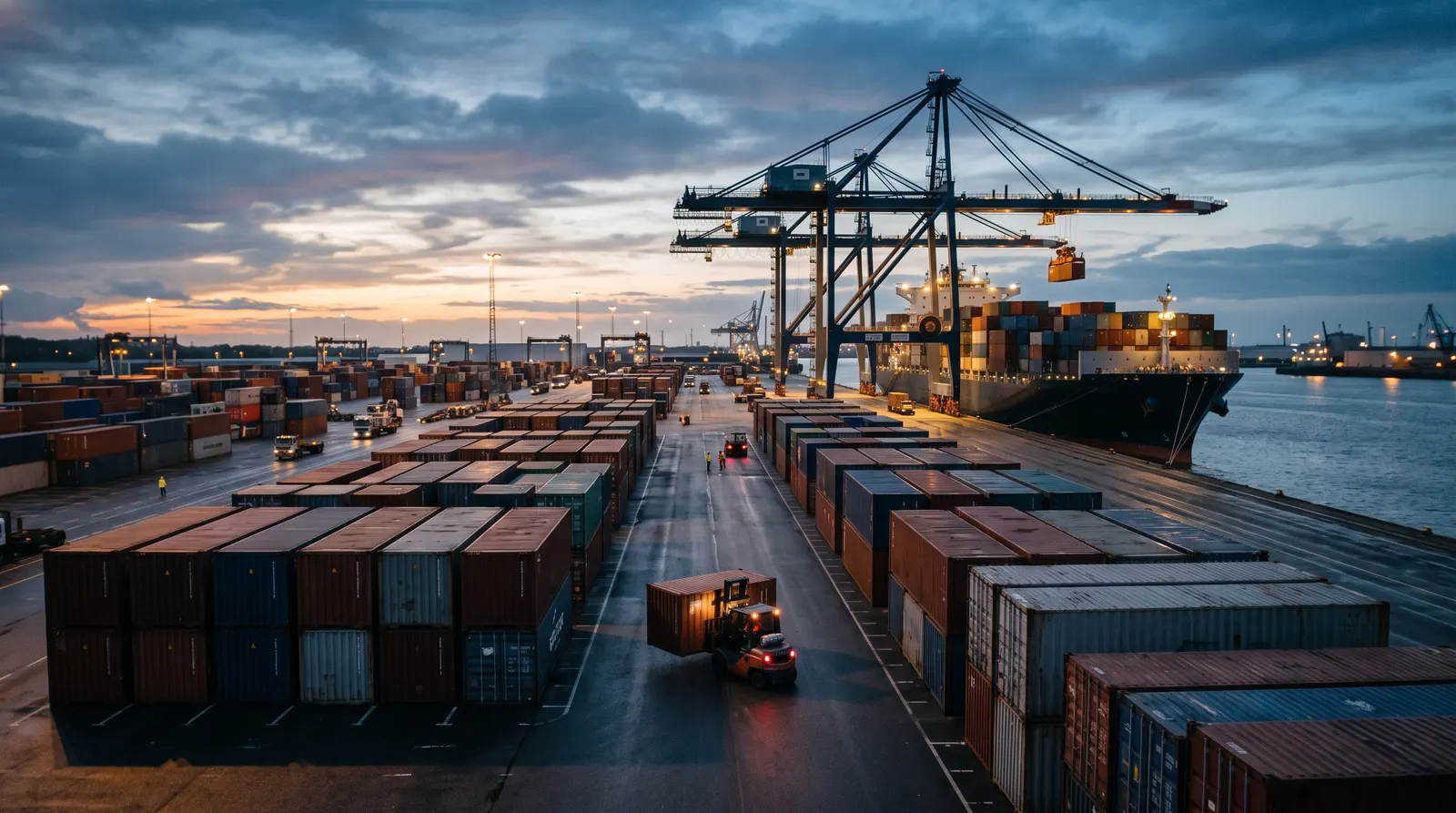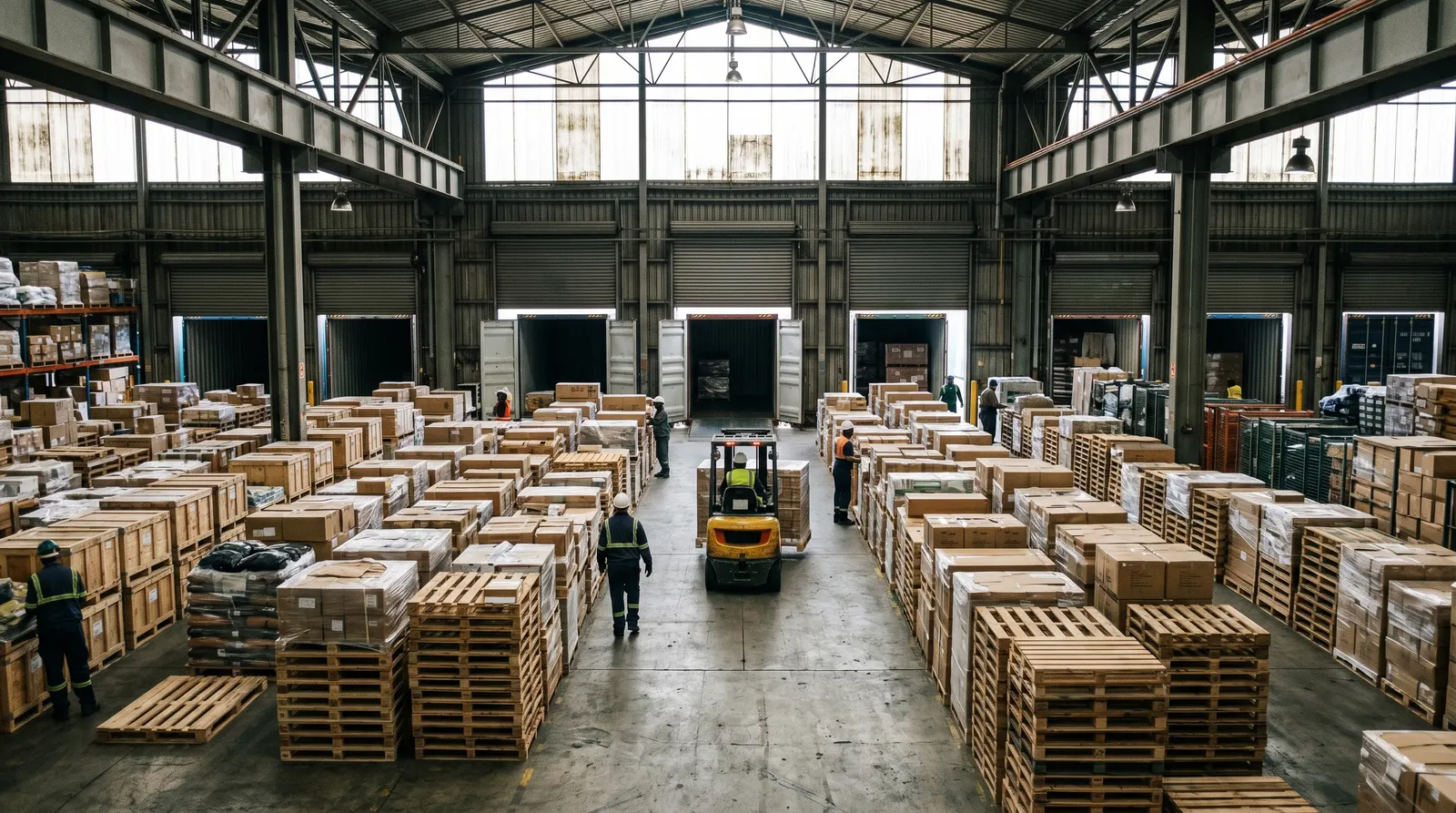
The FCL vs LCL decision is often made by habit: small shipment, book LCL. But habit can be expensive. Above a certain volume — one that varies by lane and season — a full container is cheaper than LCL on a total-cost basis and reaches the destination days sooner. This guide walks through the mechanics of both services, how to calculate the breakpoint for any lane, and the non-price factors that tip the decision when the numbers are close.
What FCL and LCL actually are
FCL (Full Container Load) means you book an entire container. No other shipper's freight shares the box. You pay a flat rate per container — 20GP, 40GP, or 40HC — regardless of how much space you fill. The container is sealed at the point of stuffing and remains sealed until it reaches the consignee.
LCL (Less than Container Load) means your cargo travels alongside other shippers' goods inside a shared container. A consolidator groups compatible shipments, stuffs them into one container at the origin Container Freight Station (CFS), ships the consolidated box, then unstuffs and distributes at the destination CFS. You pay per cubic metre (CBM) — or per tonne, whichever is greater — for only the space your cargo occupies.
Both services move on the same ocean vessels and follow the same trade-lane schedules. The difference is in the handling on either end and who pays for the full box.
How LCL pricing really works
The per-CBM ocean freight rate is only part of the LCL cost. Every LCL shipment passes through two CFS facilities — origin and destination — and both carry fees that are largely fixed regardless of shipment volume.
A complete LCL invoice typically includes:
- Ocean freight — per CBM (or W/M, weight or measure)
- Origin CFS fee — handling and stuffing at the origin warehouse
- Destination CFS fee — unstuffing, sorting, and delivery-order release
- Documentation — house bill of lading, often an LCL-specific charge separate from the master BL
The critical insight: origin and destination CFS fees are flat per shipment, not per CBM. A 2 CBM shipment and a 12 CBM shipment pay nearly identical CFS fees at each end. That fixed overhead makes very small LCL shipments economical and larger ones progressively expensive on a per-CBM basis — which is exactly why a breakpoint exists.
How FCL pricing works
With FCL, the quote covers:
- Ocean freight — per container
- THC (Terminal Handling Charge) — per container at each terminal
- BL fee — one bill of lading for the entire container
- VGM — one verified gross mass declaration
There are no CFS charges. The container moves port-to-port without being opened. Fewer handling steps means fewer fees and fewer touch-points where damage can occur.
The trade-off is fixed cost: you pay for the full container capacity whether it is 30% full or 100% full. Booking a 40GP with 8 CBM of cargo costs the same as booking it with 60 CBM.
The cost breakpoint: when FCL becomes cheaper
Because FCL is a flat rate and LCL scales with volume, there is always a crossover point on any lane. The formula is straightforward:
Break-even CBM = FCL all-in cost ÷ LCL all-in cost per CBM
Working example (illustrative — actual rates vary by lane, carrier, and season):
| Item | LCL | FCL (20GP) |
|---|---|---|
| Ocean freight | USD 85/CBM | USD 950 flat |
| Origin CFS | USD 60 flat | — |
| Destination CFS | USD 75 flat | — |
| THC + docs | included in above | USD 350 flat |
| Total at 10 CBM | USD 985 | USD 1,300 |
| Total at 15 CBM | USD 1,410 | USD 1,300 |
At 10 CBM, LCL wins by USD 315. At 15 CBM, FCL is already cheaper. The break-even here is roughly 13 CBM: 1,300 ÷ (85 + 13.5 blended CFS per CBM) ≈ 13.
In practice, the breakpoint on standard general cargo lanes sits between 10 and 15 CBM for most routes. Peak-season GRIs and capacity surcharges push FCL rates up and shift the breakpoint higher; competitive consolidation rates on busy lanes can push it lower. Use the free cargo calculator to get your exact CBM from carton or pallet dimensions, then request both FCL and LCL quotes before committing.
| Shipment volume | Likely cheaper | Notes |
|---|---|---|
| Under 5 CBM | LCL | Fixed CFS overhead is easily absorbed; LCL is clearly right |
| 5–10 CBM | LCL (usually) | Run the numbers; cost gap narrows toward 10 CBM |
| 10–15 CBM | Check both | Often within 10–15% of each other; non-price factors decide |
| 15–28 CBM | 20GP FCL | LCL per-CBM cost with two CFS stops exceeds 20GP rate |
| Over 28 CBM | 40GP or 40HC FCL | Above 20GP usable volume; LCL overhead makes no sense |
Fitting your cargo into a container
If FCL is in contention, container selection matters. Booking the wrong size eats margin.
| 20GP | 33.2 CBM usable volume / 28,200 kg max payload |
|---|---|
| 40GP | 67.7 CBM usable volume / 28,750 kg max payload |
| 40HC | 76.4 CBM usable volume / 28,600 kg max payload |
A 20GP fills efficiently between roughly 15 and 28 CBM. If you are consistently shipping 15–25 CBM — too large for cost-effective LCL, not quite filling a 20GP — consolidation (also called co-loading) offers a middle path: you buy a defined portion of a container at a negotiated flat rate, typically lower than open-market LCL per-CBM pricing, without the two-stop CFS handling that standard LCL involves.
Transit time and cargo risk
LCL is typically 4–10 days slower than FCL on the same lane, because of the two CFS stops.
At origin, your cargo waits for the consolidator's weekly cut-off before the container sails. At destination, the full container must clear customs and be unstuffed before your individual shipment is released. Both steps add elapsed calendar time even when the ocean leg is identical.
If your buyer has firm delivery windows, your inventory is lean, or you are shipping seasonal goods, the FCL premium often pays for itself in avoided stock-out costs.
Cargo risk in LCL is modestly higher. Your goods are loaded, stacked, and unstuffed alongside multiple other shippers' cargo. Fragile, high-value, or awkwardly dimensioned freight faces more handling events where damage can occur. Cargo insurance is worth factoring into the total cost comparison — particularly if LCL handling would require more robust packaging or carry a higher premium than FCL.
When LCL clearly wins
- Shipments under roughly 10 CBM on any lane
- Infrequent or ad hoc moves where you do not ship enough volume to fill a container on a regular schedule
- Testing a new supplier, product, or trade lane before committing to container-load volumes
- Cash-flow-sensitive shipments where paying only for used space matters more than transit speed
When FCL clearly wins
- Shipments above roughly 15 CBM (run the numbers — FCL is usually cheaper per CBM at this volume)
- Time-sensitive moves where the LCL handling delay is not acceptable
- Fragile, high-value, or hygiene-sensitive cargo that benefits from a sealed, single-shipper environment
- Hazardous goods or cargo with segregation requirements that are difficult or impossible to co-load
Getting a comparison quote
Most shippers only ask for one type. The better practice: for any shipment between 8 and 20 CBM, request both FCL and LCL rates and compare on a total-cost basis — ocean freight plus origin charges plus destination charges. Do not compare ocean freight rates alone; that comparison will mislead you.
A well-structured quote breaks out each charge line by line. If your forwarder's quote bundles origin and destination services into one opaque number, ask them to itemise. The FCL vs LCL decision is straightforward once the full cost picture is visible.