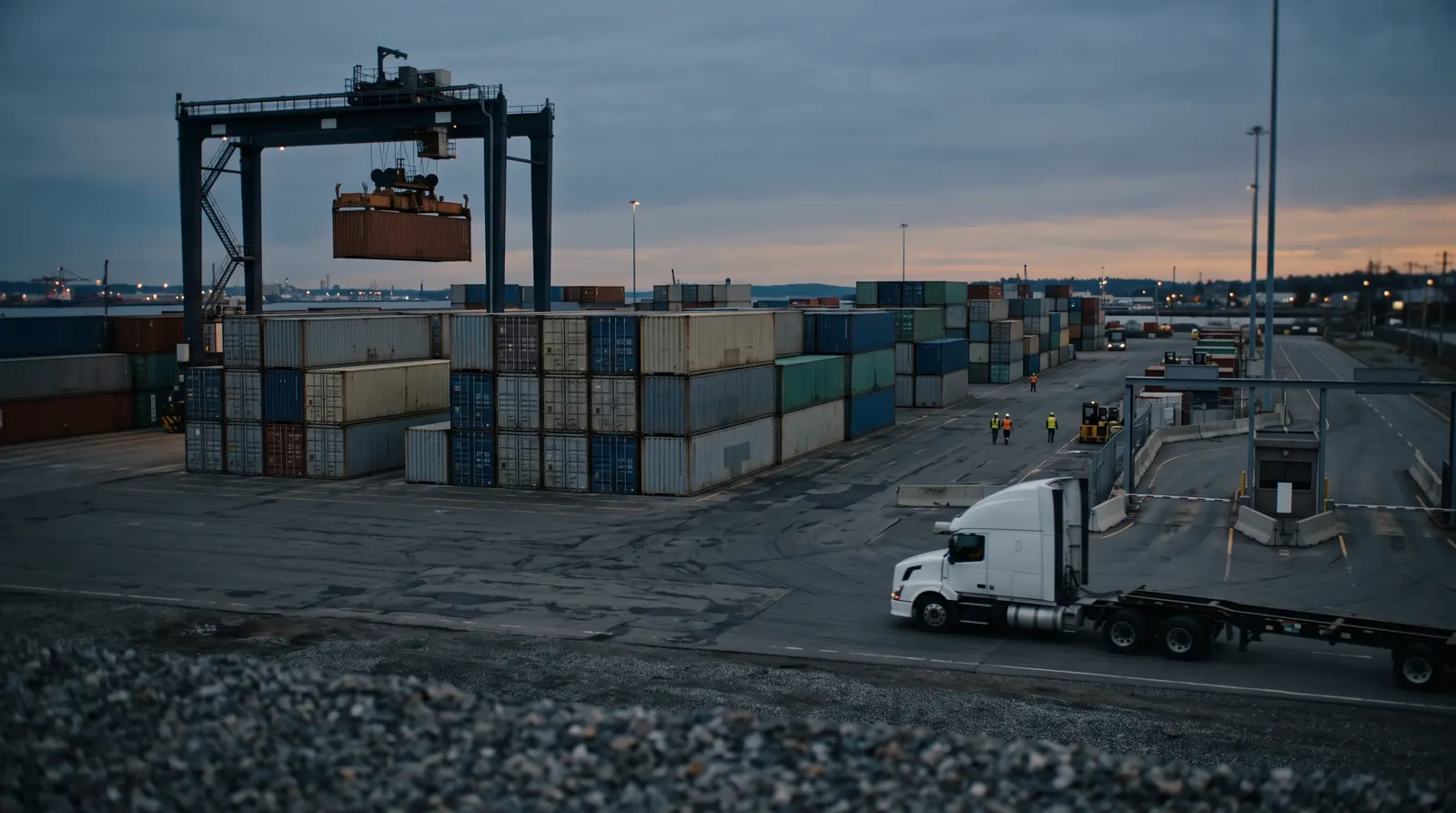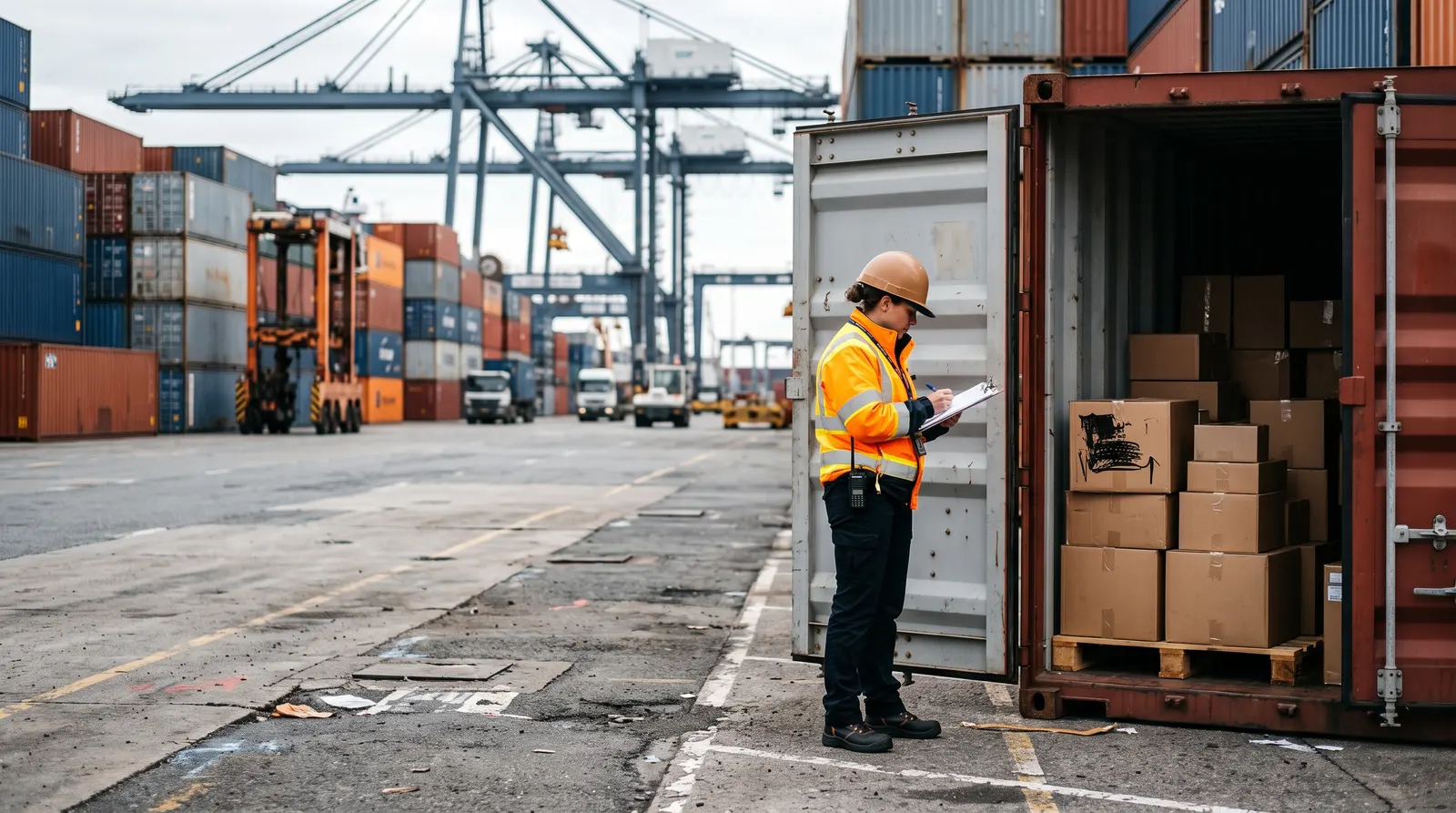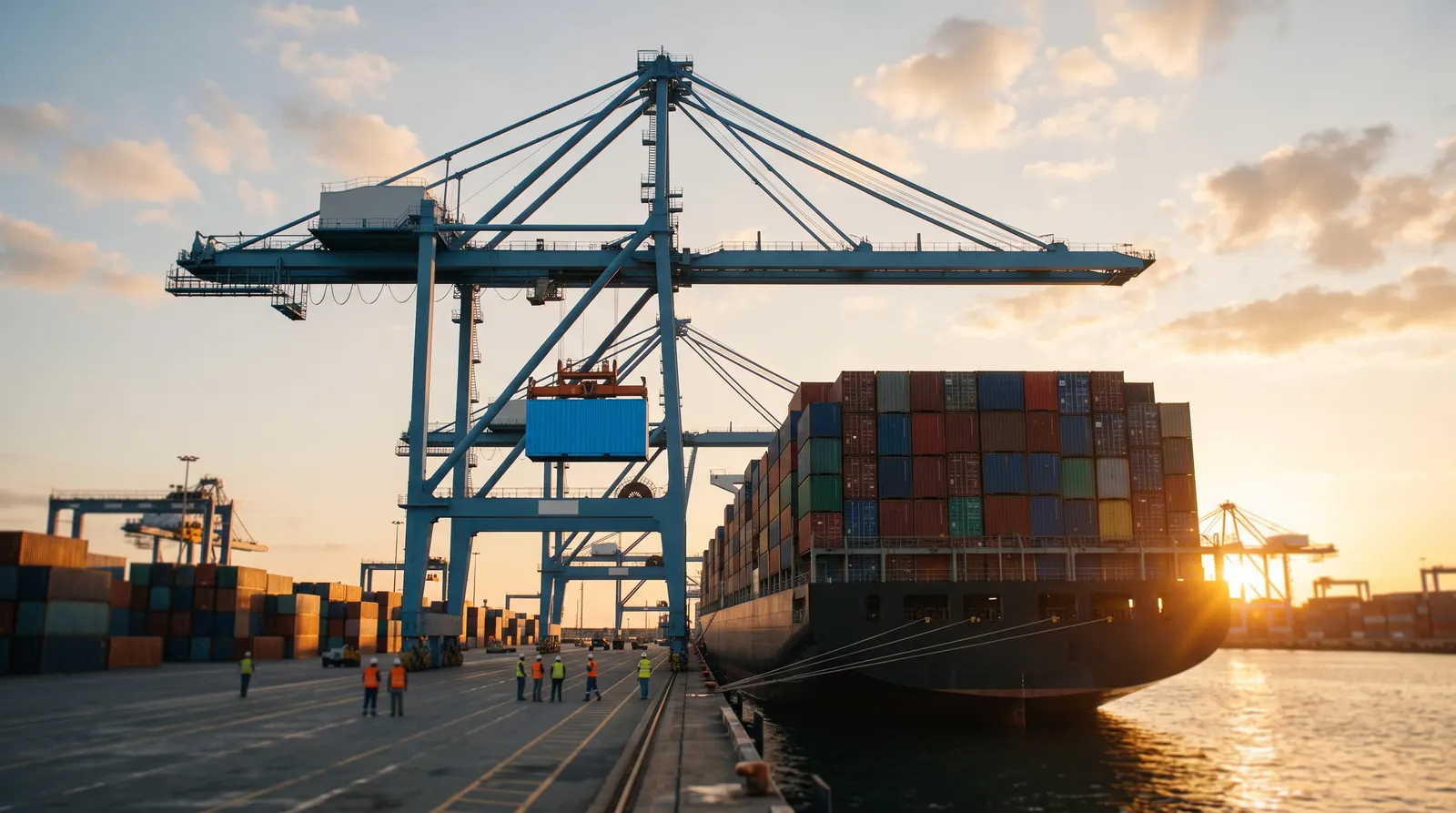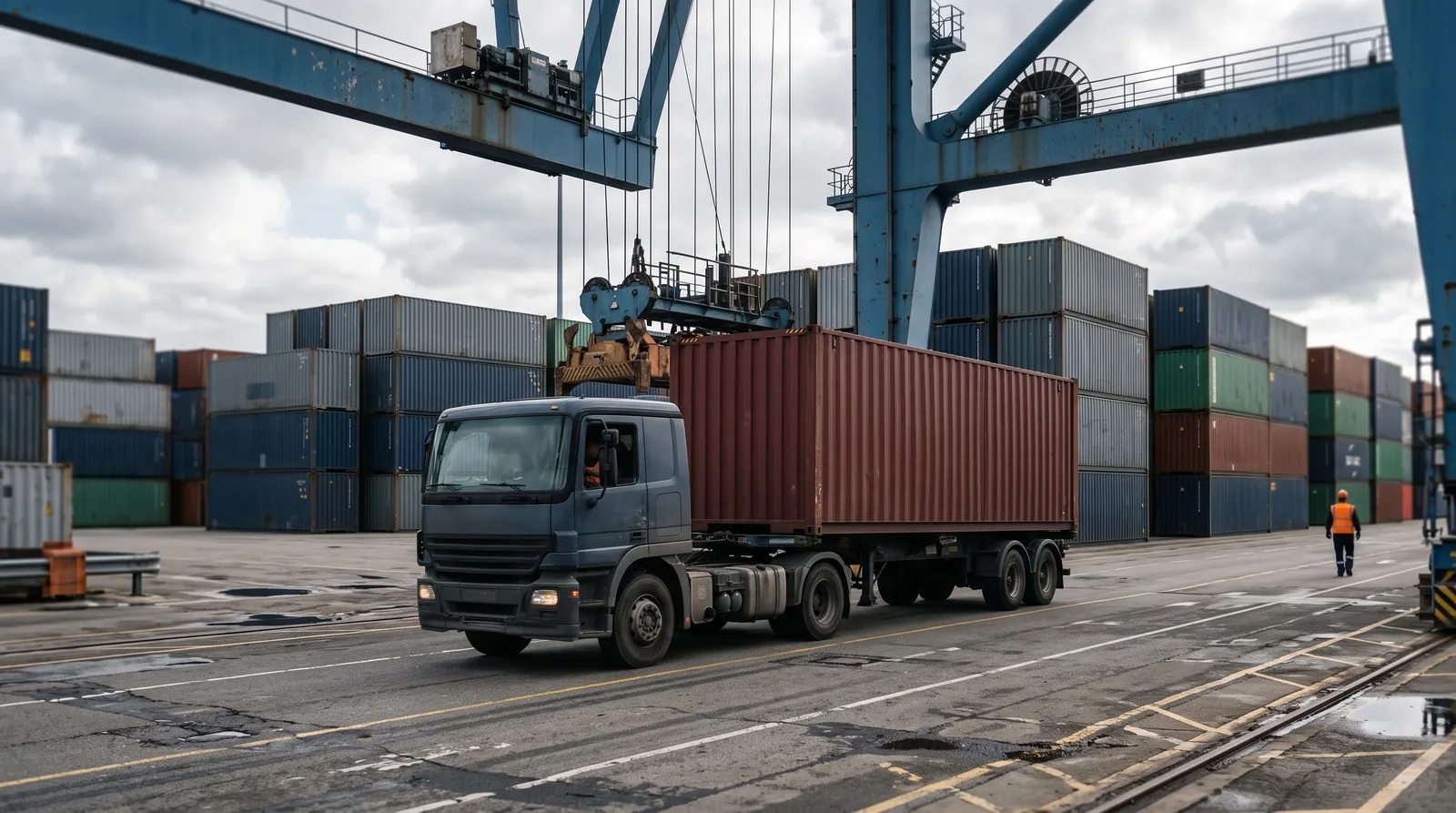
EXW and FOB are the two most common Incoterms buyers see on a supplier's quote, and they sit at almost opposite ends of the same spectrum. One hands the buyer everything from the seller's front door; the other hands the buyer everything from the rail of the ship. Between those two points sits export clearance, inland haulage, terminal handling, and a window of transit where cargo can be damaged, delayed, or lost before the buyer's insurance and control formally begin. Picking the wrong one doesn't just move a line item — it moves risk, cost, and who is on the hook when something goes wrong.
What EXW actually means
EXW (Ex Works) is the Incoterm that transfers the least responsibility to the seller. The seller's only obligation is to make the goods available at their own premises — a factory or warehouse — packaged and ready for pickup. Every other cost and risk, from loading the truck onward, sits with the buyer.
That includes export clearance in the seller's country, inland transport to the origin port or airport, origin terminal handling, the international freight leg, import clearance, and final delivery. The seller doesn't even load the truck under a strict reading of EXW — that's technically the buyer's responsibility too, though most sellers do it as a courtesy.
EXW looks attractive on paper because the unit price is the lowest number a supplier will quote. It's the price before any logistics cost is added. But that low number comes with a catch: you need a freight agent with a physical presence in the seller's country who can arrange export documentation, book inland transport, and pick up from a factory that may never have shipped internationally before.
What FOB actually means
FOB (Free on Board) shifts much more onto the seller. Under FOB, the seller handles export clearance, inland transport to the origin port, and all costs of getting the goods loaded — traditionally, "on board" the vessel. Risk and cost transfer to the buyer once the goods pass that point.
The buyer's responsibility under FOB starts with the main international freight leg: booking the ocean or air carrier, paying freight, and taking on risk from the point of loading onward. Because the seller is already handling export formalities and origin logistics, FOB requires far less on-the-ground infrastructure from the buyer than EXW does.
FOB is the most widely used Incoterm in containerised trade for exactly that reason — it's a clean split that most freight forwarders, banks, and customs brokers are set up to handle without friction.
Where risk transfers: the real difference
The headline difference isn't the price on the invoice — it's the point in the journey where each party stops being responsible.
| EXW — risk transfers | At the seller's door, before the truck even leaves. Buyer owns everything after that: loading, export clearance, inland haul, origin terminal, main freight |
|---|---|
| FOB — risk transfers | Formally, once the goods are loaded on board the vessel at the origin port; in practice a full container is usually handed to the carrier at the terminal days earlier. Buyer owns the main freight leg onward |
| Who books the freight | EXW: buyer (or buyer's agent) from the factory door. FOB: buyer, but only from the origin port onward |
| Who handles export clearance | EXW: technically the buyer, in a country where they may have no legal presence. FOB: the seller |
| Best fit | EXW: buyers with an established agent/forwarder at origin. FOB: most buyers, most shipments |
The gap between EXW and FOB is really the origin logistics chain: trucking from the factory, export documentation, and delivery to the terminal. Under EXW, that entire chain is the buyer's problem, arranged from a country the buyer may never have shipped from before. Under FOB, the seller — who already has local relationships and knows the export rules — absorbs it.
Why EXW puts more control (and more exposure) on you
EXW is not a bad Incoterm — for the right buyer. If you already have a freight forwarder with agents or partners at the seller's origin, EXW gives you the maximum control: you choose the trucker, you choose the consolidator, and you see every cost from the factory door onward instead of having it folded into someone else's price.
For a buyer without that infrastructure, EXW creates a specific problem: you're legally responsible for export clearance in a country where you likely have no registered entity. In practice, most buyers end up asking the seller (or the seller's forwarder) to handle export formalities anyway — which quietly turns the shipment into something closer to FOB, except you're still nominally on the hook for the paperwork and have less visibility into what the seller's forwarder is actually charging for it.
There's also a documentation risk specific to some jurisdictions: export VAT reclaim and certain licences are only available to a locally registered exporter. If your contract says EXW but the seller performs the export formalities anyway to make the deal work, get that arrangement written into the purchase order — an informal handshake here is where disputes start.
The same gap matters for cargo insurance: a policy that begins "at named place of destination" won't cover the factory-to-port leg under EXW unless you extend it, so confirm the policy's start point matches wherever risk actually transfers under the Incoterm you're using.
Why FOB is the default for most containerised shipments
FOB works for most buyers because it matches the freight infrastructure that already exists: your own ocean FCL booking, your own forwarder relationship, and a seller who is already equipped to handle export clearance in their own country. You get pricing control over the main freight leg — the largest cost line — while leaving the parts of the shipment you're least equipped to manage (local trucking, export paperwork) with the party who already handles them daily.
FOB does carry one well-known wrinkle for container freight: the term's traditional risk-transfer point is the ship's rail, but a full container is typically handed to the carrier at the yard, sometimes days before the vessel sails. That gap between "delivered to the terminal" and "loaded on board" is why the ICC has recommended FCA over FOB for containerised cargo since 2010. In practice, most container shipments still move on FOB terms without incident, but it's worth knowing the gap exists if you're negotiating cargo insurance start dates or reviewing a claim.
Cost implications: which one is actually cheaper?
Neither term is inherently cheaper — each just moves where the cost is disclosed. An EXW unit price looks lower because it excludes everything past the factory door. An FOB unit price is higher because the seller has already absorbed export clearance and origin inland haulage into their number. Once you add your own freight costs on top of an EXW price, the landed cost is often similar to (or higher than) an FOB quote, because the seller's local forwarder usually has better origin rates than a buyer arranging pickup from abroad.
The real cost difference shows up in control, not the invoice total: FOB lets you shop the main freight leg competitively because the seller has already handed off a clean, documented shipment at the port. EXW forces you to either build local capability at origin or accept whatever your forwarder's agent quotes for a pickup they may be arranging for the first time.
Which one should you choose?
- Choose FOB if you don't have an established freight agent or customs relationship in the seller's country — which is most buyers, most of the time.
- Choose EXW only if you already have a trusted forwarder with agents at the specific origin, and you want full cost visibility from the factory door.
- Ask for FCA instead of either when the cargo is containerised and you want a clean, ICC-recommended handoff point without the ship's-rail ambiguity that FOB carries.
Whichever term ends up on the purchase order, get it confirmed in writing before production starts — not after the goods are packed and the seller assumes one thing while you assumed another. The Incoterms guide breaks down all ten terms side by side if FOB and EXW aren't the only two on the table.
How the Incoterm shows up in your freight quote
The Incoterm on your purchase order determines which charges appear on your freight invoice and which are already buried in the supplier's price: under EXW, origin trucking and export documentation should show as separate line items on your quote; under FOB, those origin costs are the seller's, so your quote starts from the main freight leg. Holo Cargo's customs brokerage partners verify the Incoterm on the commercial invoice against the shipping documents before filing — one of the more common places a mismatch surfaces, and one of the cheaper places to catch it.