Waiting on customs clearance with no clear end date is one of the more stressful parts of importing. The vessel has berthed, the aircraft has landed, and the container or shipment just... sits, while the free-time clock quietly runs toward demurrage. The honest answer to "how long will this take" is that it depends — but the range of "depends" is narrower than it feels when you're staring at a shipment stuck in "clearing" status.
This guide breaks the clearance timeline into its actual stages, explains what pushes a shipment toward the fast end or the slow end, and covers what you can do before the goods ever leave origin to keep clearance short.
How long does customs clearance take?
For a shipment with complete, accurate documentation and no exam selection, customs clearance typically takes anywhere from a few hours to two or three business days. If the entry is queried for missing or incorrect information, or the shipment is selected for physical examination, clearance can stretch to a week or more. There is no fixed number customs authorities publish, because clearance time is a function of paperwork readiness and exam selection, not a countdown that starts when the cargo arrives.
The two ends of that range are worth keeping in mind separately:
- Best case: Entry filed and accepted before or shortly after arrival, no queries, no exam — cargo releases same day to within a couple of days.
- Worst case: A document hold or physical exam extends clearance well beyond a week, with demurrage and storage accruing the entire time.
Most shipments land closer to the best case than the worst — but the shipments that don't are the ones that generate the war stories, which is why the range feels wider than it typically is.
The customs clearance timeline, stage by stage
Every shipment moves through the same status lifecycle — not started, clearing, then released or held — and most of the time in "clearing" is spent on filing and review, not physical handling. Understanding each stage helps you see where delay actually accumulates.
| Stage | What happens | Typical duration |
|---|---|---|
| Not started | Entry not yet filed; shipment in transit or awaiting documents | Runs in parallel with freight transit |
| Entry filed | Broker submits the customs entry using invoice, packing list, and other required documents | Minutes to hours, once documents are complete |
| Under review | Customs system or officer reviews the entry and either accepts it or raises a query | Hours to 1–2 days |
| Released | Entry accepted, duties assessed (and paid, where due at release), cargo cleared for pickup | Immediate once review completes |
| Held | Entry flagged for a document query or physical exam; cargo stays in the terminal until resolved | Days to weeks, depending on the hold type |
For ocean freight, a well-prepared broker files the entry before or as the vessel arrives, so "not started" and "entry filed" overlap with the last leg of transit rather than adding time after arrival. Air shipments have a shorter transit window, so entry filing is typically timed closer to arrival, but the review stage works the same way.
What determines how fast your shipment clears
Clearance speed comes down to three things: how complete your documentation is, whether the shipment is selected for examination, and whether pre-arrival filings were submitted on time. Everything else is a variation on those three factors.
- Documentation completeness. A commercial invoice, packing list, and bill of lading or airway bill that agree with each other, plus the correct HS code and any required permits or certificates, let an entry move through review without a query. A mismatch on any of those triggers a stop.
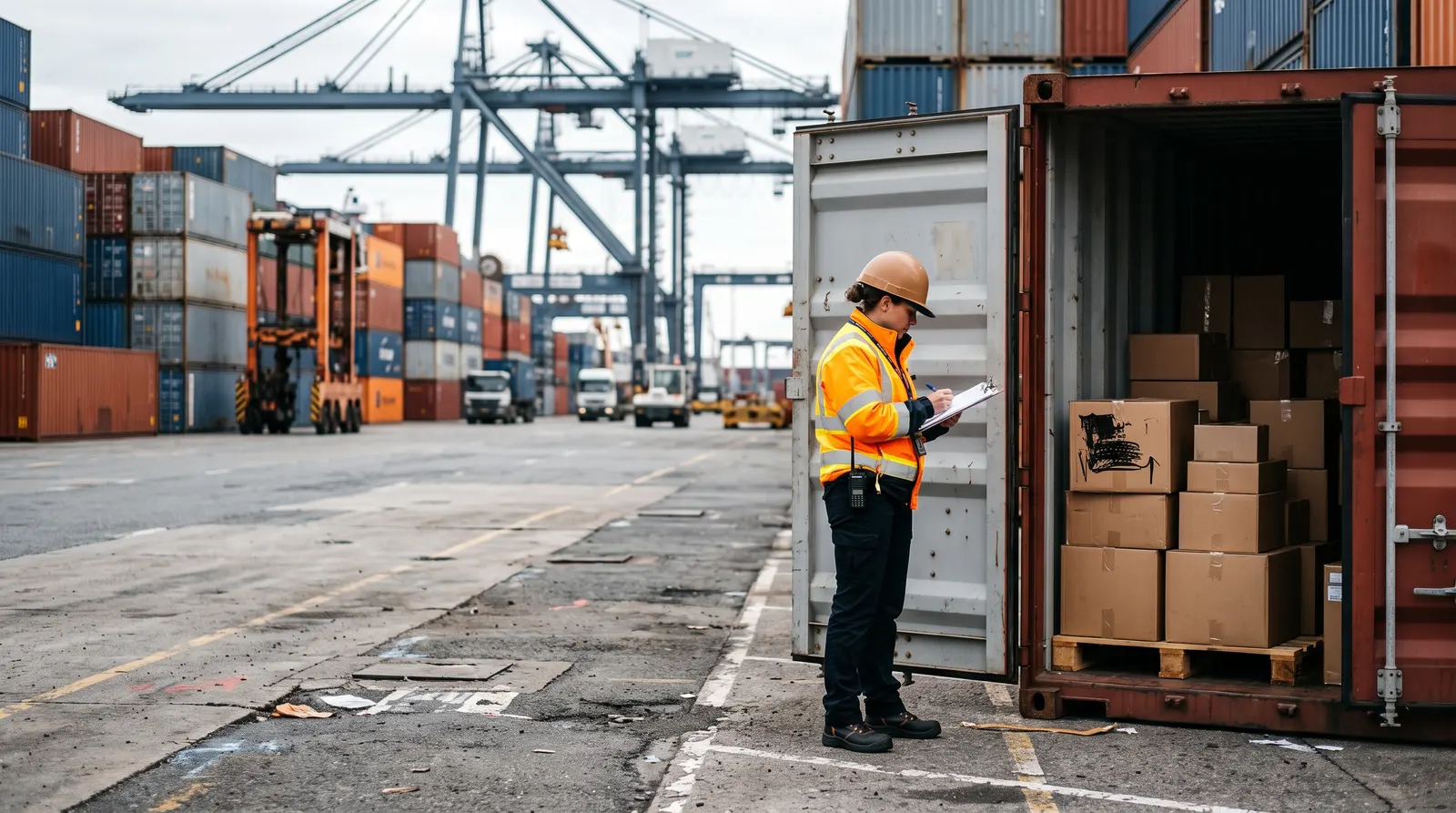
- Exam selection. Some shipments are selected for physical examination — partly risk-based, partly random. An exam adds days regardless of how clean the paperwork is, because the container has to be scheduled, unstuffed or scanned, and resealed.
- Pre-arrival filing timing. Regimes like ISF (US ocean imports) or ENS (EU) require data submitted before departure or arrival, not after. A late or inaccurate pre-arrival filing is itself a compliance issue that can delay release independent of the shipment's own documents.
- Regulated or controlled goods. Food, pharmaceuticals, chemicals, and other goods requiring another agency's permit only clear once that additional authorisation is on file. Special cargo — dangerous goods, reefer, oversized — carries its own compliance layer on top of standard customs review.
- Importer-of-record readiness. Whoever is the importer of record needs an active bond and, in some cases, a licence in place before the entry can be filed at all. Confirming this depends on the incoterm governing the shipment — DDP puts that responsibility on the seller, while FOB, CFR, CIF, and DAP put it on the buyer.
Does the mode of transport change clearance time?
Clearance itself isn't meaningfully faster or slower for ocean versus air — the same review process applies to both — but air's shorter transit window means clearance has less time to happen in parallel with transport. An ocean shipment crossing several weeks of transit gives a broker time to file and clear the entry before or as the vessel arrives, so cargo can sometimes be released the same day it berths. An air freight shipment lands in days, which compresses that same filing-and-review process into a much tighter window — documentation gaps show up faster because there's less slack to absorb them.
This is one reason document accuracy matters more, not less, on air shipments: there's simply less runway to fix a problem before it becomes a delay at the gateway.
Why clearance sometimes takes much longer than expected
A handful of situations reliably push clearance past the typical range, and they're worth planning around rather than being surprised by:
- A document query. Customs asks for a corrected invoice, an additional certificate, or clarification on value or origin. The shipment doesn't move until the broker responds and the query closes.
- A physical examination order. The container is pulled for inspection, which adds the time to schedule the exam, perform it, and reseal — commonly several days, occasionally longer at busy ports.
- Regulated-goods holds. A missing permit or certificate for FDA, USDA, EPA, or equivalent-regulated goods stops clearance until the document is produced, regardless of how clean the rest of the entry is.
- Bond or importer-of-record gaps. If the bond isn't sufficient or the importer-of-record details don't check out, the entry can't be accepted for filing in the first place.
Every one of these runs the same clock as ordinary transit delay: free time at the terminal keeps expiring, and demurrage or storage accrues whether the hold is your fault or not.
Keeping clearance time on the fast end
The highest-leverage work happens before the shipment ever departs, not after it arrives:
- Cross-check documents before the goods ship. Invoice value, packing list, and bill of lading should agree exactly, and the HS code should match the goods description.
- File pre-arrival declarations on time. ISF, ENS, or the equivalent scheme in your destination country is a booking-time task, not something to leave until the vessel is en route.
- Confirm permits and certificates in advance for any regulated commodity, so they're on file before the entry is submitted.
- Verify bond and importer-of-record status ahead of the shipment, particularly on a new lane or with a new customs broker.
- Use an experienced broker at the destination who can respond to a query the same day it's raised, rather than adding their own turnaround delay on top of customs' review time.
How Holo Cargo helps
Our operations team coordinates with experienced customs brokerage partners at destination, and pre-arrival filings are tracked alongside the shipment so entries are ready to file before the cargo arrives — whether the move is by ocean or air. The quote itemises customs and destination charges separately from freight, so you know what's covered before you book.