Ask five people in freight to define "intermodal" and "multimodal" and you will likely get five different answers, several of them contradicting each other. Both terms describe cargo that moves across more than one transport mode — ocean to rail, rail to road, air to road. The confusion is not really about the trucks, trains, ships, or planes involved. It is about something less visible: how many contracts sit behind the move, and who is liable if a handoff between modes goes wrong.
That distinction sounds academic until a container sits at an inland terminal for three extra days after a missed rail connection, and you are trying to work out which carrier's terms apply. This guide covers what each term actually means, how they differ in practice, and how to tell which one you are actually buying before you book.
Multimodal vs intermodal: the difference in one sentence
Multimodal shipping means one contract and one liable party cover the entire door-to-door journey, no matter how many modes carry the cargo. Intermodal shipping means the cargo moves in the same container across multiple modes, but each leg can still be booked and governed under a separate contract.
Put another way: intermodal describes the physical setup — a standard container that transfers between a truck chassis, a rail flatcar, and a ship's hold without being unpacked. Multimodal describes the commercial setup — a single forwarder or carrier accepting responsibility for that container's entire journey, from the shipper's dock to the consignee's door, under one bill of lading.
A shipment can be intermodal without being multimodal — the box moves seamlessly between modes, but the shipper has booked ocean freight, trucking, and rail separately, and is coordinating the handoffs themselves. A shipment can also be multimodal in a case where the physical transfer is comparatively simple — one contract, one operator, even if only two modes are involved.
What "intermodal" actually means
Intermodal shipping refers to the use of a standardized container or unit that moves across two or more modes without the cargo inside being touched, repacked, or reloaded piece by piece. The term describes equipment and handling, not who is contractually responsible for the trip.
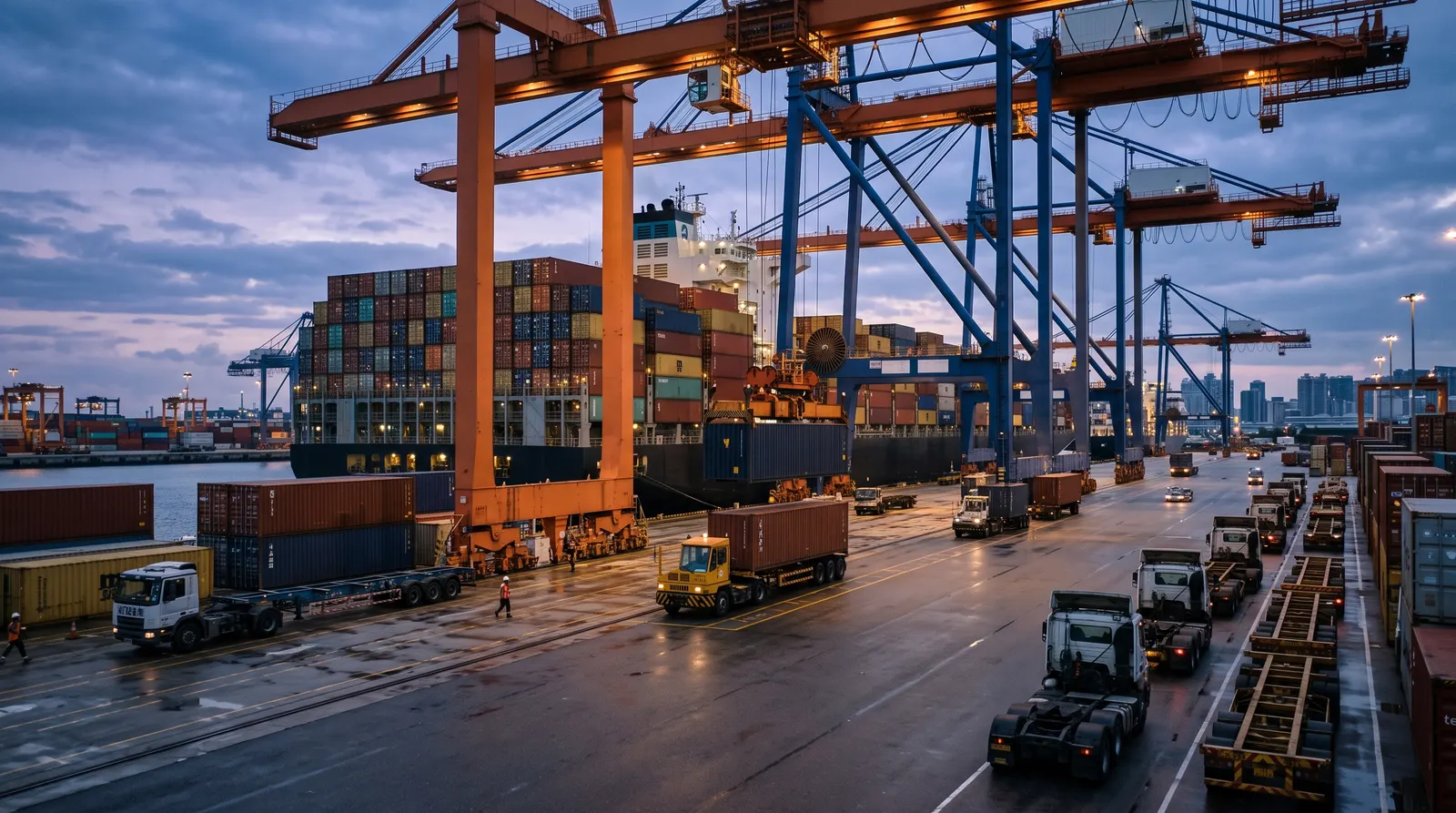
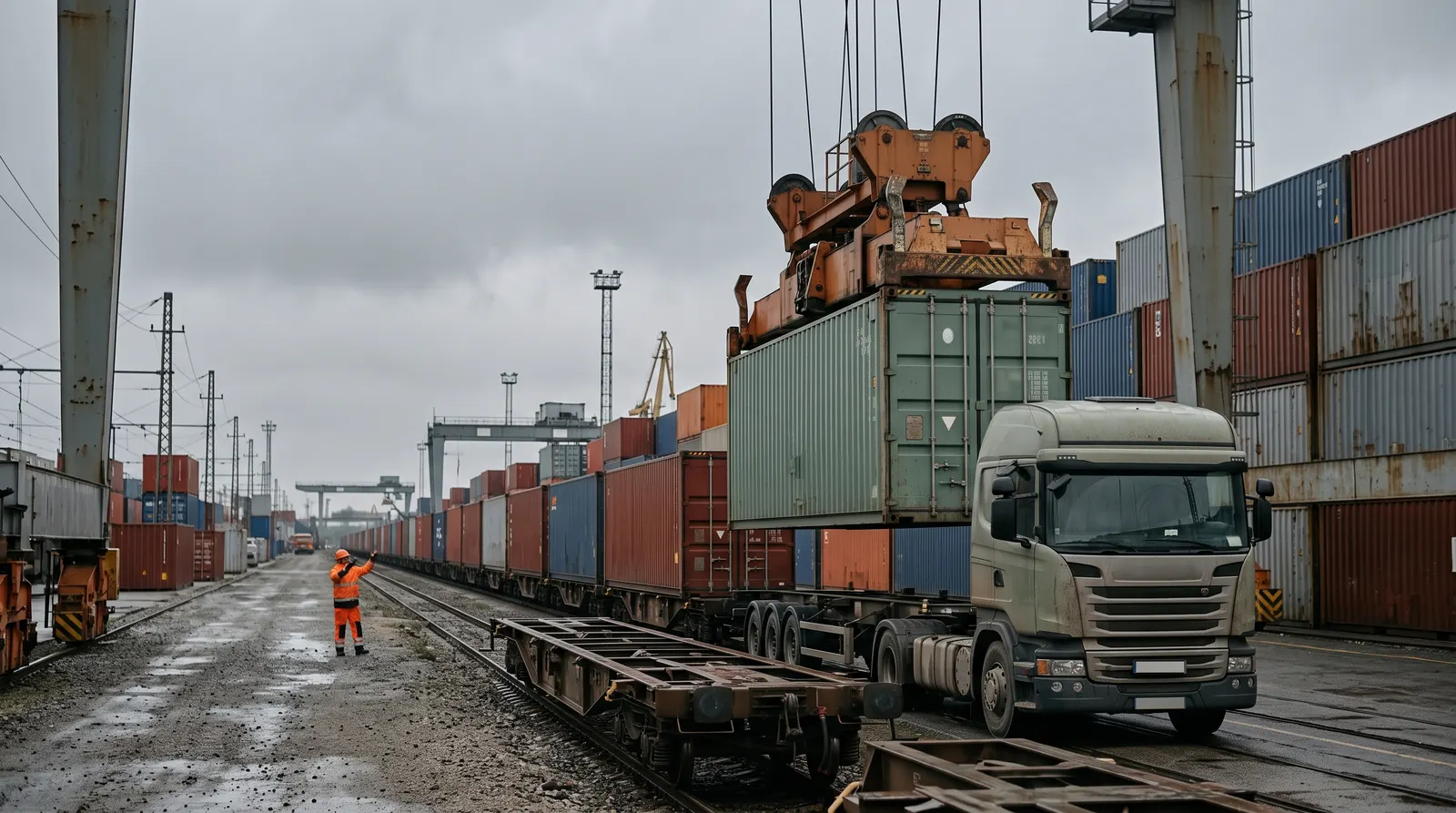
Standard shipping containers (20GP, 40GP, 40HC, and the reefer, open-top, and flat-rack variants) are built for exactly this: the same box that leaves a factory on a truck chassis can be lifted directly onto a rail flatcar, then onto a ship, then onto another truck at destination, with the cargo inside never exposed. That interchangeability is what makes intermodal transport efficient — the transfer points move the box, not the goods.
Critically, "intermodal" on its own says nothing about contracts. A shipper can book:
- Ocean freight with one carrier, for the sea leg only.
- Rail separately, from a different operator, for the inland leg.
- Trucking separately again, from a local drayage company, for first and last mile.
The container moves intermodally the entire way — but the shipper is holding three contracts, three liability regimes, and three points of contact if something goes wrong on any leg.
What "multimodal" actually means
Multimodal shipping is the movement of a single consignment under one contract and one through bill of lading, issued by a single multimodal transport operator (MTO) who is liable for the cargo for the entire door-to-door journey regardless of which mode is carrying it at any given moment.
This is a legal and commercial arrangement layered on top of the same physical container moves described above. The forwarder or carrier who issues the multimodal transport document takes on responsibility for coordinating every leg, and for the cargo's condition and timely arrival across all of them — even the legs it subcontracts to a rail operator or a trucking company it does not own.
For the shipper, the practical benefit is fewer places to look and fewer parties to chase: one document, one point of contact, and one claims process if cargo is damaged or delayed, instead of working out which of three separate carriers' terms govern the leg where the problem happened.
Multimodal vs intermodal, side by side
| Intermodal | Multimodal | |
|---|---|---|
| What it describes | The physical/equipment setup — same container across modes | The contractual setup — one operator, one liability chain |
| Number of contracts | Can be one, or several separate bookings | One |
| Liability | Follows whichever leg's carrier terms apply at the time of loss | One party liable door-to-door |
| Documentation | Often multiple bills of lading, one per leg | Single through bill of lading / multimodal transport document |
| Coordination burden | Falls on the shipper if legs are booked separately | Falls on the operator |
| Typical use | Container-based moves generally, described by equipment | A shipper wants one accountable party for a multi-leg route |
In casual freight conversation these terms get used almost interchangeably, and most of the time that looseness does not cause a problem. It becomes a real question the moment something goes wrong mid-route, or when you are comparing two quotes that look similar on price but are structured completely differently underneath.
Why the distinction matters when a leg goes wrong
When cargo is delayed or damaged partway through a multi-leg journey, the number of contracts behind the move determines how fast — and from whom — you get an answer. This is the entire commercial reason the multimodal/intermodal distinction exists.
Consider a shipment moving by rail across an inland corridor, then by road for final delivery — the pattern behind most rail freight routings. If that shipment was booked as separate contracts (rail with one operator, trucking with another), and the container arrives at the rail terminal damaged, working out whether the damage happened during rail transit or during the truck leg that preceded it can turn into a dispute between two carriers, with the shipper caught in the middle chasing both.
If the same routing was booked multimodally, that question is the operator's problem to resolve, not the shipper's. The through bill of lading makes one party liable for the cargo's condition at every point in the journey, so the shipper files one claim and the operator sorts out which subcontracted leg is actually responsible.
Neither structure is "wrong." Separately booked intermodal legs can be cheaper, and give the shipper more control over which specific carrier handles each segment. Multimodal costs more in coordination fees but removes that operational burden entirely. The mistake is not knowing which one you have booked until something forces you to find out.
How to tell which one you're actually buying
Before assuming a quote covers the whole journey under one liability chain, check for these signals:
- Count the bills of lading. One through bill of lading covering origin to destination is the clearest sign of a true multimodal contract. Multiple documents, one per leg, means you are looking at separately contracted — intermodal — bookings, even if the marketing language says "multimodal."
- Ask who you call if a leg is delayed. If the answer depends on which mode is currently carrying the cargo, you have separate contracts. If the answer is always the same point of contact, it is multimodal.
- Check what happens at each handoff. Multimodal contracts typically specify who manages customs clearance, terminal fees, and document handoffs at each mode transition. Separately booked legs leave that coordination to the shipper — confirm with a customs brokerage partner what documentation each leg actually requires.
- Confirm the routing makes sense before comparing quotes. The free route calculator resolves any two cities to the nearest port or air gateway with an indicative transit time, which is a useful first step for sanity-checking a multi-leg routing before you start comparing how different forwarders have structured it.
Which one fits your shipment
A one-off shipment on a well-understood lane, where you are comfortable managing the handoffs and want the flexibility to pick each leg's carrier independently, can work fine as separately contracted intermodal legs — particularly if cost is the priority and you have the bandwidth to coordinate.
A shipment crossing multiple modes to reach a destination with no direct port or airport access, a time-sensitive routing where a missed handoff is costly, or simply a preference for one point of accountability across the whole journey, is better served by a true multimodal contract. The how shipping works guide covers how move types and mode choice interact more broadly, which is worth reviewing before you lock in a routing either way.
How Holo Cargo helps
Holo Cargo books multimodal routings under a single itemised quote, with operators coordinating every leg and handoff so liability and accountability never depend on which mode is currently carrying the cargo. Every leg — ocean, rail, road, or air — is priced and tracked individually within that one contract, and the price quoted is the price on the final invoice for the freight and handling charges covered.