The transit time on your quote says 21 days. Your cargo arrives in 28. Nothing went wrong — no storm, no customs hold, no carrier error. The week simply disappeared into the gap between how transit times are quoted and how ocean freight actually moves.
That gap is common and it is not random. Five or six factors consistently explain it. Once you understand them, you can plan more accurately and stop building excessive cushion into every lead time out of habit.
What "transit time" actually counts
The transit time shown in a freight quote is almost always port-to-port, vessel-steaming time only. It does not include the days at origin before departure, any dwell time in a transshipment hub, or customs clearance and final delivery at the destination end. For door-to-door planning, the number on the quote is the middle section of a longer sequence.
A typical international shipment involves:
- Cargo ready to CY cut-off: getting goods to the container yard before the vessel's deadline — typically 3–5 days before departure, though this varies by port and carrier.
- Vessel departure to port of discharge: the quoted transit time.
- Arrival to customs release: ranges from same-day (with pre-lodged clearance) to several weeks depending on the commodity and whether a customs examination is triggered.
- Customs release to warehouse: final drayage, typically 1–2 business days.
For a door-to-door shipment, the quoted transit time is one input, not the answer. Most importers who struggle with inventory timing are underestimating segments 1, 3, and 4 — the legs that surround the vessel.
Direct services vs transshipment routing
A direct service runs from origin port to destination port without an intermediate port call. A transshipment service stops at a relay hub — commonly Singapore, Port Klang, Colombo, or Algeciras — where cargo is transferred to a different vessel. Direct is faster; transshipment is more available across more departure days, at the cost of added time at the hub.
The transit premium for transshipment varies considerably. A single transshipment at a well-coordinated hub with good feeder frequency typically adds 4–8 days. A looser connection — where the onward feeder sails weekly or less — can add two weeks. Carriers do not always headline this difference in a quote comparison. Two offers both showing 28 days may represent very different risk profiles: one is a direct mainline service, the other transships at a congested port with an infrequent feeder connection.
When lead time is tight, confirm with your forwarder whether the booked service is direct or via transshipment, and if the latter, what the feeder departure schedule looks like and how much buffer is built in at the hub.
How trade lane distance sets the floor
Distance establishes a floor that routing choices, schedule variance, and congestion move upward from. Indicative vessel-steaming baselines for common trade lane categories:
| Lane type | Approx. distance | Indicative transit |
|---|---|---|
| Short-haul (within a region) | Under 2,000 km | ~7 days |
| Medium (intra-Asia, Asia–Middle East) | Under 8,000 km | ~21 days |
| Long-haul (Asia–Europe, Asia–US West Coast) | Under 16,000 km | ~35 days |
| Ultra-long (Asia–US East Coast via Suez) | Over 16,000 km | Up to ~45 days |
Shanghai to Los Angeles runs approximately 14–17 days on a direct mainline service and 19–24 days with transshipment depending on the hub. Shenzhen to Hamburg runs 28–33 days direct and longer if routing via a congested hub or if slow-steaming schedules are in effect. Treat all published figures as indicative; carriers confirm actual schedules at booking.
Port congestion: the variable nobody budgets for
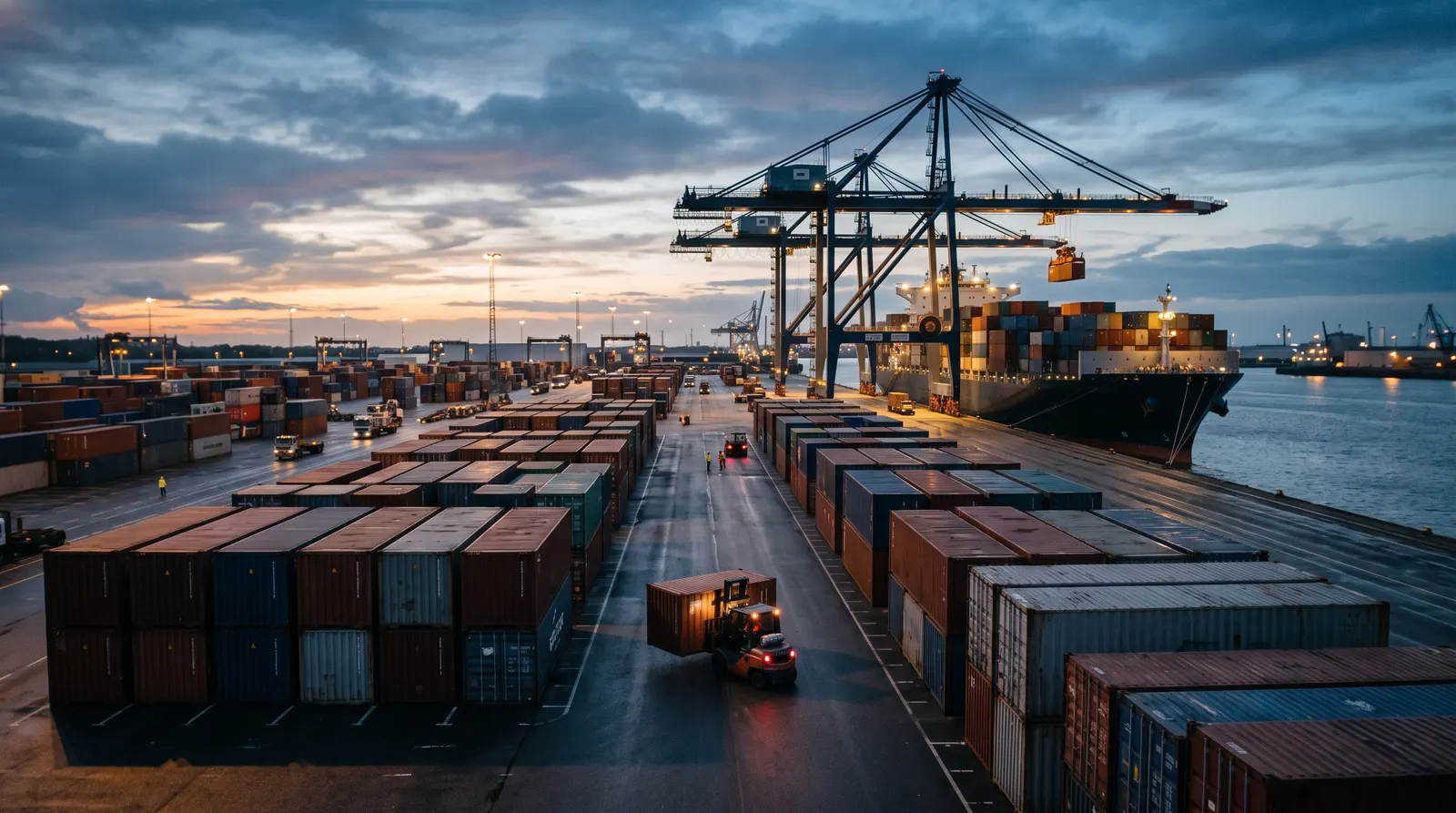
Port congestion adds time at both ends of the voyage. At origin, congestion causes vessel bunching — vessels arrive late, depart late, and CY cut-offs can shift. At destination, congestion means vessels anchor offshore waiting for a berth, adding days that do not appear in the carrier's quoted transit time.
Congestion is cyclical and hard to forecast far in advance. It was severe across major hubs during 2021–2022 and has moderated since, but it flares regularly around seasonal peaks — before Golden Week, before Christmas, or following any disruption to a high-volume hub like Singapore or Rotterdam. Ports historically most prone to congestion-driven delay include Los Angeles/Long Beach, Rotterdam, Felixstowe, and Singapore during demand surges.
The practical implication: if your arrival window is tight during a peak shipping period, build 3–5 days of congestion buffer into your planning. Carriers sometimes publish real-time port advisory updates — ask your forwarder to flag these proactively when a shipment is in motion.
Vessel schedules and departure frequency
Ocean carriers operate fixed-day weekly services on most major trade lanes. Miss your vessel's CY cut-off and the next departure is typically seven days later — adding a full week to your overall timeline before the transit time even starts.
This is where the practical impact is most often felt. Cargo ready to load on a Wednesday may not sail until the following Tuesday if the Thursday cut-off was missed by a day. Five days of lead time vanish before the vessel leaves port.
Departure frequency improves significantly on the busiest trade lanes. Asia–Europe and Trans-Pacific routes have multiple services departing most days of the week across the major carrier alliances. On thinner lanes — secondary Asia–Africa routes, niche South America services — weekly or even fortnightly sailings are common. On those lanes, cut-off discipline is critical: one missed booking can cost two weeks.
CY cut-off windows: the clock starts before the vessel
The container yard (CY) cut-off is the deadline by which a loaded full-container-load must be gated in at the terminal for a given sailing. It typically falls 3–5 days before the vessel's estimated time of departure (ETD). Missing it means rolling to the next sailing.
There are actually multiple interdependent cut-offs in the booking workflow:
- CY cut-off (physical): when the loaded, sealed container must be at the terminal gate. This is the hard deadline.
- VGM cut-off: when the verified gross mass declaration must be submitted to the carrier — usually one day before CY cut-off.
- SI (shipping instruction) cut-off: the documentation deadline for the bill of lading, typically 24–48 hours before CY cut-off.
Missing the SI cut-off even when the container is physically at the terminal can still roll the shipment. All three deadlines need to be confirmed when the booking is placed, and production and collection schedules need to be built backwards from them. Rolling a shipment by one sailing is the single most common source of unexplained delay — it appears as a week's gap with no vessel error, because no vessel error occurred.
Slow steaming and schedule reliability
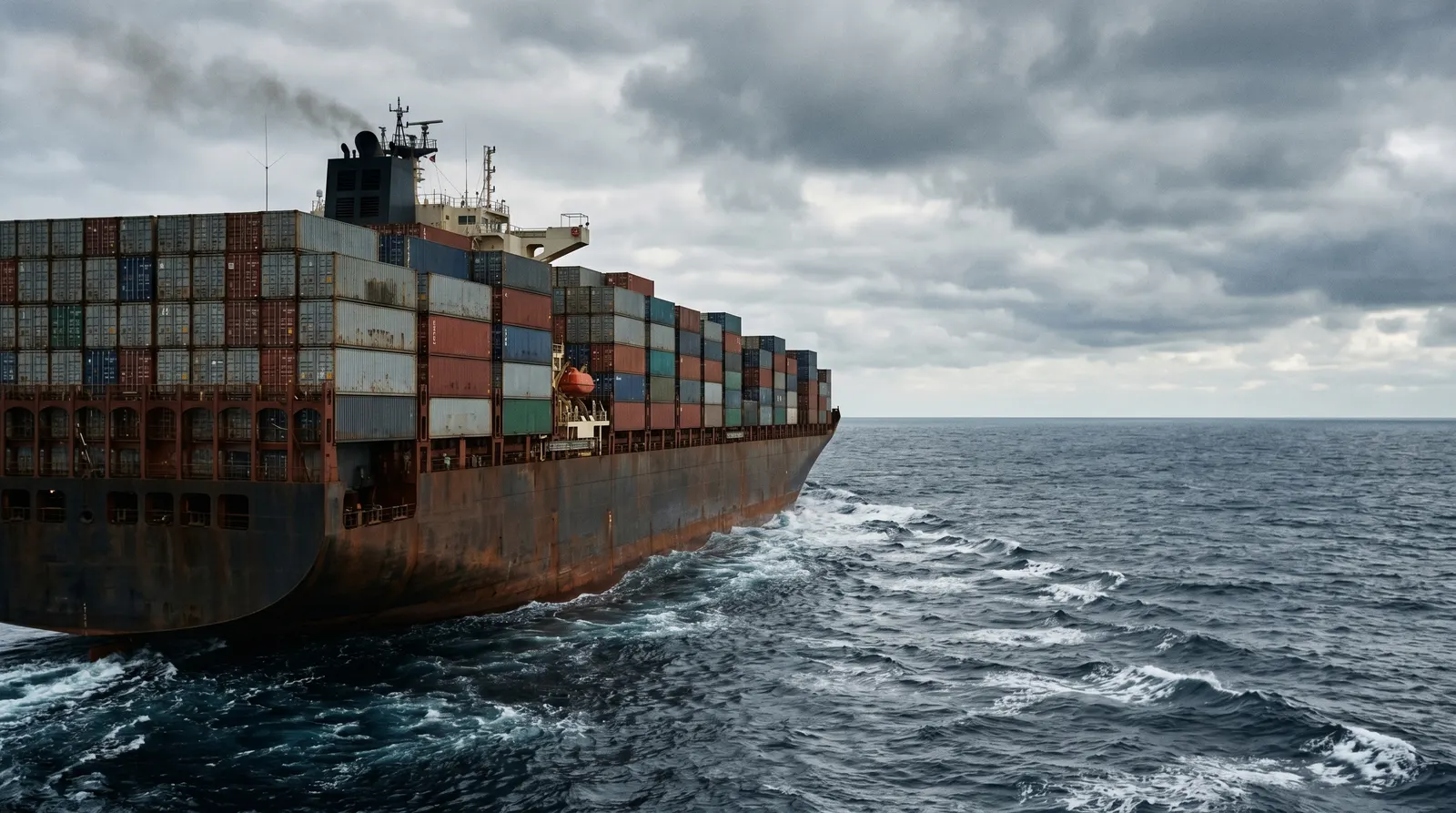
Most major carriers operate vessels at 60–80% of design speed to reduce fuel consumption — a practice called slow steaming or eco-steaming. This is structural, not situational, and adds 1–4 days to long-haul transits compared to what the same vessel could achieve at full speed. It is already baked into published schedules, so it will not surprise you if you take the schedule at face value.
What does create surprises is schedule reliability: the percentage of voyages where a vessel arrives within one day of its scheduled arrival. Industry-wide, reliability has historically ranged from around 50% to 80%, meaning a meaningful share of sailings arrive late. Checking carrier schedule reliability on your specific trade lane — your forwarder can pull this — gives a more honest picture than the headline transit time alone.
On the Trans-Pacific, vessels that could steam at 22 knots routinely operate at 14–16 knots. The fuel saving is substantial; the schedule impact is already accounted for in the published number.
Putting it together: a realistic door-to-door timeline
For an FCL shipment from a Chinese factory to a European distribution centre, a realistic door-to-door breakdown looks roughly like this:
| Segment | Typical range |
|---|---|
| Factory collection to CY gate-in | 3–7 days |
| CY gate-in to vessel departure | 2–4 days |
| Ocean transit (direct mainline) | 28–33 days |
| Vessel arrival to customs release | 2–7 days |
| Customs release to DC delivery | 1–3 days |
| Total | 36–54 days |
The midpoint of around 42–46 days is a reasonable default planning figure for Europe-bound FCL from China. The variance is real: a well-prepared shipment with pre-lodged customs documentation can hit the low end; a transshipment routing plus mild port congestion plus a customs examination can push well past the high end.
Customs brokerage arranged in advance — with all documents prepared and lodged before the vessel arrives — is the most controllable variable in the destination segment. Late or incomplete documentation is the most common cause of clearance delays on otherwise well-managed shipments.