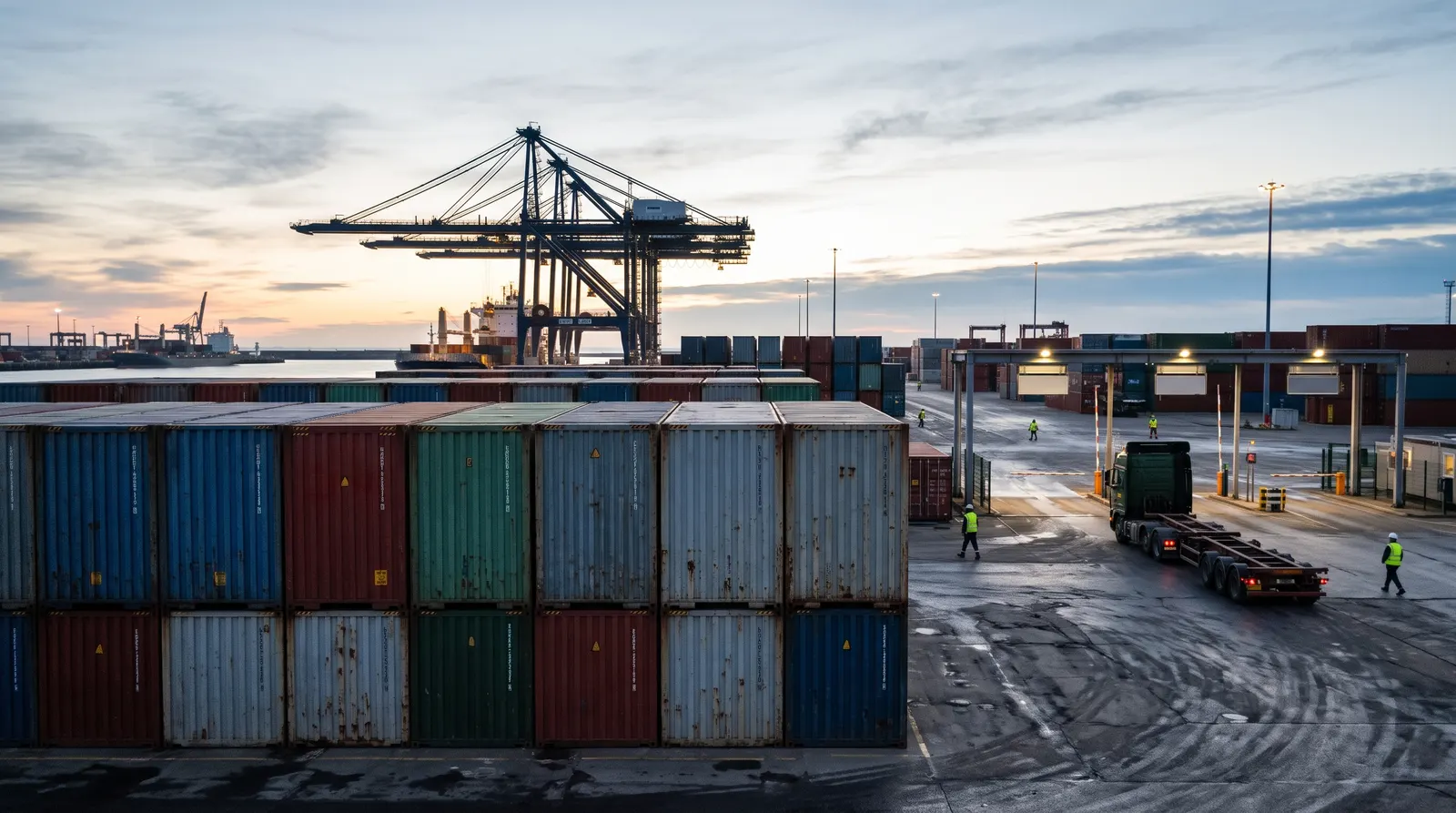
The vessel has berthed, the container is discharged, and you still cannot collect it. The usual reason is a missing delivery order. It is a small document, but without it the terminal will not release your cargo. Every day it is late adds to the cost of waiting.
This guide explains what a delivery order is, who issues it, the conditions that must be met first, and how to keep it from becoming the reason your container sits in the port.
What is a delivery order in shipping?
A delivery order (D/O) is a written instruction from the carrier or its local agent to the terminal or warehouse, authorising release of a specific shipment to a named consignee or their trucker. It is the document that turns "your cargo has arrived" into "your cargo can leave."
It sits at the very end of an import shipment's paperwork chain. The bill of lading proves who is entitled to the goods. The delivery order is the practical permission that lets the terminal act on that entitlement.
A typical delivery order identifies:
- The shipment: bill of lading number, vessel and voyage, container number(s) and seal numbers
- The consignee entitled to take delivery
- The cargo description, package count and weight as shown on the bill of lading
- The terminal or depot where the cargo is held
- Any validity period or conditions attached to the release
You may also hear it called a delivery release, cargo release, or D/O. The name varies by country and carrier, but the function is the same.
Who issues the delivery order?
The carrier, or the carrier's agent at the destination port, issues the delivery order. For ocean freight that is usually the shipping line's local office or a nominated agent. For consolidated LCL cargo, the consolidator or its destination agent issues it, because they hold the master bill of lading.
Your forwarder does not create the delivery order. A forwarder requests it, supplies what the carrier needs, pays charges on your behalf if agreed, and passes the release to your trucker or the terminal. That is the point where a good operator saves you time. A poor one leaves you refreshing an email inbox.
When is a delivery order released?
A delivery order is released only after the carrier is satisfied on four points: the cargo has arrived, the consignee has proved entitlement, local charges are settled, and customs and other holds are clear. The order of events varies by carrier and port, but these conditions are almost universal.
1. The cargo has arrived and been discharged
Release cannot happen until the vessel has arrived and the container has been discharged at the destination terminal. Some carriers will issue paperwork ahead of arrival, but the terminal will not act on it until the box is on the ground and available.
2. The bill of lading is surrendered or released
The carrier needs to know the right party is collecting. How that is shown depends on the type of bill of lading:
| Release method | How entitlement is shown |
|---|---|
| Original bill of lading | The consignee presents an original bill of lading, endorsed if required, to the carrier or agent |
| Telex or electronic release | The shipper surrenders the originals at origin and the carrier releases cargo to the named consignee without paper |
| Sea waybill | No original is needed; the named consignee is entitled to delivery once identified |
If the shipper has not sent the originals or has not confirmed a release, the carrier will not issue the delivery order. This is one of the most common causes of delay, and it is often tied to payment arrangements between buyer and seller.
3. Local charges are paid
Carriers and their agents typically collect destination-side charges before releasing the order. These can include terminal handling at destination (THC), documentation fees, and, for LCL, the CFS handling charge per CBM. If freight is collect rather than prepaid, ocean freight itself must be settled as well.
Which charges apply depends on the incoterm and the booking terms. If you are unsure who pays what, the Incoterms guide explains where responsibility moves from seller to buyer.
4. Customs and other holds are clear
Carrier release is not the same as customs release. In many ports, the terminal will release cargo only when both are in place: the carrier's delivery order and customs clearance status showing the cargo as released rather than held. If customs has placed a hold or called an exam, the container will not leave even with a valid D/O.
In practice, the customs status moves from not started, to clearing, to released (or held). A delivery order does not replace that. It runs alongside it.
Delivery order vs bill of lading vs customs release
These three documents are easily confused, and the confusion causes real delays. They answer different questions.
| Document | Answers the question | Issued by |
|---|---|---|
| Bill of lading | Who owns the goods, and under what contract were they carried? | Carrier (or consolidator) |
| Delivery order | Is the terminal authorised to hand the cargo over? | Carrier or destination agent |
| Customs release | Is the cargo legally cleared to enter the country? | Customs authority, through the broker |
You need all three to line up. A valid bill of lading with no delivery order leaves the container in the yard. A delivery order with a customs hold does the same. Treat them as parallel tracks that all have to finish before pickup.
The customs brokerage side matters here. Entry filing and document checks run at the same time as the carrier release, and delays on either track hold up the truck.
Why a late delivery order costs money
Once a container is discharged, free time starts running. If the delivery order is not released and the container is not collected within that free time, demurrage begins. Demurrage is the carrier charge for a loaded container sitting inside the terminal beyond its free days, charged per container, per day, and usually tiered so that it rises the longer the box stays. Free time is carrier and port specific, commonly around 3 to 7 calendar days.
Terminal storage can also accrue in parallel, as a separate charge levied by the terminal rather than the carrier.
So a delivery order held up for two days by an unsent original bill of lading is not a paperwork annoyance. It is two days of free time gone before you could have moved the cargo. When it is combined with a trucking slot that has to be rebooked, the cost compounds.
Common reasons a delivery order is delayed
Most delays come from a short list of causes, and nearly all of them are preventable:
- Originals not released. The shipper holds the bills of lading until the buyer pays.
- Consignee details do not match. A name or address on the bill of lading differs from the importer on the customs entry.
- Outstanding charges. Destination fees or collect freight have not been paid, or the invoice has not been sent to the right party.
- Missing import documents. Customs needs commercial documents before the broker can file, and the broker is waiting on you.
- Customs hold or exam. The cargo is flagged and the terminal will not release it.
- Office hours and cut-offs. Agents and terminals work to local hours. A release requested late in the day, or ahead of a weekend, may not be processed until the next working day.
How to get your delivery order on time
You cannot control the vessel, but you can control most of what sits between discharge and pickup. A short checklist helps:
- Agree the release method before sailing. Confirm whether the shipment moves on original bills, telex release or sea waybill, and make sure the shipper knows the date by which release is needed.
- Check consignee details early. The name and address on the bill of lading should match your importer records and the customs entry exactly.
- Clarify who pays what. Confirm which destination charges are yours and ask for them to be invoiced before the vessel arrives, not after.
- Send customs documents ahead of arrival. Give the broker the commercial invoice, packing list and any required permits while the vessel is still at sea.
- Book the pickup only after release is confirmed. Trucking and drayage slots missed because the D/O was not ready are costly to rebook.
- Know your free time. Check the free days on the booking so you can see how much margin you have once the cargo is discharged.
The how shipping works guide shows where this step fits for different move types, and the Route Calculator gives an indicative transit time so you can plan when to start chasing documents. Do not wait for the arrival notice to start.
How Holo Cargo helps
On an ocean import, our operators check the release method and consignee details before the vessel arrives, and coordinate with the carrier's agent and customs-brokerage partners so the delivery order and customs status are tracked together. You get a milestone update when the order is released, rather than finding out when the truck turns up at the gate. For the cargo side of the move, see our ocean FCL service.