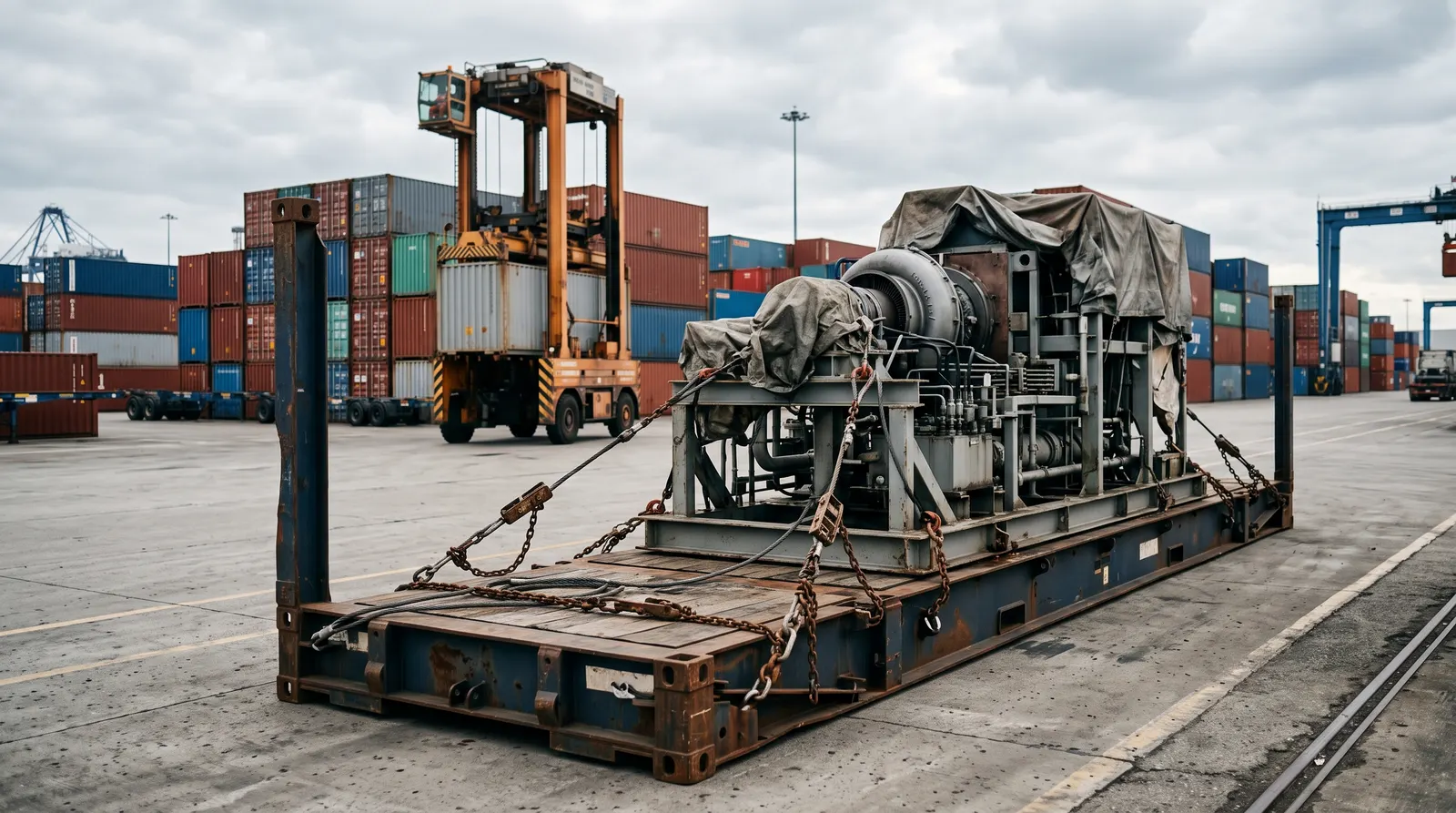
A 40HC and a 45HC are both High Cube boxes — same 9'6" height, same extra headroom over a standard container. So when shippers ask "should I book a 45HC instead," they're often expecting the same call as sizing up from a 40GP to a 40HC: more space for barely any downside. It isn't. Stepping up from a 40HC to a 45HC actually costs you payload capacity, and the bigger box isn't available or practical on every lane the way a 40HC is.
This guide breaks down the exact specs, the volume-for-payload trade you're making, and the routing factors that decide whether a 45HC is even the right question to ask.
40HC vs 45HC specs at a glance
A 40HC holds up to 28,600 kg and 76.4 CBM. A 45HC holds up to 27,600 kg and 86.0 CBM — about 13% more volume, but 1,000 kg less payload. That's the opposite trade-off from moving between most dry container sizes, where a bigger box usually keeps payload roughly flat while volume jumps. Here, the extra 5 feet of length buys cubic space at a direct cost to weight capacity.
| 40HC (40ft High Cube) | 28,600 kg max payload / 76.4 CBM max volume |
|---|---|
| 45HC (45ft High Cube) | 27,600 kg max payload / 86.0 CBM max volume |
For reference, a standard 40GP carries 28,750 kg against 67.7 CBM — close to the 40HC's payload but with less cubic space. The 45HC sits at the far end of that curve: the most volume of any standard dry box, and the lowest payload ceiling of the three. If your cargo is anywhere close to 27,600 kg, a 45HC narrows your weight margin before you've loaded a single pallet.
The volume-for-payload trade-off, explained
Every extra CBM on a 45HC comes from length, not height or width, and that length adds tare weight the carrier has to account for — which is why the 45HC's payload ceiling sits below the 40HC's rather than matching it. For dense or moderately heavy cargo, that 1,000 kg difference can matter more than the extra volume ever will.
Run the density check before you book:
- Above roughly 320 kg/CBM, a 45HC often can't use its full cubic space before hitting its payload limit — a 40HC frequently fills to a similar practical point with 1,000 kg more headroom.
- Below roughly 250 kg/CBM (light, bulky freight — furniture, insulation, empty packaging, low-density textiles), the 45HC's extra ~9.6 CBM over a 40HC is real, usable space, and the payload gap rarely comes into play.
- In between, the two boxes perform similarly in practice, and the choice comes down to whether the lane and inland leg can actually move a 45HC — covered next.
The free cargo calculator turns your carton or pallet dimensions and weights into total CBM and gross weight in one step, so you can check which limit applies to your shipment before requesting a rate for either size.
Why 45HC availability and routing differ from 40HC
A 45HC isn't just a longer box — many inland networks, chassis pools, and even some vessel bays aren't set up to move one, which limits where it's practical regardless of the cargo inside it. A 40HC runs on standard chassis and clears most road and rail networks without special handling. A 45HC's extra length often requires a specific slider or extendable chassis for the inland leg, and not every trucking provider or depot stocks one on every lane.
That has knock-on effects worth checking before booking:
- Equipment positioning: 45HC availability skews toward specific trades and can mean a longer wait for empty equipment at origin compared to the more universally stocked 40HC.
- Inland moves: door moves on a 45HC depend on the trucking provider having compatible chassis and the destination road network permitting the extra length — confirm this for both the pickup and delivery address, not just the port pair, through your road freight or multimodal provider.
- Empty return: fewer depots accept 45HC empties than 40HC empties in most regions, which can affect detention exposure if the empty return leg takes longer to arrange.
None of this makes a 45HC a bad choice — it just means the size decision has to include "can this actually move door-to-door on my lane," not just "does the cargo fit."
When a 40HC is the right call
Choose a 40HC when your cargo has any real weight to it, when you need equipment that's readily available and easy to reposition, or when the inland leg runs through a network without confirmed 45HC chassis support. Typical cases:
- General cargo in the moderate-to-dense range — palletised goods, packaged consumer products, mixed cartons — where 1,000 kg of extra payload headroom is worth more than a few extra CBM.
- Shipments where transit reliability matters more than squeezing out maximum volume, since 40HC equipment is more consistently available across carriers and inland providers.
- Any door move where the trucking leg hasn't already confirmed it can handle a longer box.
When a 45HC is the right call
Choose a 45HC when your cargo is genuinely light and bulky — closer to 250 kg/CBM or below — and the full move, including both inland legs, has confirmed chassis and depot support for the extra length. Furniture, appliances shipped disassembled, insulation, low-density textiles, and similarly voluminous, light freight are the classic fits: cargo that runs out of cubic space in a 40HC while payload capacity goes unused.
Because 45HC equipment is less universally available, it's worth confirming with your forwarder — before quoting — that the carrier serves your lane with 45HC equipment and that both ends of a door move can actually receive it. A 45HC that gets stuck waiting on chassis availability at destination erases whatever the extra volume saved.
40HC vs 45HC: side by side
| Factor | 40HC | 45HC |
|---|---|---|
| Max payload | 28,600 kg | 27,600 kg |
| Max volume | 76.4 CBM | 86.0 CBM |
| Height | 9'6" (High Cube) | 9'6" (High Cube) |
| Best for | Moderate-to-dense general cargo, reliable availability | Light, bulky cargo where volume is the binding constraint |
| Chassis / inland fit | Standard chassis, broad road and rail compatibility | Often needs slider/extendable chassis; confirm inland support |
| Equipment availability | Widely stocked across most trades | Concentrated on specific trades; confirm before booking |
The ocean FCL rate for a 45HC is typically higher than a 40HC in absolute terms, and the per-CBM economics only favour the 45HC once your cargo is light enough to use the extra space without tripping the lower payload cap. On many lanes the two boxes are priced close enough that availability and inland routing — not rate — end up deciding the call.
How to decide for your shipment
- Get your total weight and CBM. Run actual carton or pallet counts through the free cargo calculator rather than estimating.
- Check your density. Above roughly 320 kg/CBM, lean 40HC; below roughly 250 kg/CBM, a 45HC's extra volume is likely to matter.
- Confirm 45HC availability on your specific lane before assuming it's an option — it isn't stocked as universally as a 40HC.
- Check both inland legs, not just the ocean leg, for chassis and road-length compatibility if it's a door move.
- Compare quoted rates for both sizes rather than assuming the bigger box costs proportionally more, or less, than it does.
Choosing between a 40HC and a 45HC comes down to a trade most shippers don't expect — more volume for less payload — plus a routing check that a 40HC rarely requires. Holo Cargo's operators confirm both the cargo fit and the equipment availability on your actual lane before the quote is finalised, so the box on the booking is one that can actually move door-to-door. See how shipping works for how equipment selection fits into the full move.