If you've ever gotten a bill of lading from a company that clearly doesn't own any ships, you've already met an NVOCC — whether or not anyone called it that. Freight forwarder and NVOCC (Non-Vessel Operating Common Carrier) get used almost interchangeably in day-to-day ocean freight conversation, and for a lot of shippers the distinction never comes up because the same company is doing both jobs. But the two are different legal roles with different liability, and knowing which one you're actually booking with changes what document you get and who's on the hook if something goes wrong.
What's the difference between an NVOCC and a freight forwarder?
An NVOCC is a licensed ocean carrier that doesn't operate its own vessels — it buys space from vessel-operating carriers, issues its own house bill of lading, and takes on carrier liability for the cargo. A freight forwarder arranges transportation as the shipper's agent, coordinating carriers and documentation without stepping into the carrier role itself. The NVOCC is, legally, a carrier. The forwarder is an intermediary that books capacity on someone else's behalf.
That difference sounds abstract until a shipment gets damaged or delayed. The party whose name is on your bill of lading as the carrier is the one carrying contractual liability for that move — and whether that's an NVOCC, a vessel-operating carrier, or nobody (because your forwarder issued only a house document referencing someone else's bill) depends on which of these two roles you actually booked with.
What does an NVOCC do?
An NVOCC buys container or LCL space wholesale from vessel-operating carriers, consolidates cargo from multiple shippers under its own master bill of lading, and issues each shipper a house bill of lading naming the NVOCC as carrier. It never owns or operates a vessel — "non-vessel-operating" is in the name — but under most countries' maritime regulation it's treated as a common carrier all the same.
That carrier status is the core of the role. An NVOCC files tariffs, holds a carrier license or bond (in the US, this means registration with the Federal Maritime Commission and a bond on file), and assumes the same kind of liability for loss or damage that a vessel-operating carrier does, subject to the terms on its bill of lading. NVOCCs are especially common in LCL and consolidation: buying full-container space at volume and reselling it by the CBM to individual shippers is a large part of how LCL consolidation pricing works in the market. An NVOCC's own buying power with vessel-operating carriers is part of what makes that model work.
What does a freight forwarder do?
A freight forwarder coordinates the movement of cargo on a shipper's behalf — booking space with carriers or NVOCCs, arranging trucking and handoffs, and managing the paperwork from origin to destination — without itself acting as the carrier under a bill of lading. A forwarder is an agent working for the shipper's interest, not a party assuming carrier liability for the goods it books.
In practice, a forwarder's job is coordination and documentation: booking ocean FCL or LCL space depending on the mode, arranging drayage at each end, and keeping a multi-leg move synchronized so cargo doesn't sit waiting at a transfer point. Whether the underlying ocean leg is booked with a vessel-operating carrier directly or through an NVOCC's consolidated space is a choice the forwarder makes on the shipper's behalf — the shipper often never sees that distinction unless they ask.
NVOCC vs freight forwarder: the core differences
| Legal role | NVOCC: common carrier (doesn't operate vessels). Forwarder: agent/intermediary for the shipper. |
|---|---|
| Bill of lading | NVOCC: issues its own house bill of lading as carrier. Forwarder: typically arranges the bill, doesn't issue one as carrier. |
| Liability for cargo | NVOCC: carries contractual carrier liability under its bill of lading. Forwarder: liability as an agent, generally narrower. |
| How space is sourced | NVOCC: buys container/LCL space wholesale from vessel-operating carriers. Forwarder: books with carriers or NVOCCs as needed. |
| Licensing | NVOCC: registered/bonded as a carrier (e.g. FMC in the US). Forwarder: licensed as an intermediary, separate category. |
| Common in | NVOCC: LCL consolidation, house bills for multiple shippers. Forwarder: end-to-end coordination across modes and legs. |
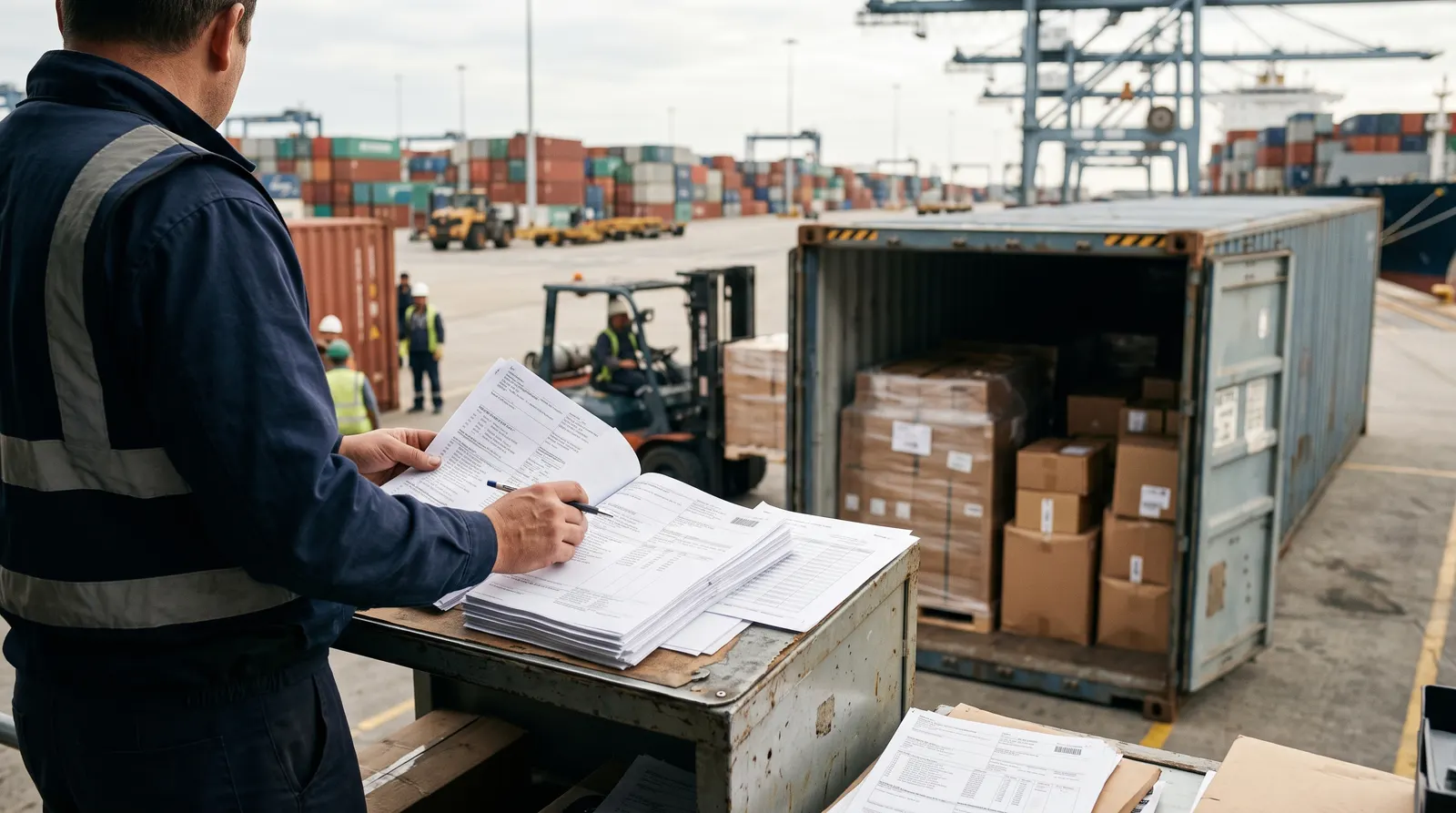
The bill of lading row is the practical tell. If the document naming your cargo shows a company as "carrier" that you know doesn't operate ships, that company is acting as an NVOCC on that shipment — regardless of what else it calls itself.
Can a company be both an NVOCC and a freight forwarder?
Yes — many logistics companies hold both licenses and move between the two roles shipment by shipment, acting as an NVOCC (issuing a house bill, assuming carrier liability) on some bookings and as a pure forwarding agent on others. This is normal in the industry and is a large part of why the two terms get blurred in everyday use.
A company operating as both isn't a red flag by itself — it's often what lets a single provider offer competitive LCL consolidation pricing (the NVOCC side, buying space wholesale) alongside broader multimodal coordination (the forwarding side) without a shipper needing two separate vendors. What matters isn't whether a provider holds one license or both — it's knowing, for your specific shipment, which role they're playing and what that bill of lading actually commits them to.
Does the difference actually matter to you as a shipper?
It matters most when something goes wrong: the party named as carrier on your bill of lading is the one contractually liable for loss, damage, or delay, so knowing whether you're dealing with an NVOCC or a pure forwarding arrangement tells you who you'd actually be pursuing a claim against. For a shipment that moves without incident, the distinction rarely surfaces day to day.
It's also worth understanding for LCL pricing specifically. Because NVOCCs buy container space wholesale and resell it by volume, LCL rates you're quoted are often shaped by an NVOCC's buying position even when you booked through a forwarder who arranged the consolidation on your behalf. Cargo insurance is a separate consideration either way — a carrier's bill-of-lading liability is typically limited and isn't a substitute for cargo insurance covering the full value of the goods.
Common mistakes when sorting out NVOCC vs freight forwarder
- Assuming "freight forwarder" on a company's name or website means it never acts as a carrier — many hold both an NVOCC license and forwarding registration
- Not checking whose name appears as carrier on the bill of lading, then being surprised about who's actually liable if cargo is damaged
- Treating a house bill of lading from an NVOCC as equivalent to no bill at all — it's a real carriage contract with real terms and liability limits worth reading
- Assuming carrier liability on a bill of lading covers full cargo value — it's typically limited, which is why cargo insurance exists as a separate line
- Picking a provider based only on rate, without asking how LCL space is sourced (own NVOCC buying power vs. booked through a third party)
How Holo Cargo helps
Holo Cargo arranges ocean FCL, LCL, and multimodal transport through vetted carrier and consolidation partners, and is clear with every shipper about which party is carrying which liability on a given move. Quotes itemize freight, handling, and consolidation charges separately, so it's clear what you're paying for and who's responsible for each leg — see how shipping works for the full move breakdown.