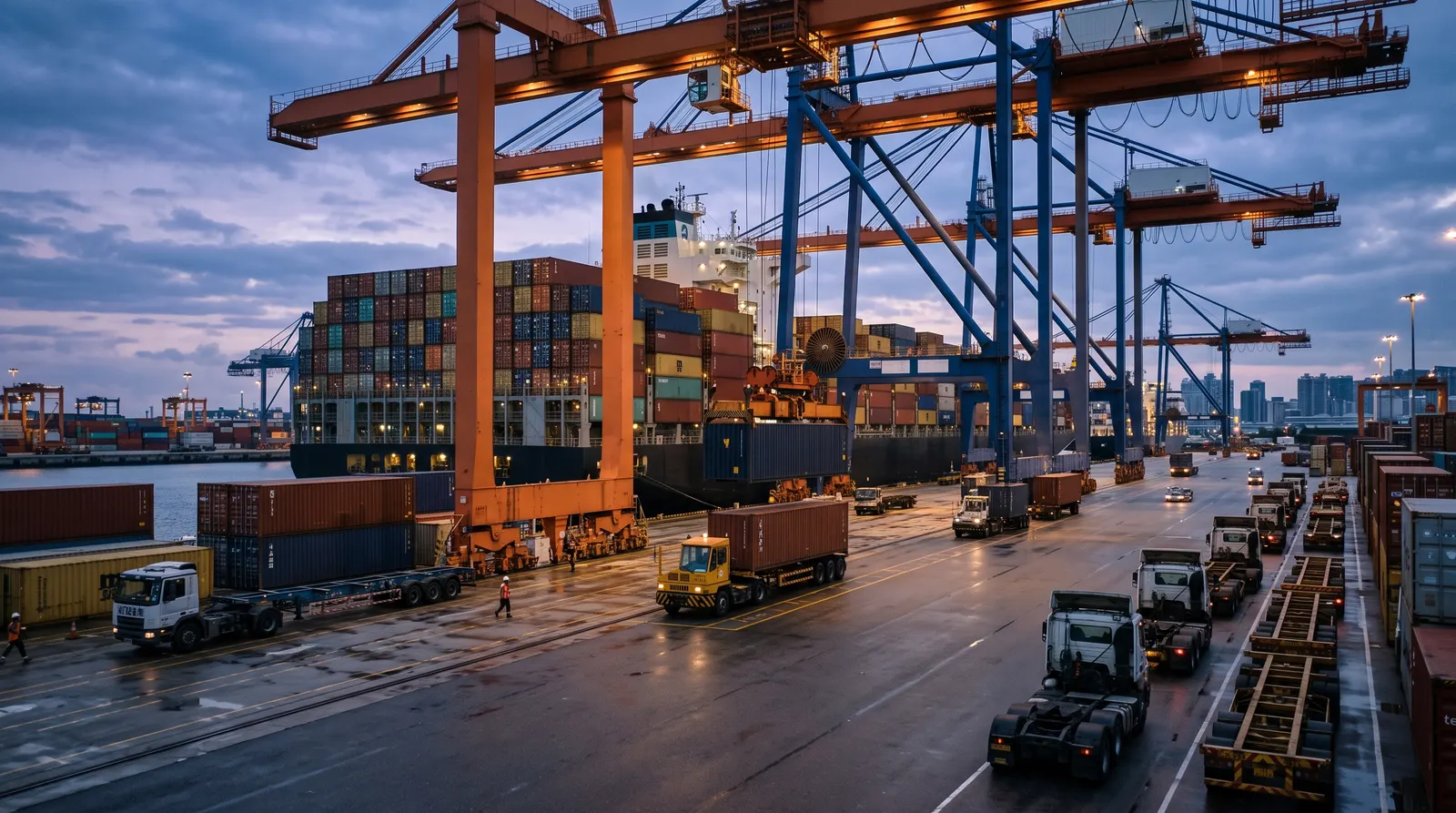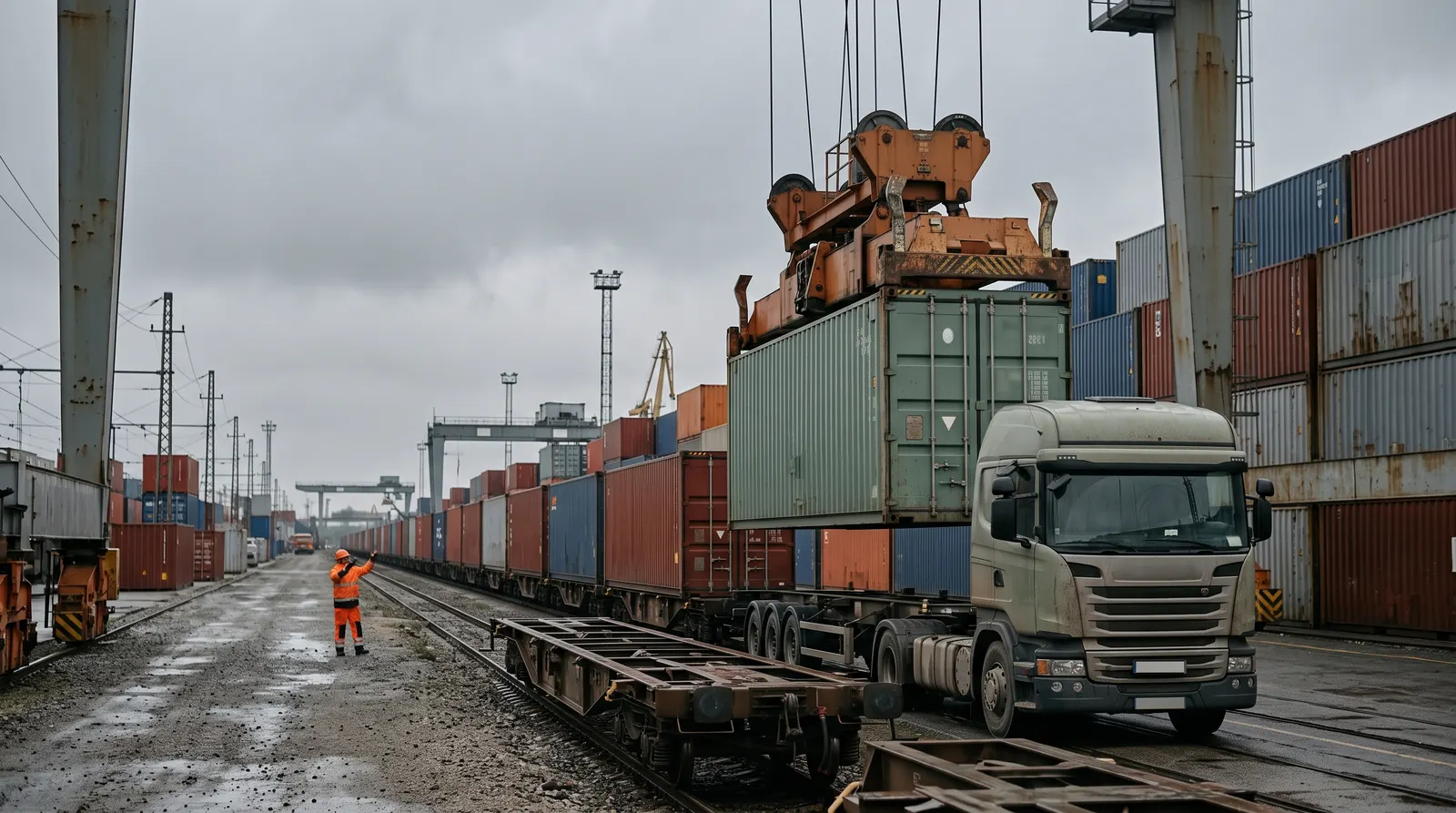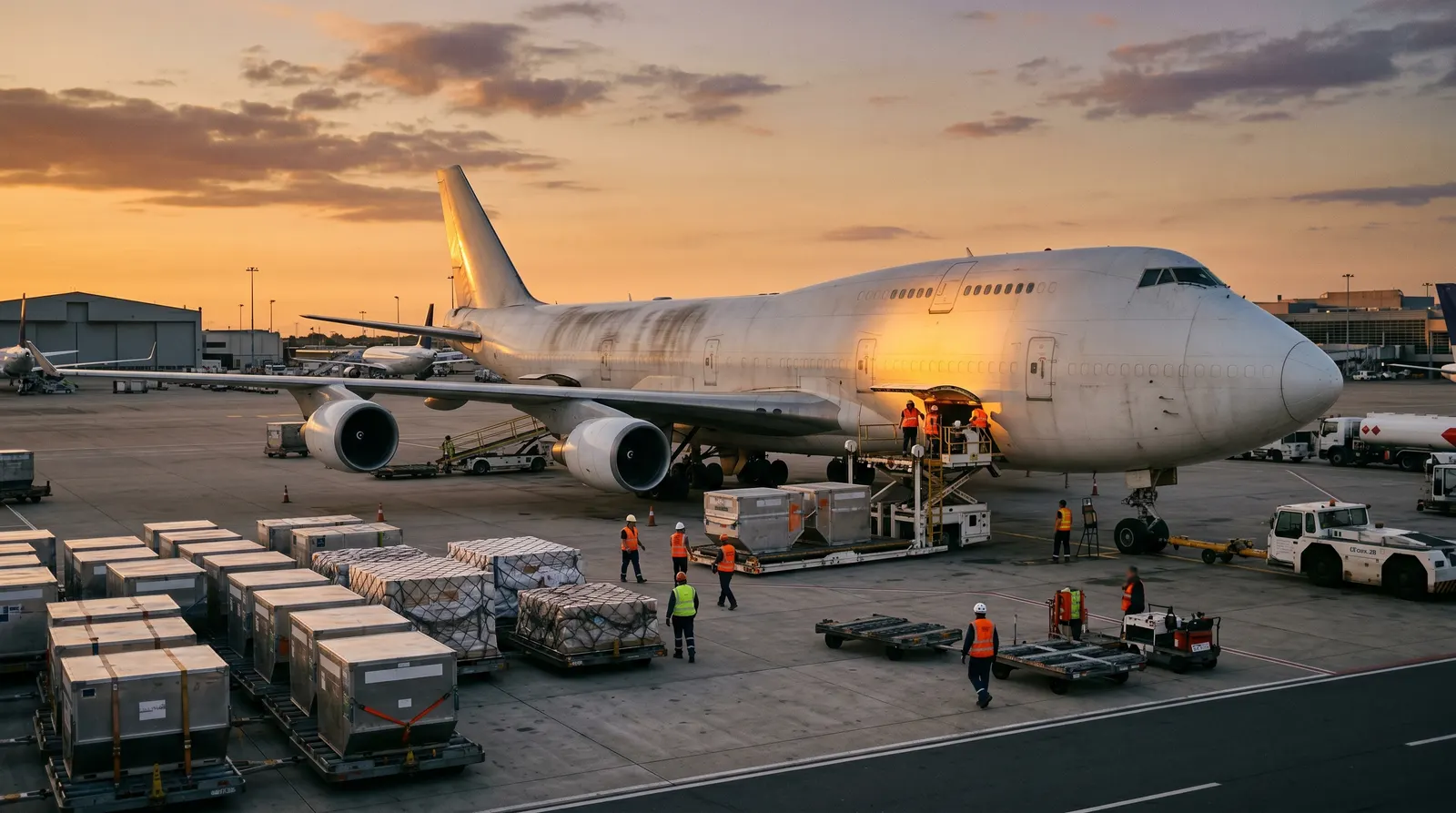
The conventional wisdom is simple: ocean is cheap, air is expensive. The per-kilogram rate for air freight is typically an order of magnitude higher than the equivalent ocean shipment, and that number tends to end the conversation before it starts.
But the sticker price comparison answers the wrong question. The right question is: what is the total cost of each mode, door to door, including everything that does not appear on the freight rate line? When you factor in inventory carrying costs, the working capital tied up in goods crossing an ocean for five weeks, the risk of a missed launch window, and the ancillary fees that accumulate on an ocean shipment, the gap between modes narrows — and for certain cargo profiles, it closes entirely.
This guide gives you the framework to make that call correctly.
The rate gap — and why it only tells half the story
Air freight rates run significantly higher than ocean on a per-kilogram basis. But ocean freight carries a full set of ancillary charges that air does not, and those charges are fixed regardless of urgency.
An ocean freight invoice for a full container load (FCL) shipment includes origin trucking, VGM filing, export terminal handling, the ocean freight rate itself, a bunker adjustment factor (BAF), destination terminal handling, a bill of lading fee, and customs brokerage on arrival. For LCL shipments, origin and destination CFS (container freight station) handling fees stack on top — and they are largely flat per shipment, not per cubic metre.
Air freight bundles differently: an airfreight rate per chargeable kilogram, a fuel surcharge (FSC), a security surcharge (SSC), and an airway bill fee. Origin and destination trucking is often shorter, because cargo airports tend to sit closer to industrial zones than container terminals. Customs clearance on air cargo is typically faster, which reduces the tail risk of a customs hold adding unplanned warehouse costs.
Never compare a clean air rate to a fully loaded ocean rate. Run both apples-to-apples, door to door, before drawing any conclusion.
How transit time translates into real cost
The difference in transit time between air and ocean is not days — it is weeks. On long-haul lanes, that difference represents real carrying cost on your inventory.
Indicative transit times vary by lane and carrier, but the scale of the gap is consistent:
| Route type | Air | Ocean |
|---|---|---|
| Short-haul (under 3,000 km) | ~2 days | ~7 days |
| Medium-haul (3,000–8,000 km) | ~3 days | ~21 days |
| Long-haul (over 8,000 km) | ~5 days | ~35 days |
These are transit-only figures — add customs clearance, port dwell, and inland delivery at each end for a door-to-door comparison.
On a long-haul lane such as China to Europe or Asia to North America, ocean transit typically runs four to five weeks. That is four to five weeks of goods-in-transit: inventory that cannot be sold, working capital that cannot be recycled, and product that is unavailable if demand spikes unexpectedly. For high-value goods, the carrying cost of that float is a real freight expense — it just does not appear on the freight invoice.
Five situations where air freight pays for itself
1. High-value, low-density cargo
For goods that are expensive relative to their weight — electronics, medical devices, aerospace components, luxury goods — the inventory carrying cost of a five-week ocean voyage is meaningful. If your product's value per kilogram is high, the incremental freight cost of air over ocean can be less than the carrying cost difference over those extra weeks. Run the numbers with your actual cost of capital before defaulting to ocean.
2. Time-sensitive and perishable goods
Pharmaceuticals, fresh produce, cut flowers, and live seafood have shelf lives measured in days. For these, ocean freight is not a slower alternative — it is not an option at all. But time-sensitivity extends further than obvious perishables: fast fashion, consumer electronics tied to a product cycle, and seasonal goods all lose value rapidly. A shipment of winter apparel that arrives two weeks after peak retail season generates less revenue per unit than one that arrived on time by air.
3. Emergency restocking
If a stockout is imminent and the next ocean departure cannot arrive before inventory runs dry, air freight is a supply-chain hedge — not a luxury. The cost of lost sales, customer attrition, or a halted production line typically exceeds the air premium by a wide margin. In this scenario, the comparison is not air versus ocean. It is air versus the downside of doing nothing.
4. Launch or deadline shipments
Trade shows, retail planogram changes, product launches, and contractual delivery dates all carry hard deadlines. Missing them does not just cost a freight invoice — it costs an opportunity, a penalty clause, or a client relationship. When the date is non-negotiable, the mode question collapses: the cargo arrives on time, or it does not.
5. Very small or sample shipments
Below a certain volume, LCL consolidation fees make ocean freight expensive on a per-unit basis. For shipments of 1–2 CBM, prototypes, compliance samples, or spare parts, air freight or air courier rates can be comparable to — or cheaper than — LCL once CFS handling and documentation fees are counted in full. Always request an LCL total-cost quote before assuming it is the low-cost option on small volumes.
When ocean freight wins — every time
For heavy, non-urgent, containerload cargo, ocean freight is decisive. No framework changes that.
- Bulk commodities and industrial raw materials. Steel, chemical feedstocks, machinery parts, and furniture are priced for ocean lanes. Weight alone makes air freight unworkable at scale.
- Non-time-sensitive retail goods. A fourteen-week forward plan with a reliable ocean FCL booking reduces per-unit freight cost dramatically and funds your cash-flow cycle without any air premium.
- High-volume reefer cargo. Temperature-controlled seafood, frozen meat, and bulk produce almost always move by reefer container. The economics of ocean reefer versus air cold-chain favour ocean heavily for anything above a few pallets.
- Anything filling a 20GP or larger. Once you are moving more than roughly 15 CBM of general cargo with no urgency constraint, the container rate per unit of volume will almost certainly beat any air option.
If your goods are heavy, durable, and you have lead time to plan, ocean is the right default — and booking it early avoids the peak-season premium spikes that can compress your margin.
The chargeable-weight rule you need to know
Air freight is priced on chargeable weight — the greater of actual weight and volumetric weight. For bulky, low-density cargo, this can make air much more expensive than it first appears.
Volumetric weight is typically calculated as:
Length (cm) × Width (cm) × Height (cm) ÷ 6,000 = volumetric kg
A pallet of lightweight packaging foam, for example, might weigh 80 kg on a scale but measure out to 300 volumetric kg. The freight invoice will be based on 300 kg.
This is why high-density cargo — metal components, electronics, liquids — performs far better in air freight than low-density cargo. Before concluding that air is viable for bulky-but-light goods, calculate the chargeable weight first. It changes the economics substantially, and comparing ocean CBM rates to an air actual-weight rate without this step will produce a misleading result.
Running an honest total-cost comparison
A mode decision should be based on total landed cost for both options, not on rate-line comparisons. The components:
- Origin charges — trucking to port or airport, export documentation, terminal or cargo handling
- Main-leg rate — ocean freight including BAF and any applicable surcharges, or air freight rate including FSC and SSC
- Destination charges — terminal handling, customs brokerage fees, delivery
- Carrying cost delta — days in transit multiplied by your daily cost of capital on the goods value; on a high-value shipment, this number is not negligible
- Deadline risk premium — if a delay on the ocean leg would trigger lost sales, a penalty, or a line stoppage, assign a realistic probability and cost to that outcome
Use the free cargo calculator to compute the two figures each mode bills on — chargeable weight for air freight, CBM for ocean LCL or FCL — from your carton or pallet dimensions. Then request a quote for both modes on your lane, which gives you a real comparison to work from rather than a rule of thumb.
Quick decision guide
| Cargo profile | Likely right mode |
|---|---|
| Heavy, non-urgent, containerload | Ocean (FCL or LCL) |
| High-value, low-density, any volume | Run both; air often competitive |
| Perishable or hard deadline | Air — often the only viable option |
| Emergency restock, stockout risk | Air — compare against downside cost |
| Under ~2 CBM, samples or parts | Compare air courier vs LCL total cost |
| Filling a 20GP or larger, no urgency | Ocean — decisively |
Many shippers split production runs: ocean for the bulk of the order, air for the first quantity needed to launch or maintain sales while the container is en route. The modes are not mutually exclusive — they serve different parts of the supply chain simultaneously.