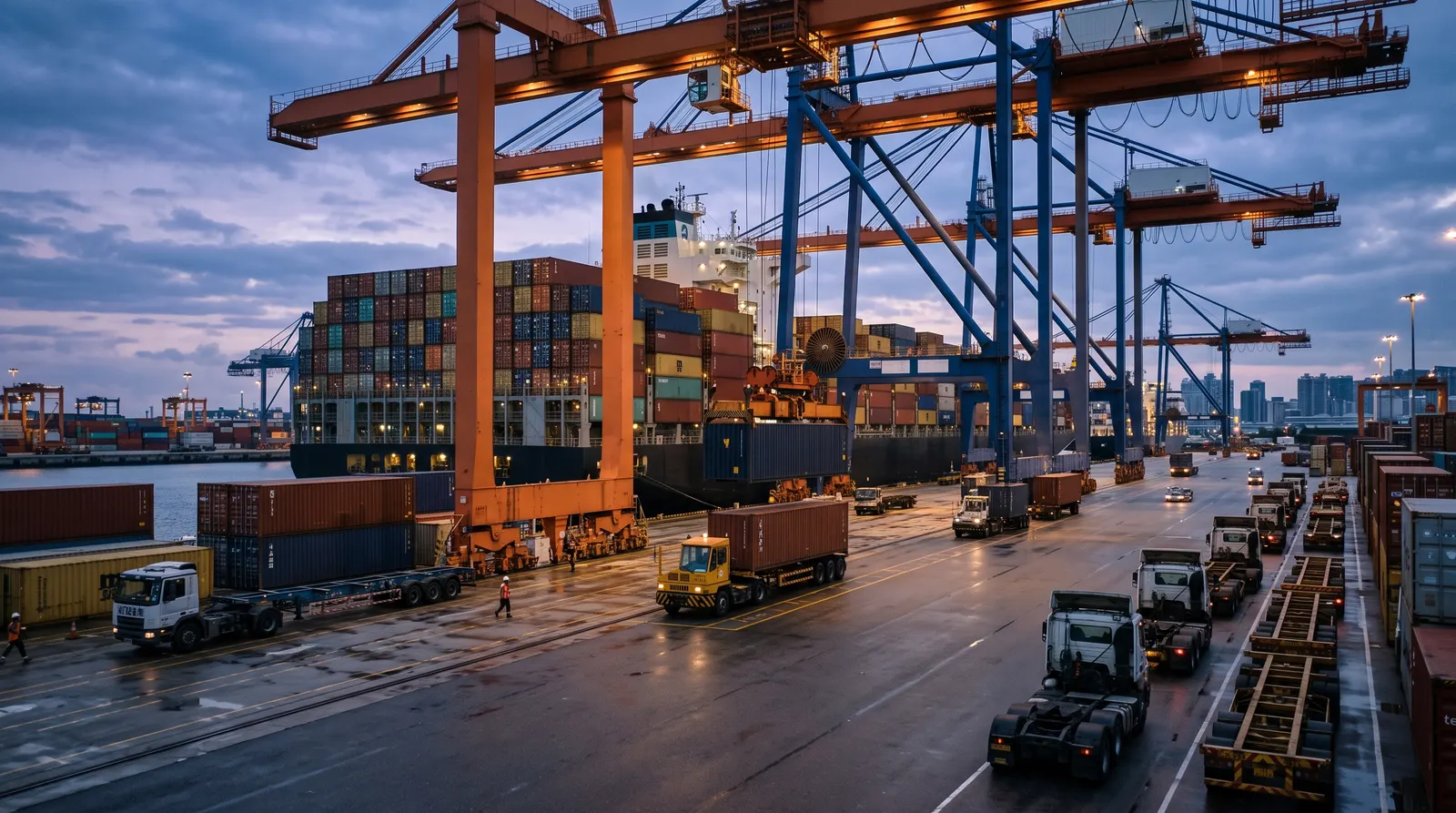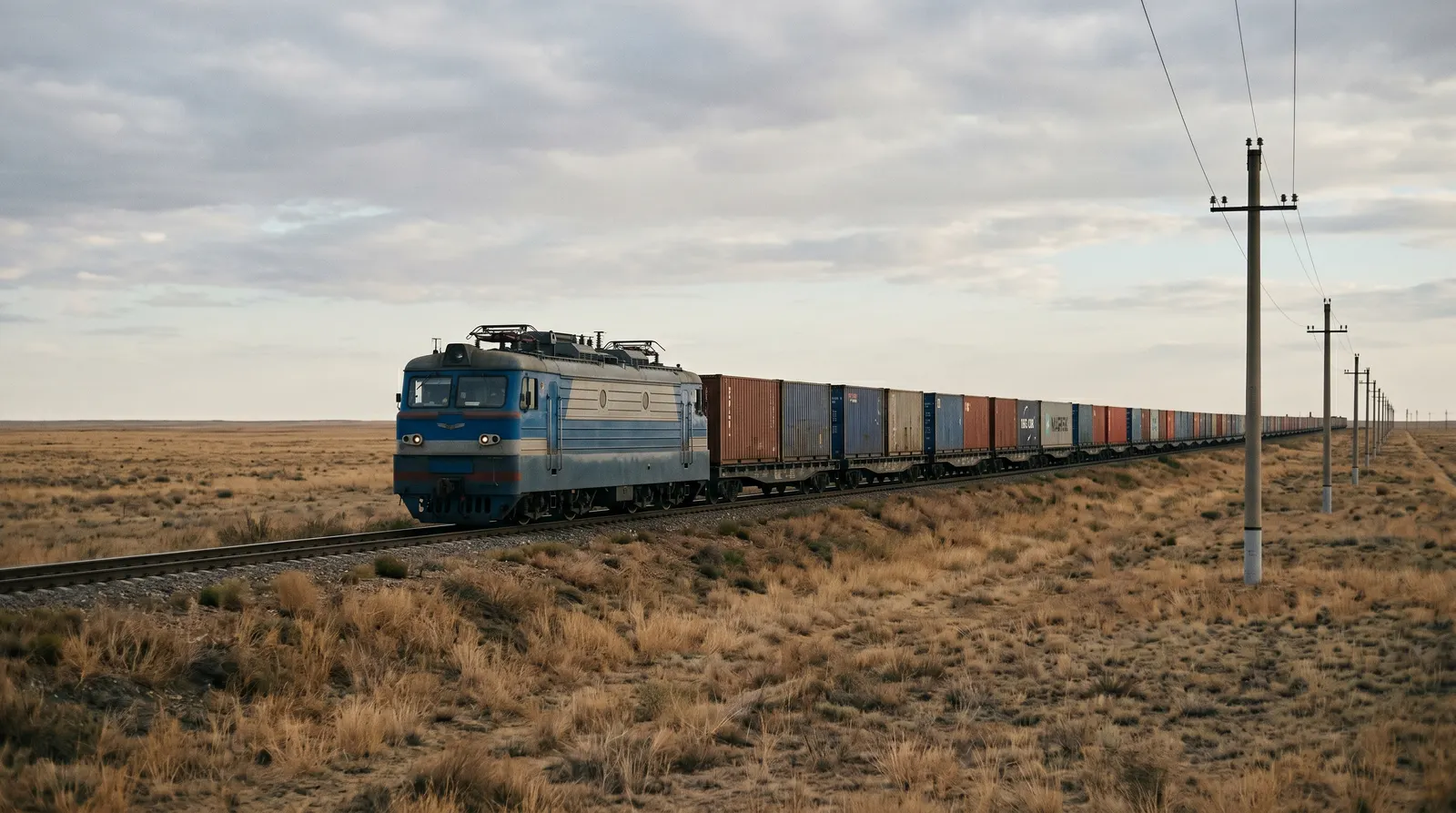
For years, China–Europe freight was a binary choice: wait five weeks for an ocean container or pay an order-of-magnitude premium to fly it. Rail changed that. The China Railway Express (CR Express) — sometimes called the New Silk Road — has grown from a novelty into a genuine middle lane, connecting Chinese manufacturing hubs to European destinations in roughly 12 to 20 days at rates that sit well below air.
That middle position is the whole pitch. But "somewhere between ocean and air" is not a decision framework. This guide gives you one.
How the China–Europe rail network works
The CR Express is a network of block-train services linking Chinese cities to Europe via Central Asia. Multiple corridors exist, and route choice affects transit time, cost, and geopolitical exposure.
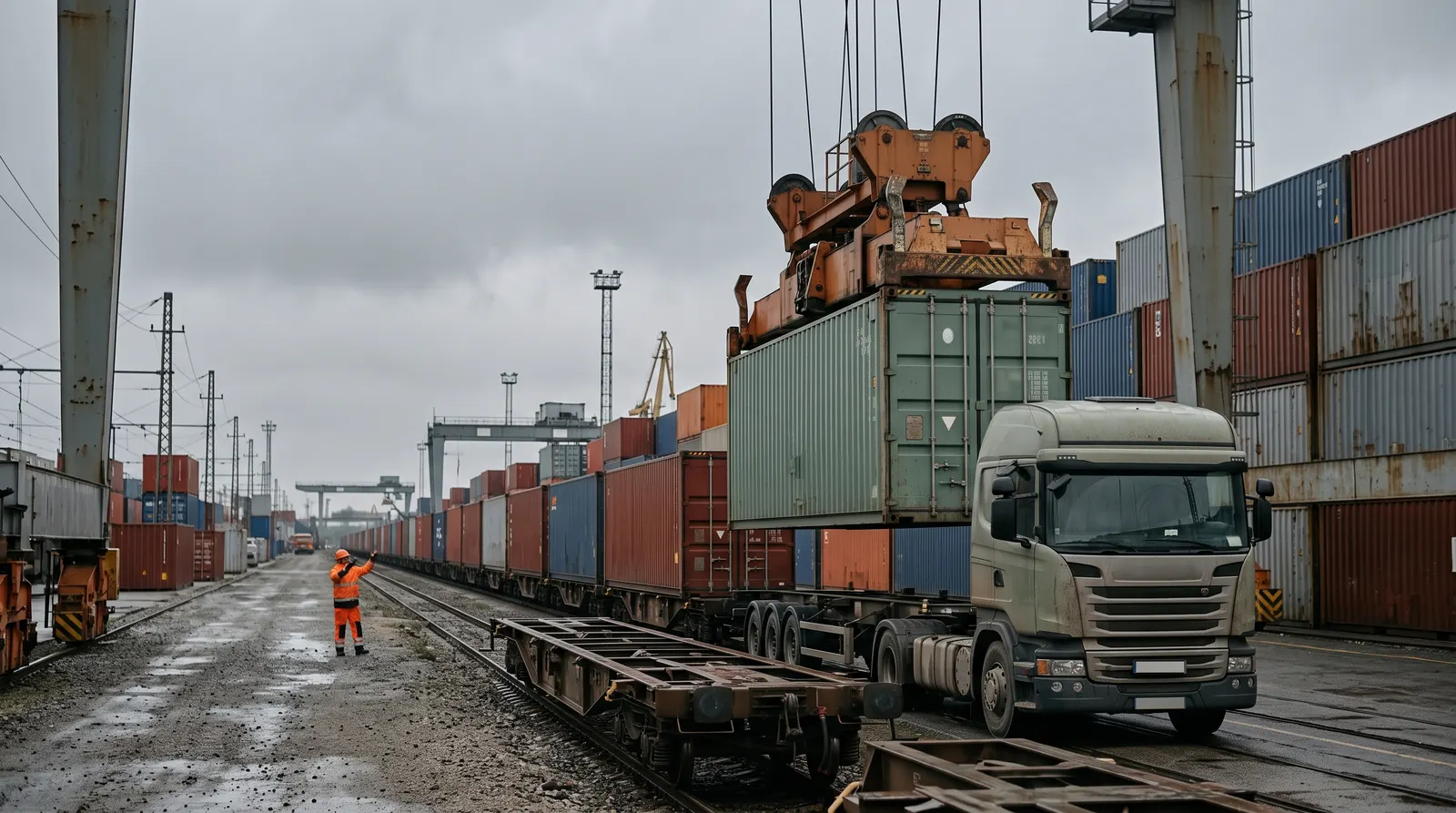
The dominant historical corridor runs north through Russia and Belarus into Poland — the so-called Northern Corridor. It uses the broad-gauge Russian rail network, which means containers must be transferred to standard-gauge bogies or transloaded at the Polish–Belarusian border (Brest/Małaszewicze). That handover adds time and is a common source of delay.
Post-2022, sanctions exposure on the Northern Corridor pushed significant volumes to the Middle Corridor (Trans-Caspian International Transport Route), which routes through Kazakhstan, across the Caspian Sea by ferry, into Azerbaijan and Georgia, then onward through Turkey or the Balkans to Central and Western Europe. The Middle Corridor avoids Russia and Belarus entirely but involves sea crossings and more border handovers — which typically adds transit days compared to a fast northern service.
Key Chinese departure cities include Chengdu, Chongqing, Xi'an, Yiwu, Zhengzhou, and Wuhan. Major European terminals include Hamburg, Duisburg, Warsaw, Rotterdam, and Madrid. The Shenzhen to Hamburg lane illustrates the full corridor well — southern Chinese manufacturing to a primary European port.
Transit time: rail vs ocean
Rail is materially faster than ocean on the China–Europe corridor. Expect roughly 12–20 days for rail versus 25–35 days for ocean, though both ranges reflect real variability in service level, route, and season.
| Mode | Indicative transit (China to Europe) | Key variable |
|---|---|---|
| Ocean (via Suez) | 25–35 days | Port pair, carrier, Suez vs Cape routing |
| Rail — Northern Corridor | 12–16 days | Service class, border clearance at Brest |
| Rail — Middle Corridor | 16–22 days | Caspian ferry availability, multiple borders |
| Air freight | 3–6 days | Gateway pair, belly vs freighter capacity |
A few notes on these figures. Suez Canal disruptions have pushed some ocean services around the Cape of Good Hope, adding 10–14 days. Rail transits are quoted by operators in business days but real-world performance varies — allow buffer at the European end for customs and terminal dwell.
The transit advantage of rail is most meaningful when your supply chain has a planning horizon of two to three weeks rather than five to seven. A smaller transit window translates directly into a later production cut-off date on the China side.
The cost picture
Rail costs more than ocean freight, less than air. The premium over ocean FCL varies by route and market conditions, but it is real — and the question is whether the transit-time saving is worth it for your cargo.
Specific rates change with market conditions, so we will not quote figures here. What does not change is the structure:
- Ocean FCL remains the lowest-cost option for containerload cargo with no urgency requirement.
- Rail typically commands a meaningful premium over ocean for an equivalent container — reflecting the faster transit and lower capacity compared to vessel services.
- Air freight sits significantly above rail on a per-kilogram basis, often by a factor of several times.
- Ocean LCL is generally the low-cost option for sub-container loads, but rail LCL consolidation services exist and can be competitive when ocean capacity is tight or expensive.
The cost premium for rail makes the most sense when the carrying cost of the extra ocean weeks is itself significant. High-value goods — electronics, automotive components, branded consumer goods — have carrying costs that are real even if they do not appear on a freight invoice. A container worth €500,000 in goods sitting at sea for an extra two weeks has a measurable cost of capital attached. Rail can recover that premium in ways that are invisible at the rate-comparison stage.
Request a quote for both rail and ocean on your specific lane and container size before drawing conclusions — the premium only makes sense against real numbers for your cargo.
When rail makes sense
Rail is most competitive for electronics, automotive parts, and consumer goods moving from China to Central or Eastern Europe — where the transit advantage over ocean is largest and cargo value supports a cost premium.
Cargo types well-suited to rail:
- Electronics and components. High value-to-weight, no dangerous-goods issues, and buyers often have tighter delivery windows than ocean can accommodate without very early cut-offs.
- Automotive parts. Just-in-time supply chains for European manufacturing plants frequently need faster replenishment than ocean allows, but volumes and weights are not suitable for air.
- Consumer goods with seasonal windows. Fashion, sporting goods, and promotional items tied to specific sell-through periods benefit from the rail transit reduction.
- Machinery and industrial equipment. Mid-weight machinery that fits in a standard container and needs to arrive faster than ocean but cannot justify air economics.
Rail also works well for shippers in Central China — Chengdu, Chongqing, Xi'an — who face long inland distances to coastal ports. The rail journey from those origins to Europe can be competitive with the combined inland haul-plus-ocean option on total transit.
Multimodal solutions that pair a rail China-to-Europe leg with road for the last mile extend viable destinations well beyond the main terminal cities.
When ocean is the better call
For high-volume, lower-value, or non-urgent cargo, ocean freight remains the default. Rail cannot match ocean on capacity, dangerous-goods flexibility, or cost at scale.
Ocean is the clear choice when:
- Cargo is heavy and low-value. Furniture, construction materials, bulk consumer goods, and chemical feedstocks have per-unit values that do not justify rail's premium. The carrying cost advantage never materialises.
- You need a full container of dangerous goods. Rail has strict restrictions on DG cargo — many IMO classes accepted by ocean carriers are prohibited or heavily restricted on rail. Ocean is far more flexible on DG.
- Volume is large. Ocean vessels move tens of thousands of TEU per voyage. Rail block trains are typically limited to a few dozen TEU per departure — a fraction of ocean capacity. When you need to move large volumes on a predictable weekly schedule, ocean capacity is more reliable.
- Oversized or project cargo. Out-of-gauge loads, heavy lifts above standard payload limits, and project breakbulk cargo generally do not fit rail's constraints. Ocean handles these through specialist services.
- You are shipping to a UK or Atlantic-facing port. Rail's European terminal network concentrates in Central and Eastern Europe. If your final destination is Rotterdam, Hamburg, or Antwerp, ocean may still be the faster door-to-door option once rail terminal dwell and onward trucking are included.
Customs and border complexity on rail
Rail crosses more customs jurisdictions in a single journey than ocean. Understanding the handovers — and building buffer for them — is essential to reliable planning.
A Northern Corridor shipment from China to Germany crosses Chinese customs on export, Mongolian or Kazakhstani territory, Russian customs (if transiting Russia), then Belarusian and Polish customs at the Brest/Małaszewicze border. The gauge change at that border adds a physical transloading step that is a known choke point.
The Middle Corridor is, if anything, more complex: China export, Kazakhstan, Caspian ferry crossing (Azerbaijan or Turkmenistan port), Azerbaijan or Georgian customs, then onward via Turkey or Balkan routes into the EU.
On EU entry, the normal import process applies — customs entry, EU-side customs broker, potential physical inspection. This is identical to what ocean freight faces, but the overall transit clock starts ticking from a tighter initial window.
Practical implications:
- Documentation must be correct from origin. Errors causing holds at any border are costly in a way they are not on ocean — the delay window is proportionally larger relative to total transit.
- Use a freight forwarder with rail corridor experience. The process differs from ocean customs in ways that matter.
- Build buffer at the European end. Published transit times are terminal-to-terminal; door-to-door adds more.
Making the decision: a quick comparison
| Factor | Rail | Ocean FCL |
|---|---|---|
| Typical transit (China to Europe) | 12–20 days (varies) | 25–35 days |
| Cost vs ocean | Higher premium | Baseline |
| Suitable for DG cargo | Limited | Broad IMO class support |
| Container capacity per service | Lower | Very high |
| Oversized / heavy cargo | Restricted | Specialist options available |
| Customs complexity | Higher (multiple borders) | Lower (two main jurisdictions) |
| Electronics / auto parts / consumer goods | Strong fit | Works, longer lead time |
| Bulk / heavy / low-value cargo | Weak fit | Strong fit |
| Geopolitical routing risk | Northern Corridor exposed; Middle Corridor alternative available | Suez dependency; Cape re-routing possible |
The clearest signal for rail: goods value high enough to benefit from faster transit, cargo compatible with rail restrictions, and a destination in Central or Eastern Europe with good terminal access. When those three conditions are met, rail often produces a better total cost outcome than the rate comparison suggests.
When they are not, ocean FCL or ocean LCL will serve the lane more cost-effectively. For shipments where neither mode meets your deadline, air freight remains the option.
Rates and transit times on the China–Europe corridor shift with geopolitical events, capacity cycles, and seasonal demand. The framework above holds — but the numbers inside it change. Current market rates on both ocean and rail, for your specific cargo and dates, are the only reliable basis for a booking decision.