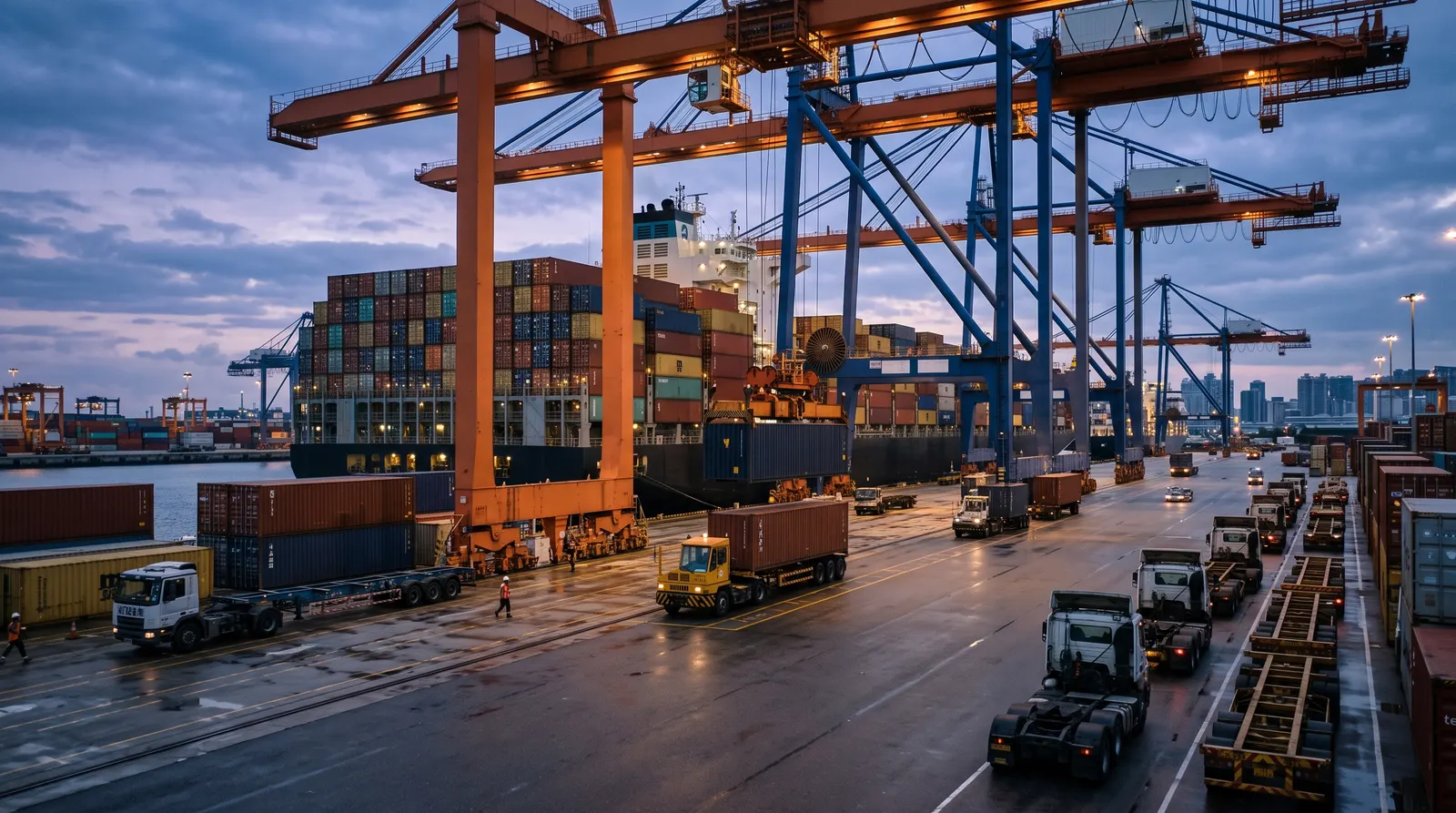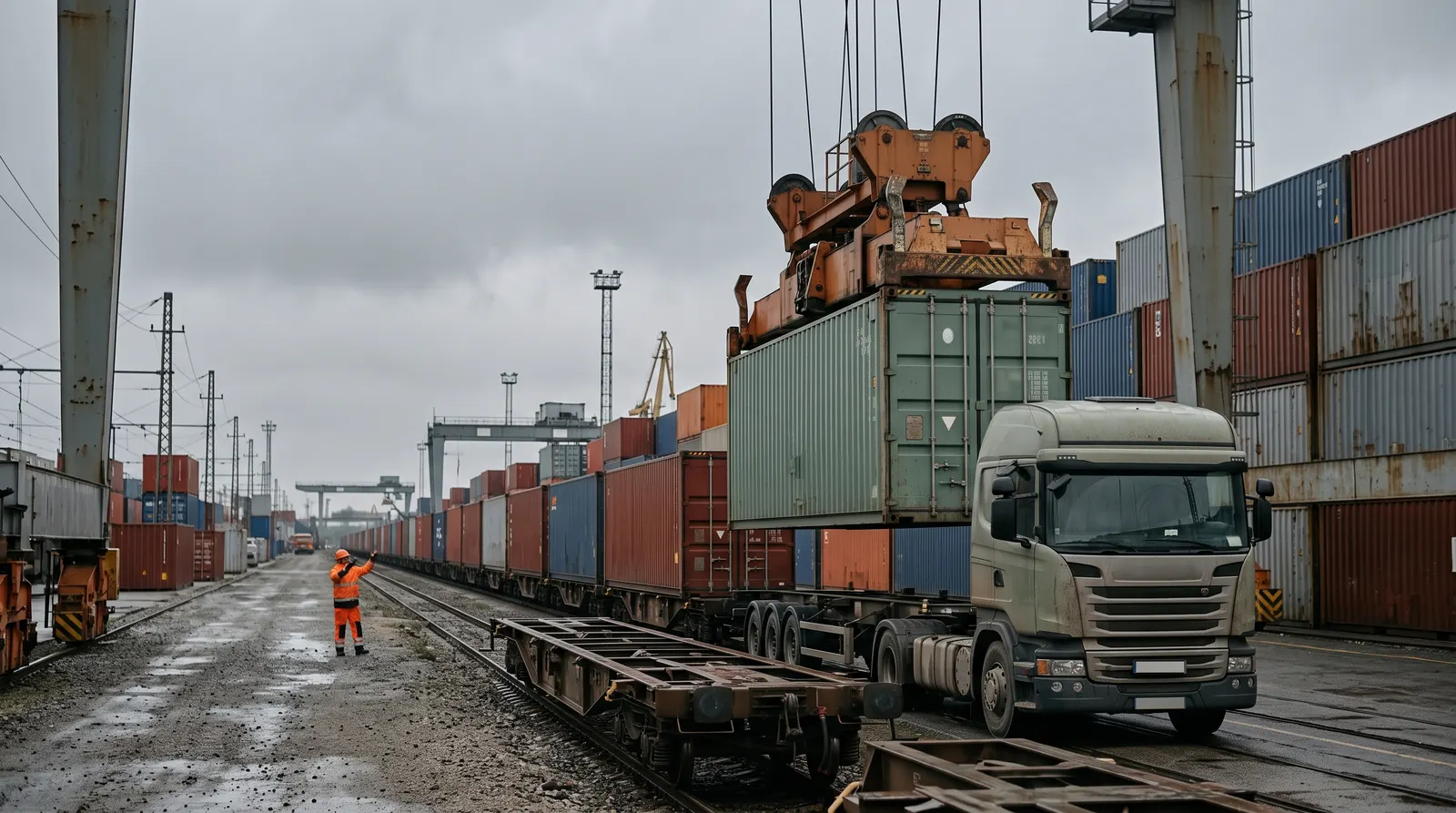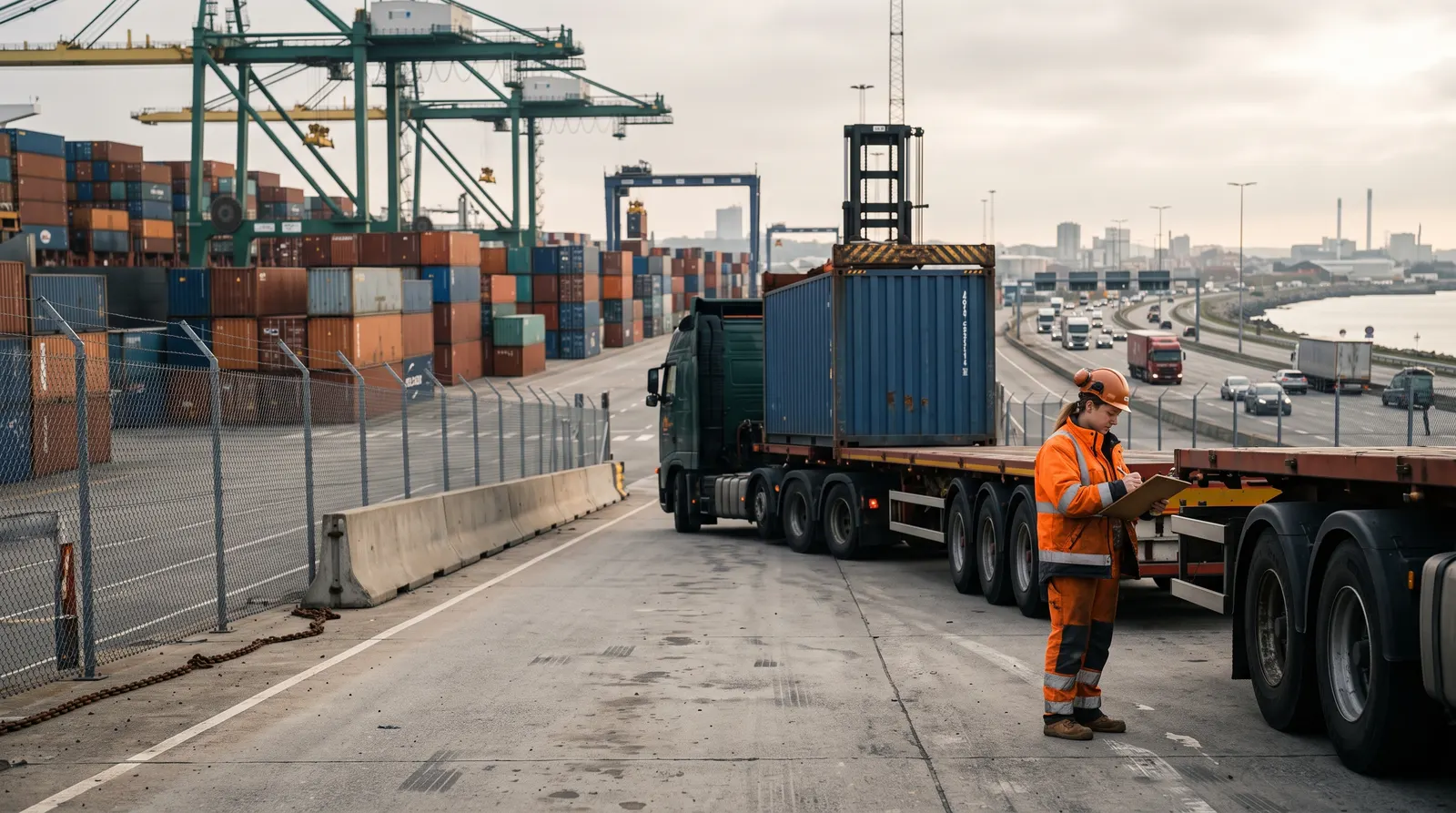
Every ocean or air quote covers some slice of the journey between shipper and buyer. Door-to-door and port-to-port mark the two ends of that range — one bundles the entire move under a single quote, the other stops at the terminal gate on both sides. Neither is inherently better. The right pick depends on what your team is set up to handle, and which Incoterm is already governing the sale.
What door-to-door and port-to-port actually mean
Door-to-door covers the full journey — pickup at the shipper's address, main freight leg, and delivery to the buyer's address, all under one quote. Port-to-port covers only the ocean or air leg between the origin and destination terminals; everything before and after is arranged separately.
Holo Cargo's quote types map to four move combinations: door-to-door, door-to-port, port-to-door, and port-to-port. Door-to-port and port-to-door are hybrids — pickup handled but destination left to the buyer, or vice versa. Which one fits depends on where your operational capability starts and ends, not on which sounds more complete.
Port-to-port is the oldest and simplest structure: it is what an ocean or air carrier sells directly, because a vessel or aircraft only ever moves cargo between gateways. Door-to-door is what a freight forwarder builds on top of that core leg by adding trucking, customs clearance, and coordination at both ends.
The four move types side by side
| Move type | Origin handling | Main freight leg | Destination handling | Typical buyer |
|---|---|---|---|---|
| Door-to-door | Pickup at shipper's address | Ocean, air, rail, or multimodal | Delivery to buyer's address | Shippers who want one quote, one point of contact |
| Door-to-port | Pickup at shipper's address | Main freight leg | Buyer collects/arranges from destination port | Shippers who control origin but not the buyer's local logistics |
| Port-to-door | Shipper delivers cargo to origin port | Main freight leg | Delivery to buyer's address | Shippers with an origin logistics setup, buyers who want a finished delivery |
| Port-to-port | Shipper delivers cargo to origin port | Ocean or air freight only | Buyer collects from destination port | Experienced importers/exporters with their own trucking and customs teams |
The gap between door-to-door and port-to-port is where trucking, customs brokerage, and documentation live. A port-to-port quote leaves all of that outside the freight number; a door-to-door quote folds it in as line items.
Cost: what actually changes
Port-to-port freight looks cheaper on the invoice because it only prices one leg. Door-to-door usually costs more in total dollars but replaces several separate vendor relationships — and their separate markups — with one itemised quote.
A port-to-port quote covers ocean or air freight and the standard terminal-side charges tied to that leg — items like THC, BAF, and documentation fees. It does not include:
- Trucking or drayage to and from the terminal
- Customs clearance at either end
- Storage if cargo dwells at the terminal past free time
- Coordination between the trucking vendor, the customs broker, and the carrier
Sourced separately, each of those pieces adds its own quote, its own timeline, and its own point of failure. A door-to-door quote prices them as line items inside a single document, so the total is visible before you commit rather than assembled after the fact from several invoices.
Whether door-to-door actually costs more once every piece is counted depends on how efficiently you can source trucking and customs on your own. A shipper with an established broker relationship and a regional trucking contract may beat a forwarder's bundled rate. A shipper without either usually pays more in total by sourcing separately — even though each individual quote looks smaller.
When port-to-port is the right call
Port-to-port fits shippers who already have the pieces door-to-door would otherwise bundle:
- You have an in-house or contracted customs broker at both origin and destination, and don't need that coordinated for you.
- You run your own trucking or have a standing carrier contract for drayage on both ends.
- Your buyer is an experienced importer who wants to control destination clearance and delivery themselves — common in intercompany shipments or established B2B trade lanes.
- You are shipping under an Incoterm that already assigns port-side responsibility to each party, such as FOB or CFR, where the freight quote naturally stops at the terminal.
Large manufacturers and established importers with dedicated logistics teams often default to port-to-port because the surrounding infrastructure already exists internally — paying a forwarder to duplicate it adds cost without adding capability.
When door-to-door is the right call
Door-to-door fits shippers who don't want to manage — or don't yet have — the surrounding pieces:
- You don't have a standing customs broker or trucking vendor, and don't want to source and manage them per shipment.
- You want a single point of contact and a single invoice covering the full move, rather than reconciling several vendor bills against each other.
- Your buyer expects a finished delivery, not a container sitting at a foreign terminal they need to collect and clear themselves.
- You are shipping under DAP or DDP, where the seller is contractually responsible for delivery to the buyer's door — port-to-port pricing wouldn't cover the obligation anyway.
- Your cargo needs coordinated handling across legs — a reefer container that needs continuous cold-chain monitoring from pickup to delivery, for example, is harder to manage safely across multiple disconnected vendors.
Smaller and mid-size shippers, and anyone moving cargo on a lane they don't ship frequently, generally get more value from door-to-door — the coordination overhead of managing three or four vendors per shipment is real, even when each individual vendor is competitively priced.
Match the move type to your Incoterm
Move type and Incoterm should agree — pricing a port-to-port quote against a DDP sale, or a door-to-door quote against an FOB sale, means paying for coverage you don't need or leaving a contractual gap uncovered.
Incoterms define where risk and cost transfer between buyer and seller, and they map naturally onto the four move types:
- EXW, FCA, FOB (origin handoff) — the seller's responsibility ends at or near origin, so a port-to-port or door-to-port quote usually matches the contract.
- CFR, CIF, CPT, CIP (port arrival) — freight is prepaid to the destination port, aligning with port-to-port or door-to-port depending on who arranges origin pickup.
- DAP, DDP, DDU (door delivery) — the seller is on the hook for delivery to the buyer's address, which requires a door-to-door or port-to-door quote to actually fulfil the obligation.
Quoting the wrong move type against your Incoterm is a common, avoidable error — it either leaves a contractual delivery obligation unpriced or pays for destination handling nobody asked for. Confirming the move type against the Incoterm before requesting a quote avoids both problems.
Making the call
There's no universal answer — the decision comes down to three questions: what surrounding infrastructure you already have, what your buyer expects to receive, and which Incoterm governs the sale. Answer those three and the move type mostly picks itself. What matters more than the label is making sure the quote you request actually matches the obligation you're shipping under, so nothing gets left uncovered — or unnecessarily duplicated — between origin and destination.
Holo Cargo quotes all four move types — door-to-door, door-to-port, port-to-door, and port-to-port — across ocean FCL and LCL, air, and multimodal routings, with every charge itemised so the scope of the quote is clear before you book. Full move-type definitions and how they map to a booking are covered in the how shipping works guide.