Most shippers never formally decide between a freight forwarder and booking direct with a carrier — they default to whichever relationship they inherited. That default is worth questioning. The two paths differ on price access, service scope, capacity flexibility, and who answers the phone when something goes wrong. Neither is universally right; the correct choice depends on your volume, your cargo, and how much operational work you want to own.
What "booking direct" actually means
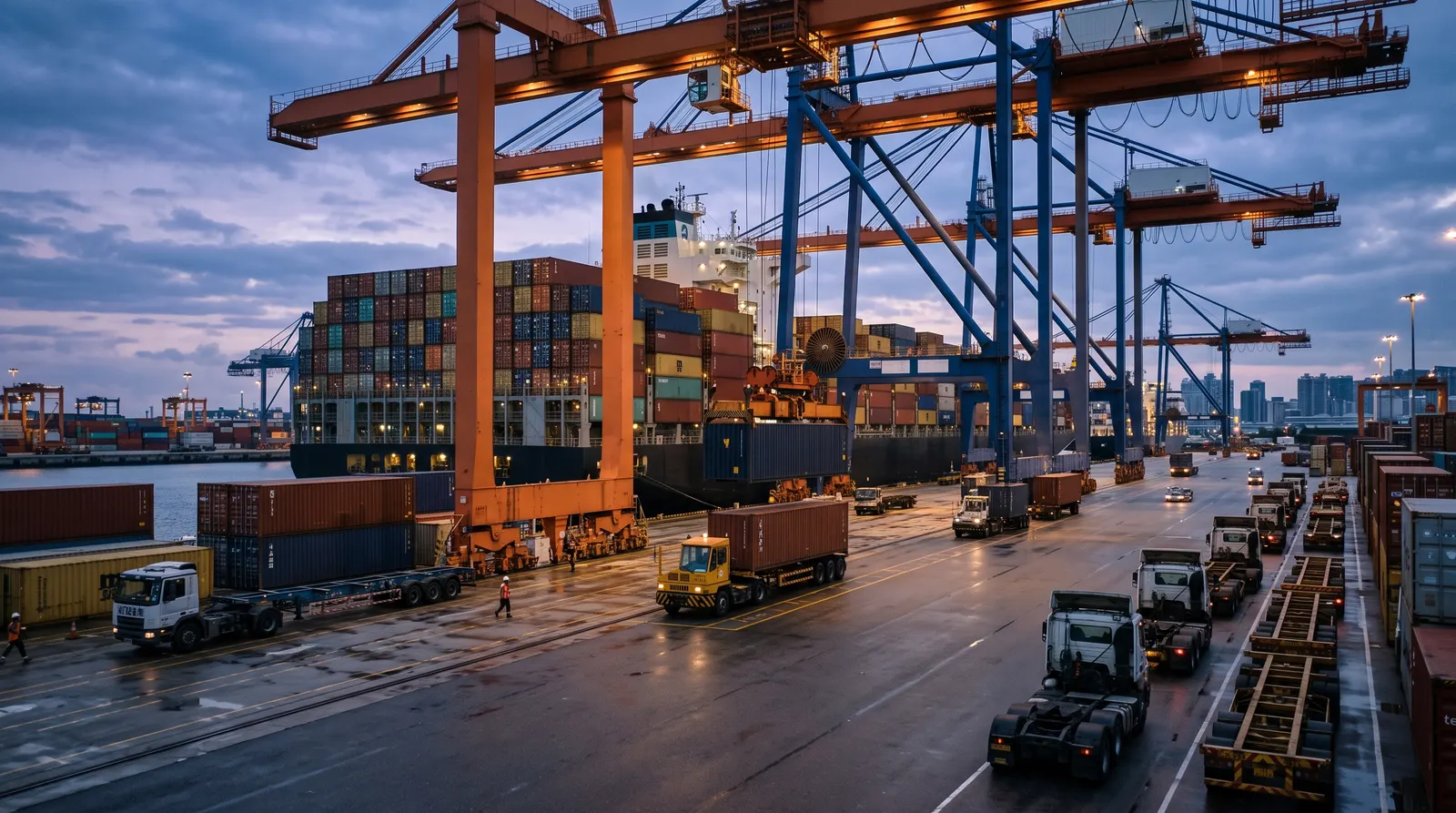
Booking direct means contracting with the ocean or air carrier itself — the vessel operator or airline — rather than through an intermediary. You negotiate a rate directly with the carrier's sales desk, receive the carrier's own bill of lading or air waybill, and manage every other piece of the move — trucking, customs, insurance, documentation — yourself or through separate vendors.
Carriers will quote direct shippers, but their commercial pricing tiers, service contracts, and account attention are generally built for large, predictable volumes. A shipper booking a handful of containers a year is a very different account than one moving hundreds, and pricing reflects that.
A freight forwarder, by contrast, is an intermediary that buys capacity from carriers — often across ocean, air, and inland modes — and resells it to shippers, typically bundled with the surrounding services a shipment needs: customs brokerage, trucking, documentation, and often cargo insurance. The forwarder is the single point of contact; the carrier relationship happens behind the scenes.
Cost: where each side actually wins
Large-volume shippers with consistent lanes sometimes secure carrier rates as good as or better than a forwarder's, because carriers reward committed volume with tiered contract pricing. Below that volume threshold, forwarders usually win on total landed cost.
A single carrier sells its own capacity at its own rate card, adjusted by contract tier. A forwarder aggregates volume across many shippers and negotiates block space at rates individual mid-size shippers cannot access alone — then applies a margin. Whether that markup nets out higher or lower than a direct carrier rate depends almost entirely on your volume.
The part shippers often miss is that the freight rate is not the total cost. A direct carrier booking still needs:
- Trucking or drayage to and from the port or airport
- A customs broker to file entries and manage clearance
- Documentation handling — bill of lading, ISF/AMS filings, certificates
- Someone tracking the shipment and chasing status updates across every leg
Sourced separately, each of those adds its own markup and its own point of failure. A forwarder's all-in quote typically already reflects them as line items rather than surprises. When you compare a "cheaper" direct carrier rate against a forwarder's quote, compare the fully landed cost — not just the ocean freight or air freight line. Request an itemised quote for both scenarios before deciding; the gap often narrows or reverses once every charge is on the table.
Capacity and schedule flexibility
A single carrier relationship means single-carrier exposure — if that carrier blanks a sailing, cuts capacity, or has no space on your date, you have no fallback. A forwarder holds relationships across multiple carriers and can shift your booking without starting over.
This matters most during capacity-constrained periods: peak season, blank-sailing cycles, or geopolitical disruptions that force carriers to re-route around chokepoints. A shipper booked directly with one carrier is fully exposed to that carrier's schedule integrity. A forwarder working across several carrier contracts can often re-book onto an alternative sailing or a different routing with far less disruption, because the relationship — and the negotiating leverage — sits at the forwarder level, not with a single line.
The same logic applies across modes. If ocean capacity tightens, a forwarder handling ocean FCL, ocean LCL, and air freight under one roof can pivot part of a shipment to a faster mode without you starting a new vendor relationship from scratch.
Service scope: what each path covers
| Need | Booking direct with carrier | Freight forwarder |
|---|---|---|
| Ocean or air freight rate | Yes — direct rate card | Yes — negotiated/blended rate |
| Customs brokerage | Separate vendor required | Usually bundled |
| Trucking / drayage | Separate vendor required | Usually bundled |
| Documentation (BL, ISF/AMS) | You manage or a broker does | Forwarder manages |
| Cargo insurance | Separate policy required | Often offered directly |
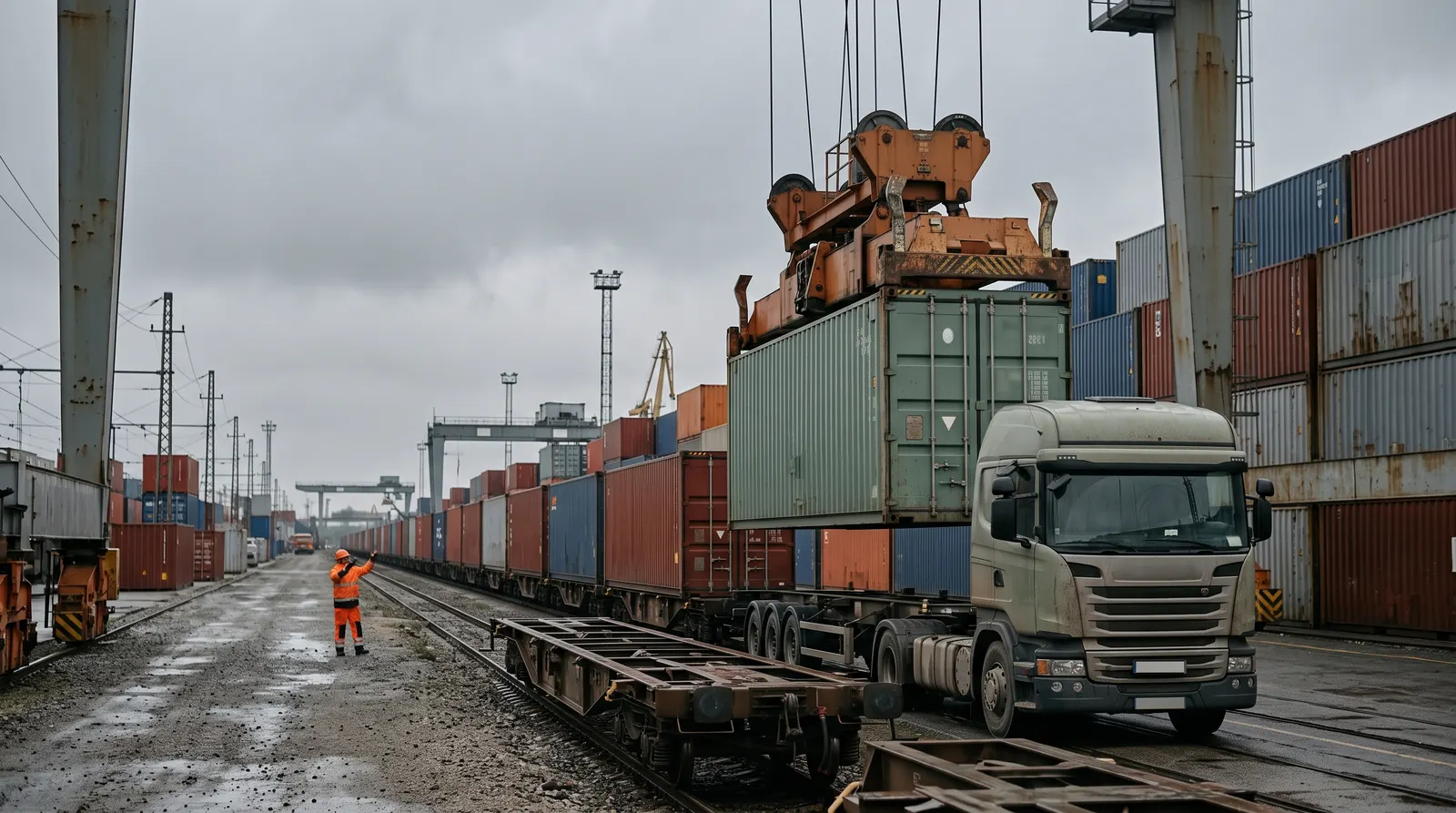
| Multimodal routing (rail, road) | Not offered by an ocean/air carrier | Available |
| Single point of contact | No — multiple vendors | Yes |
| Consolidation for sub-container volume | Not applicable | Available (LCL / co-loading) |
A carrier sells transport capacity — port to port, or airport to airport. Everything before the origin gate and after the destination gate is outside its scope by definition. A forwarder's core value is stitching those pieces into one door-to-door move with one quote, one bill, and one party accountable for the whole journey. Consolidation is a good example of a service a carrier structurally cannot offer an individual shipper below container-load volume — only a forwarder aggregating multiple shippers' cargo can put a partial load into a shared box economically.
When booking direct makes sense
Booking direct with the carrier is a reasonable choice when:
- Your volume is large and consistent enough to earn contract-tier pricing. This usually means dozens of containers or more per year on stable lanes, with a logistics team able to negotiate and manage the contract.
- You already have in-house customs, trucking, and documentation capability. If those functions exist internally, the value a forwarder adds shrinks — you are only paying for freight procurement, which a large shipper can often do at least as well directly.
- You need a single carrier's specific service network or equipment, such as a niche reefer routing or an oversized-cargo vessel a particular line specializes in.
- You can absorb the operational risk of single-carrier dependency — meaning a blanked sailing or capacity cut does not put a delivery deadline at serious risk.
When a forwarder is the better call
For most shippers, a forwarder is the more efficient path, particularly when:
- Volume does not justify a direct carrier contract. Below contract-tier thresholds, a forwarder's blended rate usually beats what an individual shipper can negotiate alone.
- You need customs, trucking, and documentation handled as one package, not sourced and managed separately.
- Your cargo does not fill a container. LCL and consolidation only exist through a forwarder.
- You ship across multiple modes — ocean, air, rail, road — and want one relationship rather than a separate vendor per mode.
- You want schedule resilience without maintaining direct relationships with several carriers yourself.
The traditional-forwarder trade-off
The case for a forwarder is strong on paper, but it comes with a real-world caveat: many traditional forwarders reintroduce the friction they are supposed to remove. Rate requests sit in an inbox for days. Status updates require a phone call. A quote and the final invoice do not match, and reconciling the difference eats hours. That gap between what a forwarder should deliver and what shippers actually experience is exactly what pushes some volume back toward direct carrier booking, even when the forwarder model makes more structural sense.
The fix is not abandoning the forwarder model — it is picking a forwarder that runs it properly: rate requests answered in minutes rather than days, pricing that matches the final invoice, and problems flagged while they are still small. That is door-to-door coverage working as intended. Whichever path you choose, make the decision on fully landed cost and service scope, not the headline freight rate alone.