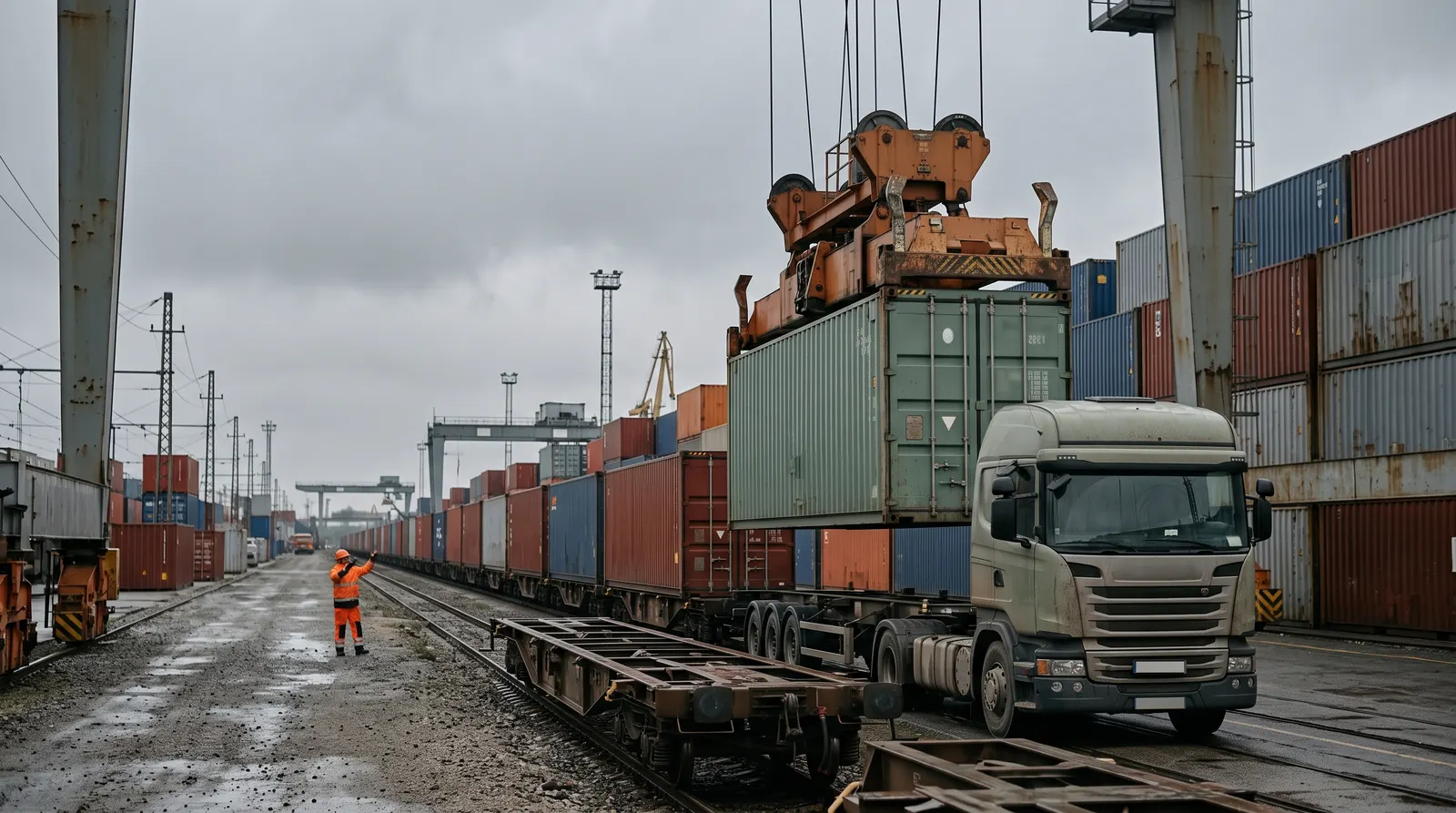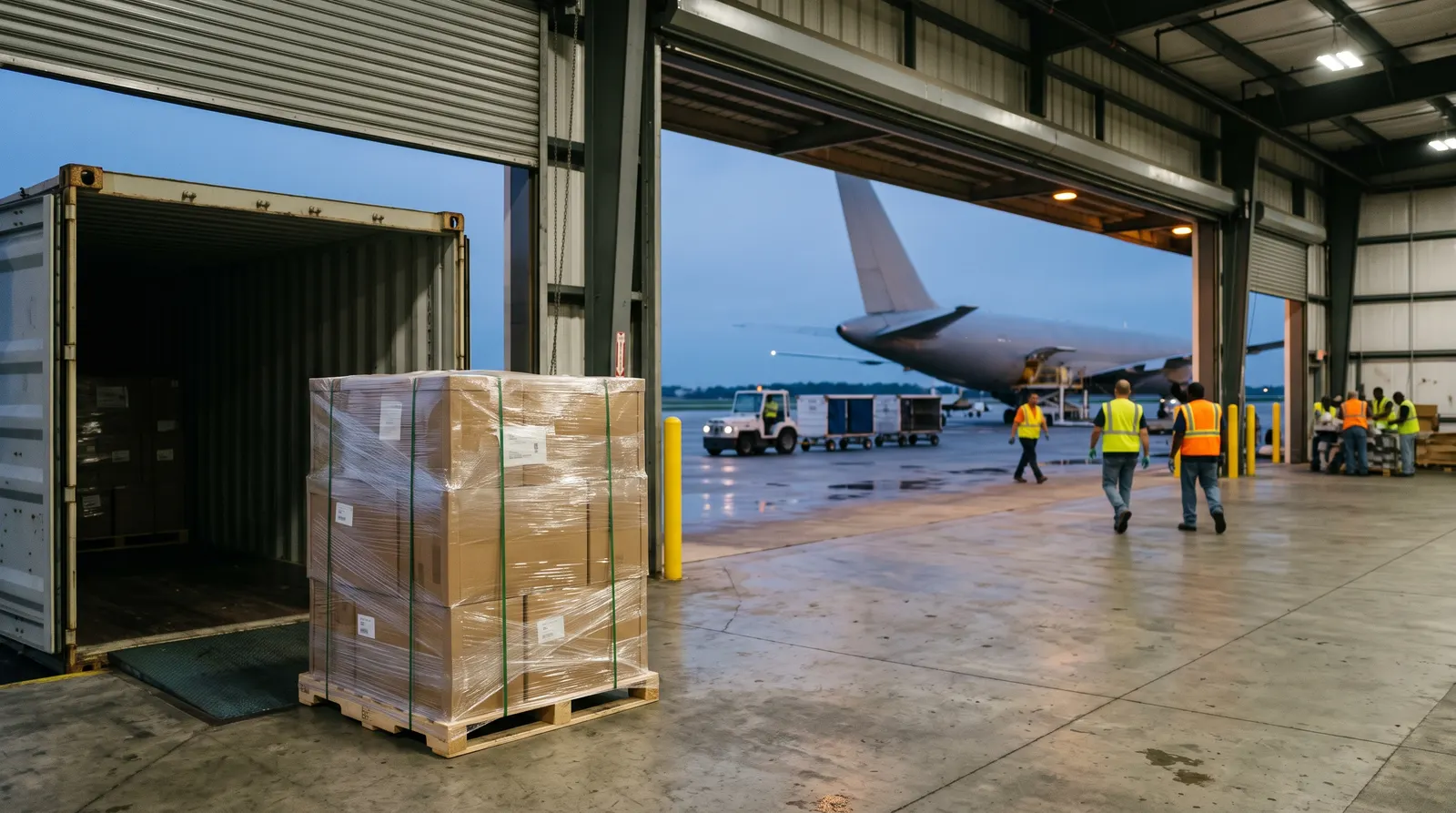
Most shippers default to LCL (Less than Container Load) the moment a shipment is too small for a full container, on the assumption that ocean is always the cheap option. That assumption holds for most cargo. It breaks down at the small end of the range — samples, spare parts, prototypes, and light replenishment orders — where fixed handling fees and low density change the math. Below a certain volume, air freight is not a premium fallback; it can be the cheaper mode outright.
This guide walks through how each mode actually prices a small shipment, where the crossover tends to sit, and what to weigh beyond the freight invoice.
The short answer
For very small, light shipments — roughly under 1–2 CBM with low-to-moderate weight — air freight is frequently comparable to or cheaper than LCL once CFS handling fees are counted in full. Above that range, LCL usually regains the advantage as volume grows and fixed costs get spread over more cargo.
The reason is structural, not a rate quirk. LCL carries two CFS handling touch-points — one at the origin Container Freight Station, one at destination — priced per CBM but typically subject to a minimum charge, so on very small shipments they barely shrink below that floor. On a small shipment, those near-fixed costs are a large share of the total. Air freight has no CFS stop and prices on chargeable weight, so a small, dense parcel can move through the air rate structure more cheaply than it clears two CFS gates by sea.
How LCL pricing works on a small shipment
LCL charges for ocean freight per CBM (or per tonne, whichever is greater), plus origin and destination CFS fees that are priced per CBM but typically subject to a minimum charge — so on very small shipments they barely shrink regardless of how little space your cargo occupies.
A typical LCL invoice includes:
- Ocean freight — priced per CBM or weight/measure (W/M)
- Origin CFS fee — stuffing and handling at the origin warehouse, priced per CBM subject to a minimum per shipment
- Destination CFS fee — unstuffing, sorting, and delivery-order release, priced per CBM subject to a minimum per shipment
- Documentation — a house bill of lading fee, separate from the master BL
The origin and destination CFS fees are the problem for small volumes. Because both are typically subject to a per-shipment minimum charge, a 0.5 CBM shipment and a 5 CBM shipment can land close to the same CFS cost at each end — so on the smaller shipment, that near-fixed overhead can dominate the total invoice. The per-CBM ocean freight rate itself is rarely the deciding factor at this scale; the two CFS touch-points are.
How air freight pricing works on a small shipment
Air freight is priced on chargeable weight — the greater of actual weight and volumetric weight — plus a fuel surcharge, a security surcharge, and an airway bill fee. There is no CFS-equivalent handling stop.
A typical air invoice includes:
- AFR (air freight rate) — per chargeable kilogram
- FSC (fuel surcharge) — per chargeable kilogram
- SSC (security surcharge) — per chargeable kilogram
- AWB fee — a flat airway bill charge
Volumetric weight is calculated as length (cm) x width (cm) x height (cm), divided by 6,000, for air freight. Whichever is greater — actual weight or volumetric weight — is what gets billed. For a small, dense shipment (machine parts, electronics, metal components), the actual weight is often the higher figure and the volumetric formula barely matters. For a small but bulky shipment (packaging samples, light textiles, foam-packed goods), volumetric weight can push the chargeable weight well above what the item weighs on a scale — which erodes air's advantage quickly.
Where the crossover tends to sit
Because LCL's minimum-charge CFS fees barely shrink below a certain volume and air's rate scales with chargeable weight, there is a rough volume band where the two modes land close together. The table below is illustrative — actual rates vary by lane, carrier, and season — but shows the shape of the comparison:
| Shipment | LCL (ocean freight + both CFS fees) | Air (AFR + FSC + SSC + AWB, at similar density) |
|---|---|---|
| 0.5 CBM, ~150 kg | Minimum-charge CFS fees dominate the total | Often competitive or cheaper |
| 1 CBM, ~250 kg | Close; CFS fees still a large share | Often close, sometimes cheaper |
| 2–3 CBM, ~500–700 kg | LCL usually pulls ahead | Chargeable weight cost climbs |
| 5+ CBM, dense cargo | LCL clearly cheaper | Air rarely competitive |
The exact crossover point depends on your lane, cargo density, and the CFS rates in effect at both ends — it is not a fixed number. Use the free cargo calculator to get both your CBM and your chargeable weight from carton or pallet dimensions, then request quotes for both ocean LCL and air freight on the same shipment before assuming which one wins.
Density is the variable that decides it
Volume alone does not tell you which mode is cheaper — density does. A shipment's chargeable weight under air rules depends on whether it is dense (heavy for its size) or bulky (light for its size).
- Dense, small shipments — spare parts, tooling, electronics, metal hardware — tend to favor air at the low end, because actual weight (not the volumetric formula) sets the chargeable weight, and small dense loads rarely reach a weight where air becomes expensive.
- Bulky, low-density shipments — packaging samples, textiles, lightweight consumer goods — lose air's advantage fast, because the 1:6000 volumetric formula inflates the chargeable weight well above actual weight. These often stay cheaper on LCL even at small volumes.
Run the actual chargeable-weight number before assuming air is viable. A shipment that looks small enough for air to make sense on a bathroom scale can price very differently once volumetric weight is applied.
Beyond price: transit time and handling
Air freight is typically faster and involves one fewer physical handling stop than LCL, which also lowers cargo risk for fragile or high-value small shipments.
LCL requires your cargo to wait for a consolidator's cut-off before the container sails, then clear the destination CFS and be unstuffed before release — both steps add elapsed days beyond the ocean transit time itself. Air freight moves through fewer handling events, and customs clearance on air cargo is typically faster than on a consolidated ocean shipment. For fragile, high-value, or time-sensitive small shipments, the reduced handling can matter as much as the freight rate.
None of this changes the price comparison — it is a separate factor to weigh once you know the total cost of each mode.
When LCL still wins on a small shipment
- Non-urgent shipments where a few extra days in transit cost nothing
- Dense-enough cargo that the per-CBM ocean rate, not the CFS fees, drives the total
- Recurring small shipments on a lane with strong LCL consolidation rates
- Cargo requiring cargo insurance consideration where a slower, more predictable schedule is preferable
When air wins on a small shipment
- Samples, prototypes, or spare parts needed on a hard deadline
- Small, dense cargo where chargeable weight stays low
- Emergency restocking where the cost of a stockout exceeds any freight premium
- Shipments small enough that two CFS handling fees outweigh the ocean freight rate itself
If your volume regularly sits in the gray zone — too small to comfortably fill a container, too large to obviously favor air — consolidation co-loading can sometimes offer a third option worth comparing alongside standard LCL and air quotes.
Running the comparison properly
Do not compare a bare ocean freight rate to a bare air rate — that comparison is misleading on any shipment size, and especially at the small end where fixed fees dominate. Get both totals door to door: LCL's ocean freight plus both CFS fees and documentation, against air's chargeable-weight rate plus fuel and security surcharges and the AWB fee. The mode that is cheaper on paper for a large shipment is not always cheaper for a small one, and the only way to know for certain is to price both.