Most shippers spend hours comparing ocean carriers or debating air versus ocean, then book the inland leg almost as an afterthought. That is a mistake. The truck or train that moves your cargo from port to warehouse, or across a domestic corridor, has its own cost structure, its own risk profile, and its own failure modes — and getting it wrong adds cost and delay to a move that should have been the simple part.
Road and rail are not interchangeable. Each is built for a different combination of distance, volume, and urgency. This guide breaks down when each mode wins, what actually drives the cost difference, and how to make the call without guessing.
What is the real difference between road and rail freight?
Road freight moves cargo by truck, door to door, with no intermediate handling — it is faster over short-to-medium distances and far more flexible on pickup and delivery timing. Rail freight moves cargo in bulk over long, fixed corridors between terminals, trading flexibility for lower cost per tonne on high-volume, non-urgent freight.
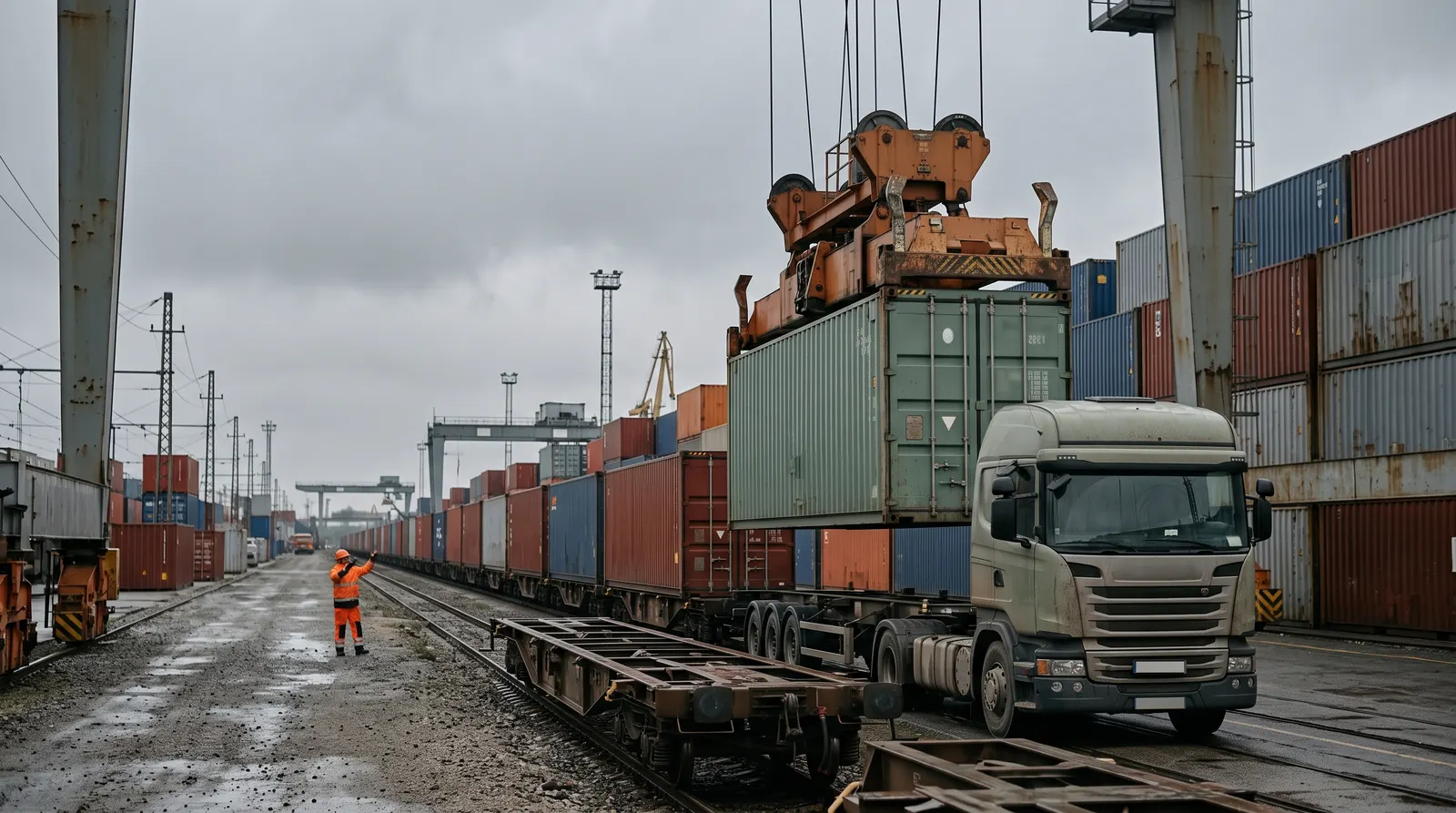
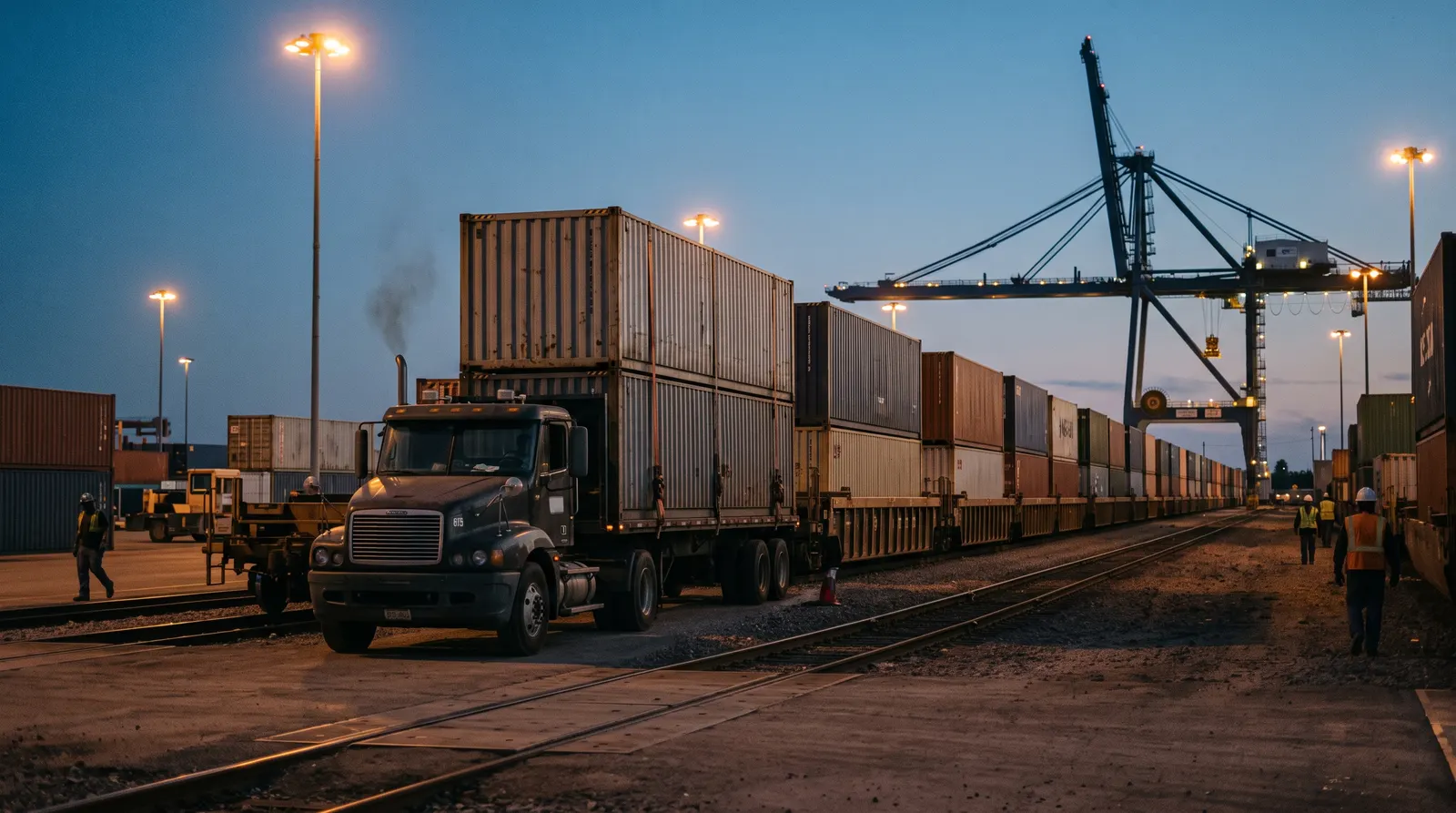
Road freight is the default for regional distribution, cross-border moves within a continent, and any shipment that needs to go from a specific origin address to a specific destination address without a terminal transfer in between. Rail freight, by contrast, only makes sense where a rail corridor actually connects your origin and destination regions — and even then, cargo typically still needs a truck for the first and last mile between a rail terminal and the actual pickup or delivery point.
The practical question is rarely "which mode is better" in the abstract. It is: does my lane have a viable rail corridor, does my volume justify it, and can my deadline absorb rail's longer dwell and transfer times?
Cost: where each mode actually wins
Rail freight is generally cheaper per tonne over long distances once volume is high enough to fill a wagon or a block of wagons. Road freight is generally cheaper and simpler for shorter hauls or partial loads, because it avoids the fixed costs of rail terminal handling and drayage on both ends.
The cost comparison is not just the line-haul rate. A rail move typically involves:
- Drayage from the shipper's dock to the origin rail terminal
- Rail terminal handling and any block/wagon loading fees
- The line-haul rail rate itself
- Rail terminal handling at destination
- Drayage from the destination rail terminal to the final delivery point
A road move, by comparison, is a single truck rate covering the full door-to-door distance — no intermediate terminal fees, no double handling. For short and medium hauls, those avoided terminal fees on both ends of a rail move can offset most or all of rail's lower per-kilometre rate, which is why road remains competitive well beyond the distances most people assume.
Rail starts to win decisively once the corridor is long enough and the volume is large enough that the line-haul savings outweigh the fixed terminal costs on both ends — commonly the case for full trainload or block-train volumes moving hundreds of kilometres or more on an established corridor.
Transit time and reliability
Road freight is faster point-to-point on most lanes and is the only realistic option for tight delivery windows. Rail freight trades some transit-time predictability and flexibility for cost efficiency on corridors where schedules are fixed and well established.
Indicative road transit runs about one to two days for regional moves and three to seven days for longer domestic hauls, depending on distance and border crossings. Rail transit times vary far more by corridor and network congestion, and a rail move typically adds the drayage time and terminal dwell at both ends on top of the line-haul schedule — so a rail corridor that looks fast on paper can still take longer door-to-door than expected once transfers are included.
Road freight also gives you more control over the exact pickup and delivery time. A truck can usually be scheduled around a specific loading dock appointment; a rail move runs on a fixed departure schedule, and missing a cutoff typically means waiting for the next scheduled service — which can be the next day or, on thinner corridors, several days later.
Cargo fit: what actually belongs on each mode
Road freight handles nearly any cargo type and is the natural choice for time-sensitive, palletized, or irregular shipments. Rail freight favours dense, heavy, non-urgent bulk cargo that fills a wagon efficiently and does not require frequent handling.
| Factor | Road freight | Rail freight |
|---|---|---|
| Typical distance | Regional to cross-border | Long domestic or cross-border corridors |
| Volume fit | Any size, including LTL/part loads | Best at full wagon or block-train volumes |
| Flexibility | High — direct door to door | Lower — fixed terminals and schedules |
| Cost profile | Competitive on short-medium hauls | Competitive on long hauls at scale |
| Handling | Single load, no transfer | Terminal handling both ends plus drayage |
| Best cargo types | Palletized goods, mixed loads, urgent freight | Bulk, heavy, dense, non-urgent cargo |
Reefer and other special cargo can move by either mode, but road remains the more common choice for temperature-controlled and time-sensitive freight because it avoids the extra handling cycles a rail terminal transfer introduces. For special cargo with tight tolerances, fewer handoffs generally means fewer opportunities for something to go wrong.
Dangerous goods, oversized freight, and project cargo each carry their own equipment and documentation requirements regardless of mode — the road-versus-rail decision for these shipments usually comes down to whether a viable rail corridor exists at all, not just cost.
When rail freight is worth the extra planning
Rail freight rewards shippers who can plan ahead and commit to volume. It fits best when:
- The lane runs along an established rail corridor with reliable service frequency
- Cargo volume is large enough to fill a wagon or approach block-train quantities
- The shipment is not time-critical and can absorb rail's fixed schedule and terminal dwell
- Total distance is long enough that line-haul savings outweigh the added terminal handling on both ends
- The goods are dense and heavy — bulk commodities, industrial materials, palletized freight in volume — rather than light, bulky, or highly time-sensitive
Shippers moving high volumes on a recurring basis along a fixed corridor are the best candidates for rail. A one-off shipment, an urgent order, or a lane without dependable rail infrastructure is usually better served by road, even at a higher line-haul rate.
When road freight is the only realistic option
Road freight is the default, and for good reason. It fits nearly every shipment that:
- Needs a specific pickup or delivery appointment rather than a fixed terminal schedule
- Moves a distance too short to justify rail terminal handling on both ends
- Has no rail corridor connecting the origin and destination regions
- Carries a hard deadline where any schedule uncertainty is unacceptable
- Involves mixed or partial loads that would not fill rail capacity efficiently
For most first-and-last-mile moves, and for the majority of continental and cross-border freight below full trainload volumes, road freight is simply the more practical choice — even where a rail alternative technically exists.
How to decide: a simple framework
Run through these questions in order before booking either mode:
- Does a rail corridor actually connect my origin and destination regions? If not, the decision is already made — book road.
- Is my volume close to a full wagon or block-train load? Below that threshold, rail's fixed terminal costs usually erode its line-haul advantage.
- Can my delivery deadline absorb rail's schedule and terminal dwell time? If the shipment is time-critical, road wins by default.
- Is the cargo dense and durable, or light and fragile? Dense bulk cargo suits rail's handling profile; fragile or urgent goods suit road's single-handling profile.
- What does the total door-to-door cost look like, including drayage and terminal fees on the rail option? Compare that total against a single road rate before assuming rail is cheaper.
Use the free cargo calculator to work out your shipment's gross weight and volume from carton or pallet dimensions, and the route calculator to check distance and an indicative transit time between your origin and destination — both are useful inputs before you request quotes on either mode.
Inland transport is rarely the whole move
Road and rail rarely operate in isolation. An inland leg is usually one segment of a larger door-to-door shipment that also includes an ocean or air main leg, and the decision on how to combine them is what multimodal planning is for. Getting the inland mode right on both ends of an international move — matching pickup and delivery flexibility at origin with reliable terminal handling at destination — often matters as much as the ocean or air rate itself.
Holo Cargo quotes road and rail inland moves with the same line-by-line transparency as the international leg, so the drayage, terminal handling, and line-haul components are itemised rather than bundled into a single opaque number. Operators coordinate the inland leg alongside your main carriage booking, so the two segments are scheduled to match rather than left to align by chance.