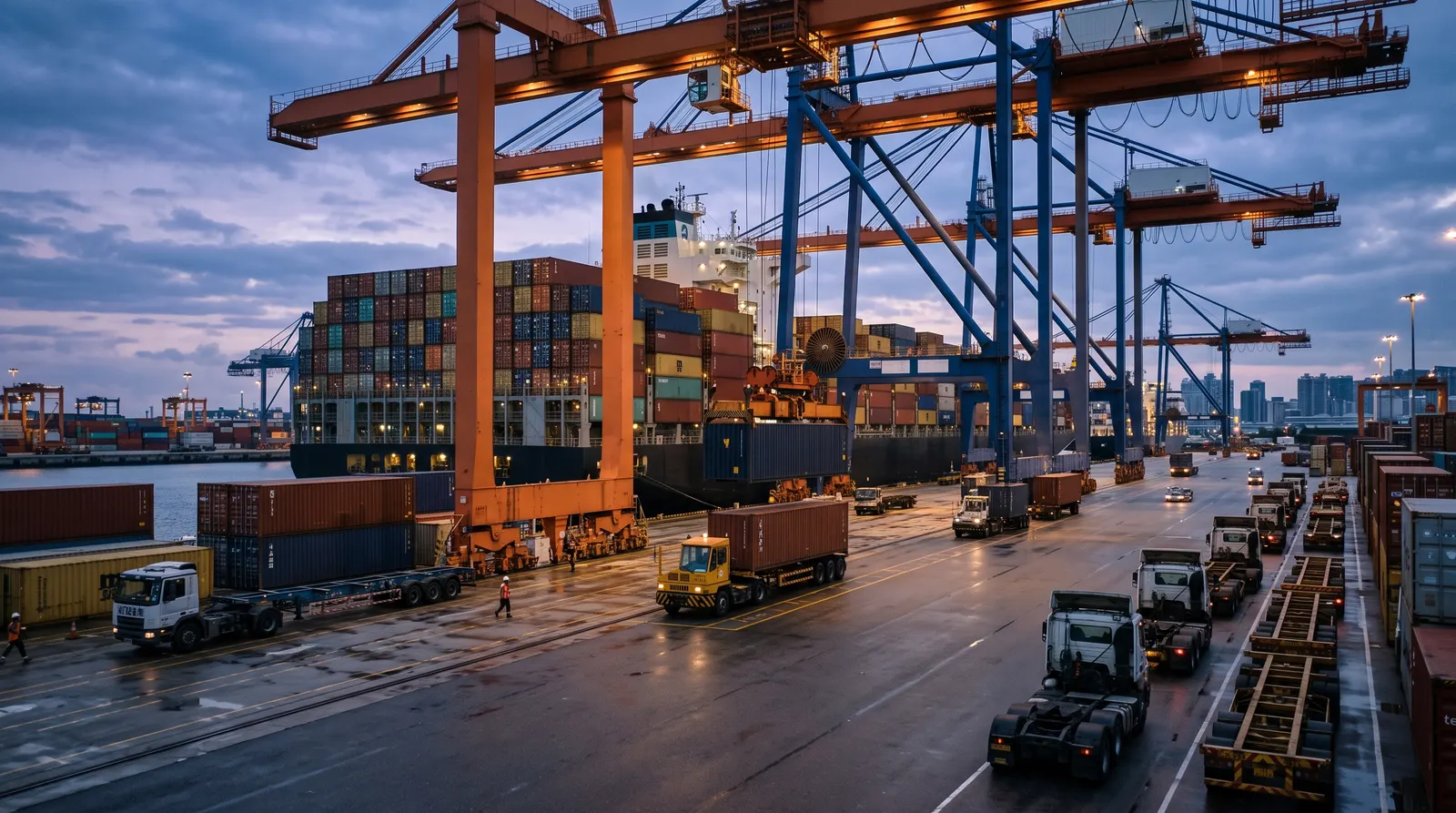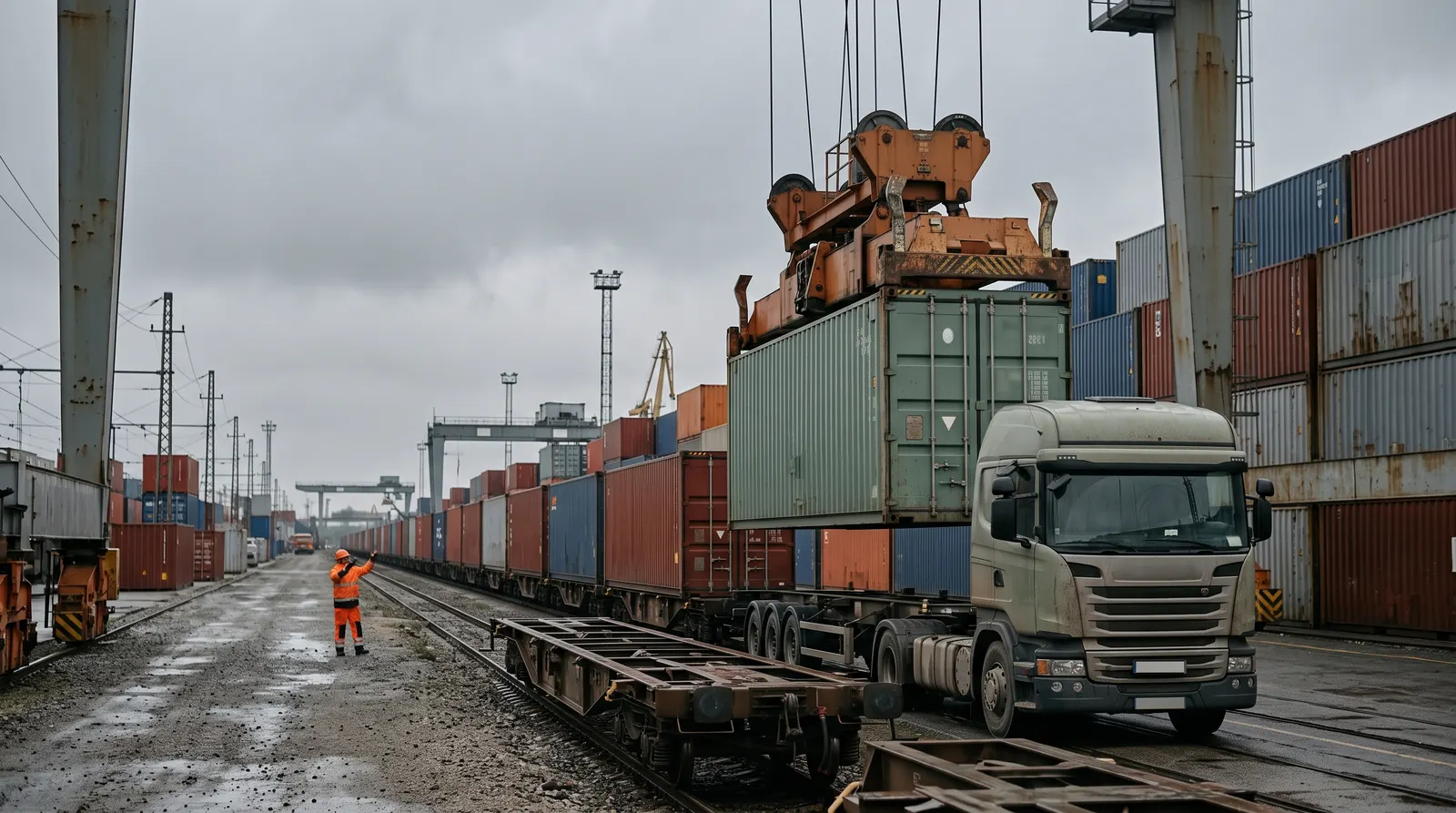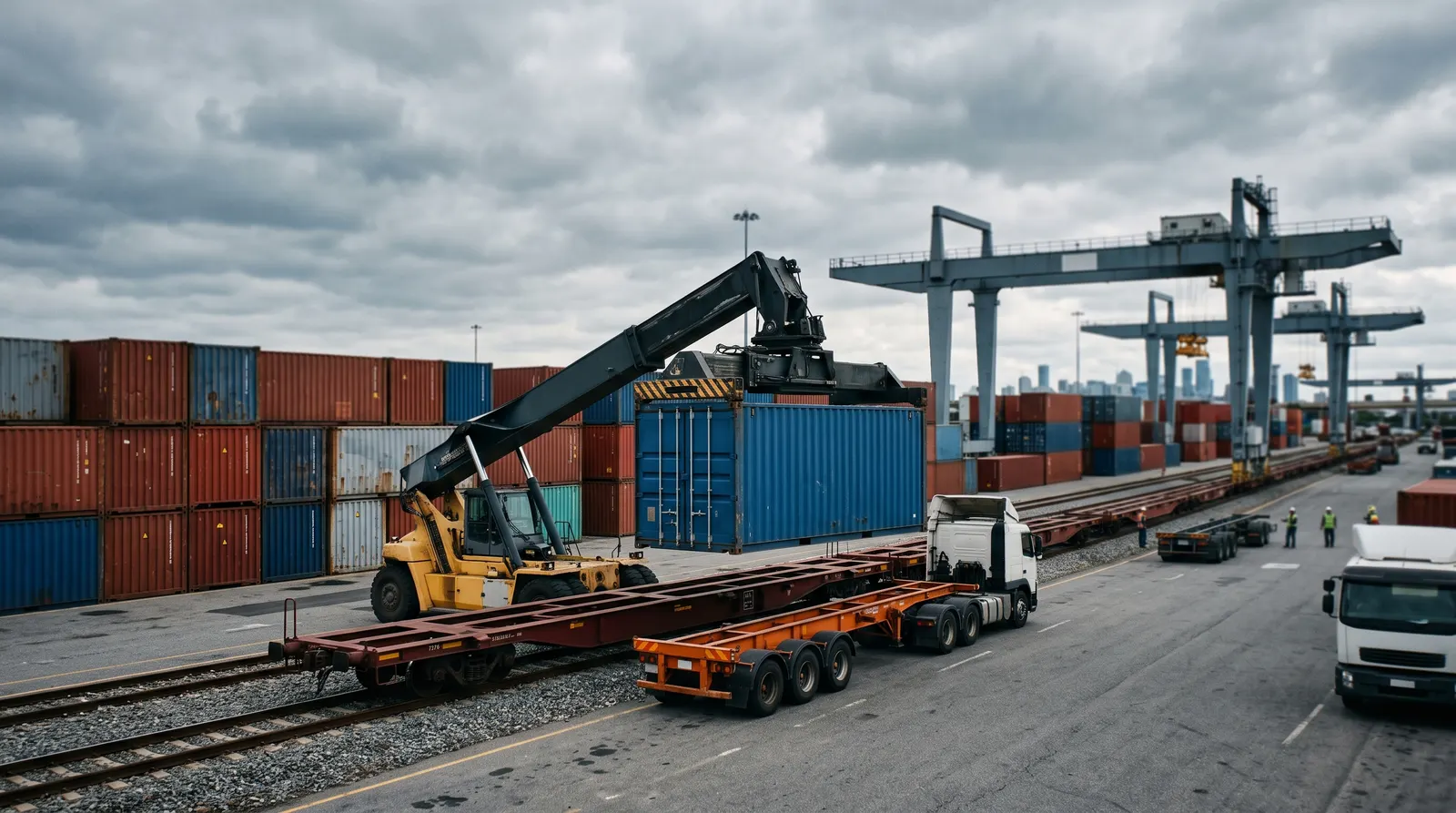
Most shipments do not travel on a single mode even when the shipper thinks of them that way. An "ocean" container still moves by truck to the port of loading and by truck again from the port of discharge to the final warehouse. What separates true multimodal shipping from an ordinary ocean or air booking is not the number of vehicles involved — it is who holds the contract, and how many bills of lading you are chasing to find out where your cargo actually is.
This guide covers what multimodal shipping means in practice, how it differs from intermodal and combined transport, and when combining modes under one contract is worth the coordination it takes.
What is multimodal shipping?
Multimodal shipping is the movement of a single consignment using two or more transport modes — typically ocean, rail, road, or air — under one contract and one through bill of lading, issued by a single carrier or forwarder who takes responsibility for the entire journey.
The defining feature is contractual, not physical. In a multimodal move, one party (a multimodal transport operator, or MTO) is liable for the cargo door-to-door, regardless of which mode is carrying it at any given moment. You get one bill of lading, one point of contact, and one claim process if something goes wrong — instead of separate contracts and separate liability regimes for each leg.
A typical example: a factory in Chengdu ships electronics that move by road to a rail terminal, by rail across the China–Europe corridor, then by road again to a distribution center in Germany. Three modes, one shipment, one document trail.
Multimodal vs intermodal vs combined transport
The terms overlap in casual use, but the distinction that matters commercially is the number of contracts — not the number of trucks or trains involved.
| Term | What it means | Number of contracts |
|---|---|---|
| Multimodal transport | Two or more modes, one contract, one liable party door-to-door | One |
| Intermodal transport | Cargo moves in the same container/unit across modes, but each leg can be contracted separately | One or more |
| Combined transport | Often used interchangeably with multimodal in EU/UK usage; generally implies one contract | One |
| Segmented / separate bookings | Shipper books ocean, then books trucking separately | Multiple |
In practice, most shippers use "multimodal" and "intermodal" loosely. The commercially important question to ask a forwarder is simple: is this one bill of lading covering the whole route, or am I on the hook for coordinating the handoffs myself? That answer determines who absorbs the risk of a missed connection.
How a multimodal move is put together
A multimodal shipment is built from individual mode legs — each with its own routing, equipment, and transit characteristics — stitched into a single itinerary by the operator.
Common leg combinations:
- Rail + road: China–Europe rail corridors landing at an inland terminal (Duisburg, Warsaw, Madrid), then trucked the last mile — for example, cargo moving on the Shenzhen–Hamburg corridor before continuing by road.
- Ocean + road: The most common multimodal pattern by volume — an FCL or LCL container moves by sea to a gateway port, then by truck to an inland destination that has no direct port access.
- Ocean + rail + road: Common for inland Asian or European destinations where neither a direct sea route nor a direct road route exists economically.
- Air + road: Air freight to a gateway airport, then a short trucked leg to final delivery — standard for most air shipments but rarely called "multimodal" in casual use because the road leg is so short.
Container-based cargo (standard 20GP, 40GP, and 40HC boxes) transfers between modes without unpacking, which is the main reason multimodal has grown: the box itself does the work of keeping cargo intact across handoffs. Break-bulk or specialized cargo generally needs project-cargo handling instead, since it cannot move seamlessly between standard equipment types.
When multimodal shipping makes sense
Multimodal is worth the added coordination when a single mode cannot reach the origin or destination directly, when transit time matters more than the lowest possible freight cost, or when the shipper wants one liable party instead of managing several.
Situations where combining modes is the right call:
- The destination has no direct port or airport access. Inland cities in Central Asia, Eastern Europe, or landlocked regions are often only reachable economically by combining a sea or rail leg with road.
- You need a transit time between ocean and air. Rail-plus-road on the China–Europe corridor typically lands well inside ocean's transit window while costing meaningfully less than air freight — a genuine middle option rather than a compromise.
- You want one point of accountability. Managing three separate carrier contracts across three modes means three separate claims processes if something is damaged or delayed. A single multimodal contract puts that burden on the operator instead of the shipper.
- Peak season or capacity constraints on one mode. When ocean space is tight on a given lane, a rail or road alternative for part of the journey can preserve a delivery date that a pure-ocean routing would miss.
Multimodal is not automatically cheaper. Adding legs adds handling points, and each transfer is a place where cargo can be delayed or damaged if the handoff is not managed well. The case for multimodal rests on solving a routing or timing problem that a single mode cannot — not on assuming more modes means more savings.
What to check before booking a multimodal shipment
Before booking, confirm who is liable for each leg, what the through transit time actually assumes, and whether your cargo type is compatible with every mode in the routing.
A few practical checks:
- Liability regime. Ask whether the contract is a true through bill of lading (single liability) or a set of back-to-back bookings dressed up as one itinerary. The difference matters if cargo is damaged mid-route and you need to know which leg's liability terms apply.
- Cargo compatibility across every leg. Dangerous goods, oversized cargo, and reefer freight face different restrictions on each mode — rail in particular has tighter DG restrictions than ocean. Confirm your special cargo type is cleared for every leg before booking, not just the first one.
- Realistic transit time, not best-case. Published multimodal transit times are often terminal-to-terminal for the fastest leg, with handoff buffers glossed over. Build in time for the transfer points, particularly customs clearance where a mode change crosses a border.
- Incoterms alignment. Multimodal routings interact with the shipment's incoterms in ways a single-mode shipment does not — confirm where risk transfers relative to each leg, especially for door-to-door quotes that bundle multiple carriers under one forwarder.
The free route calculator is a useful first step for sanity-checking a multimodal routing — it resolves any two cities to the nearest port or air gateway with an indicative transit time, so you can see roughly where the mode changes will fall before you ask for a quote.
How Holo Cargo helps
Holo Cargo quotes and books multimodal routings — ocean, rail, road, and air legs combined under a single itinerary — with operators coordinating each handoff and the carriers or customs-brokerage partners involved at every transfer point. Every leg is itemised in the quote, and the price you're quoted is the price on the final invoice for the freight and handling charges covered.