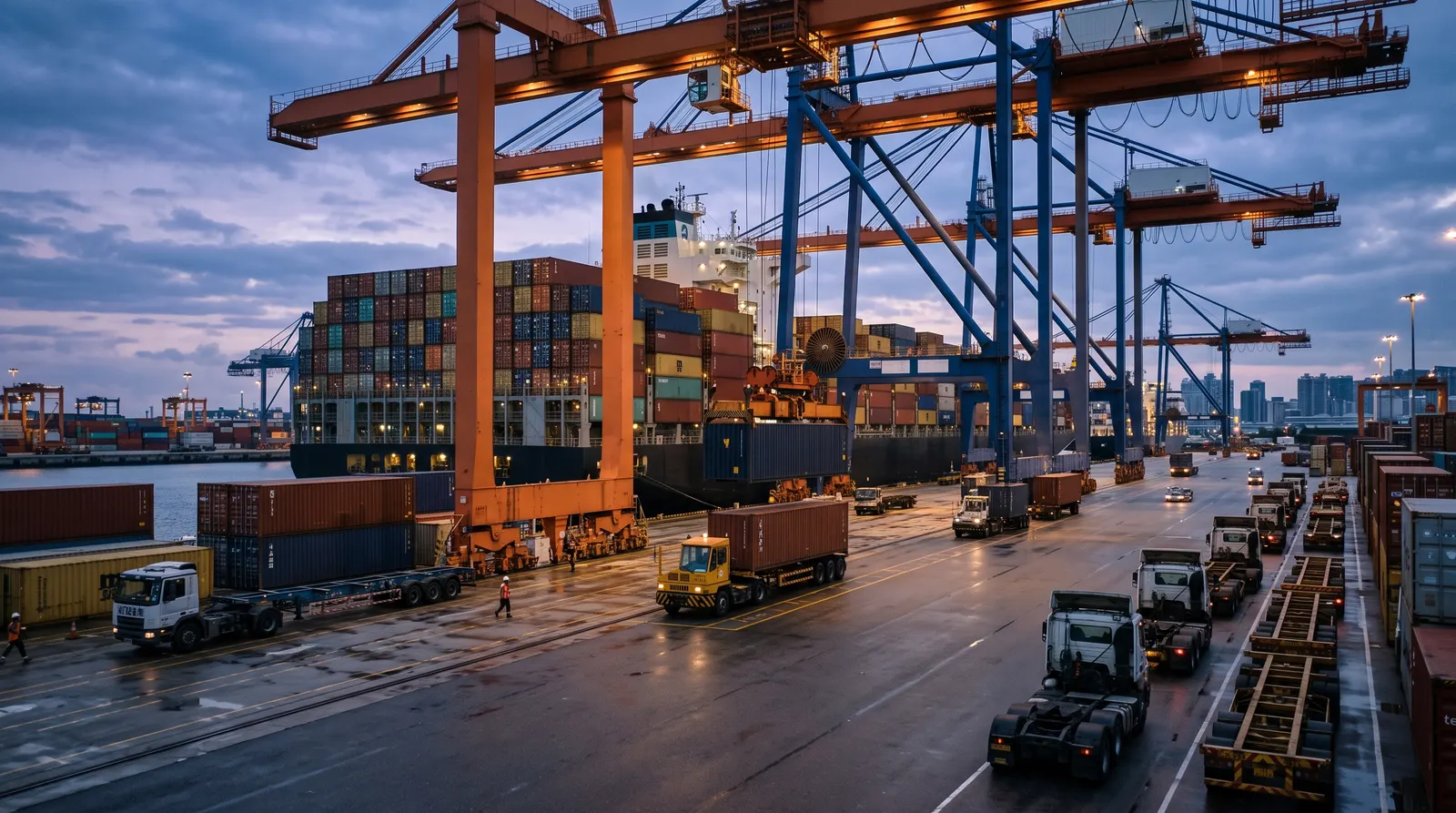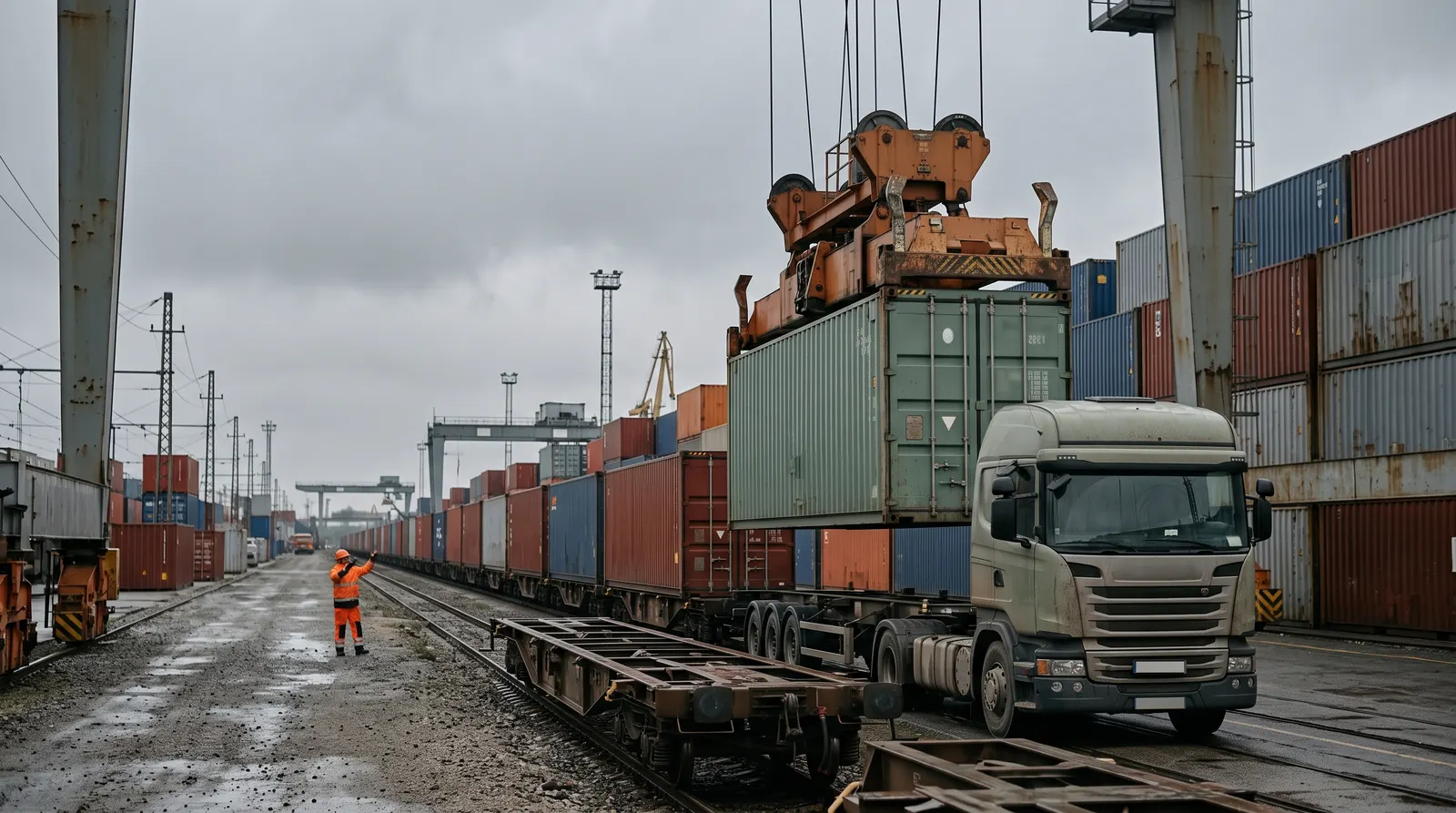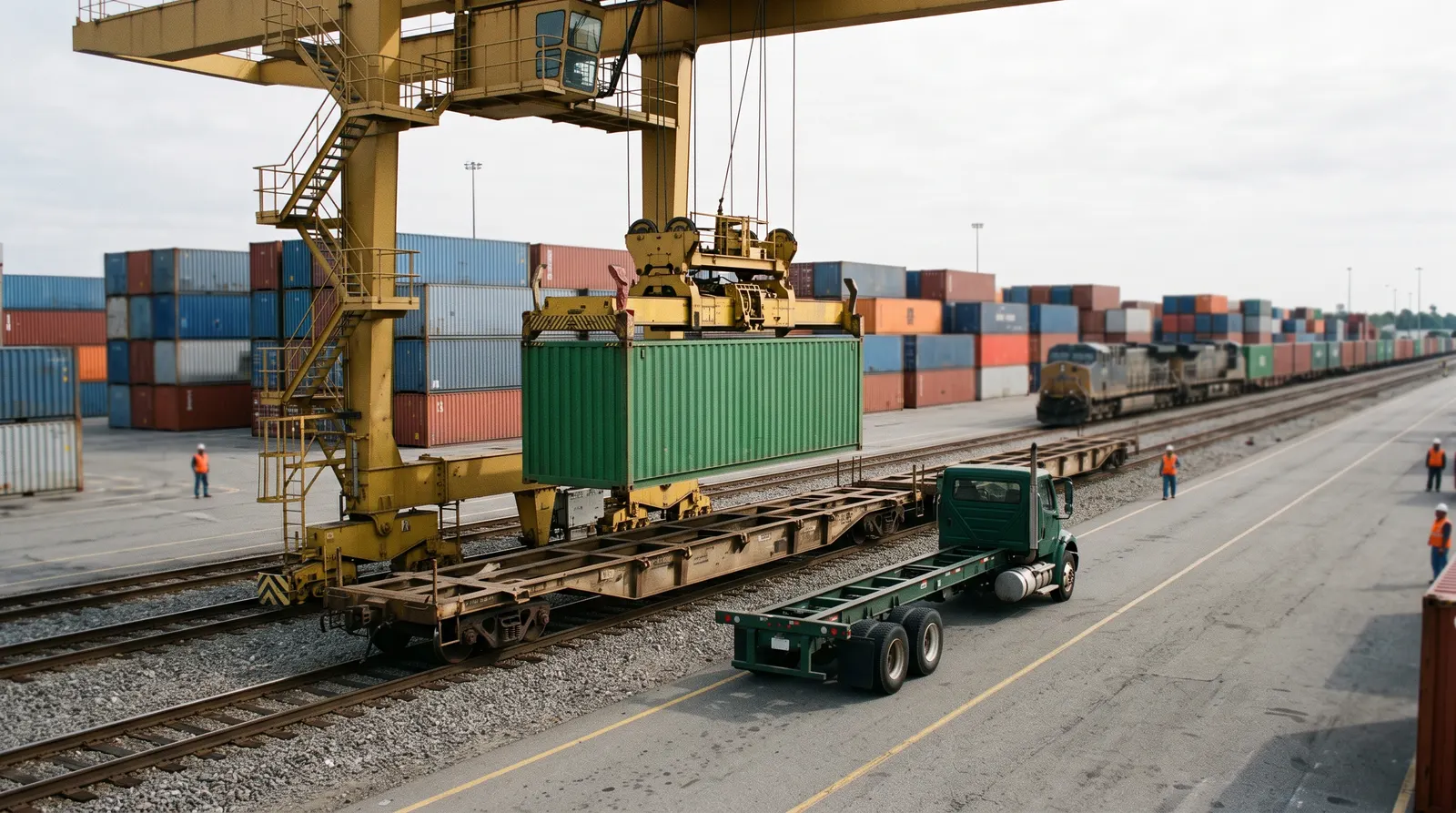
Shippers moving cargo inland default to trucks because road freight is simple to book and easy to picture. Rail freight gets less attention, but on the right lane it moves the same cargo for meaningfully less money — the trade-off is a fixed schedule, terminal handling at both ends, and a corridor that has to exist in the first place. Knowing what rail freight actually is, and where it fits, keeps you from either overlooking a cheaper option or booking a mode your lane and volume cannot support.
What is rail freight shipping?
Rail freight is the movement of cargo by train between fixed terminals, typically over long domestic or cross-border corridors, using containers, wagons, or flatcars rather than a truck moving door to door. It is one of five modes Holo Cargo books alongside ocean, air, road, and multimodal, and it is most often used for the inland leg of a longer international journey rather than as a standalone service.
Cargo travels on rail in a few forms: standard shipping containers (20GP, 40GP, 40HC) loaded onto flatcars, which is the most common setup for containerized freight moving on established corridors; bulk wagons for loose commodities; or specialized rail cars for cargo that does not fit standard container dimensions. Because standard containers transfer between a truck, a rail flatcar, and a ship without unpacking, rail slots into an international move without adding a repacking step — the box itself carries the cargo through each handoff.
Rail is rarely the entire journey. A shipment almost always needs a truck for the first mile from the shipper's dock to the origin rail terminal, and another for the last mile from the destination terminal to final delivery. Rail is the middle leg, not the whole route.
How a rail freight shipment actually moves
A rail move has five stages: drayage to the origin terminal, terminal handling and loading, the line-haul rail journey, terminal handling at destination, and drayage to final delivery. Each stage adds its own cost and its own point where a shipment can wait for the next available slot.
The sequence in practice:
- Origin drayage — a truck moves the container from the shipper's warehouse to the nearest rail terminal with capacity on the corridor you need.
- Origin terminal handling — the container is lifted onto a flatcar or the wagon is loaded and staged for the next scheduled departure.
- Line-haul rail movement — the train runs the fixed corridor between origin and destination terminals on a published schedule, not on demand.
- Destination terminal handling — the container or wagon is unloaded and staged for pickup.
- Destination drayage — a truck completes the final leg to the consignee's address.
That structure is why rail rarely beats road on short distances: the terminal handling and drayage on both ends are fixed costs that a single door-to-door truck movement simply does not incur. Rail's advantage shows up on the line-haul segment, and it only outweighs the terminal costs once the distance and volume are large enough.
What rail freight costs — and why it is not just the line-haul rate
Rail freight pricing has the same shape as any inland move: an origin charge, a freight charge, and a destination charge — except the freight charge on rail includes terminal handling on both ends, not just the line-haul rate. Comparing a rail quote to a road quote on the headline rate alone misses most of the real cost difference.
| Origin drayage | Truck from shipper dock to rail terminal |
|---|---|
| Origin terminal handling | Lift-on / loading fee at the rail terminal |
| Line-haul rail rate | The train movement itself, corridor-dependent |
| Destination terminal handling | Lift-off / unloading fee at the rail terminal |
| Destination drayage | Truck from rail terminal to final delivery point |
Because two terminal handling fees and two drayage legs sit on either side of the line-haul rate, rail rarely wins on cost for short or medium distances — the fixed handling costs eat the savings. Rail pulls ahead once the corridor is long enough and the volume is close to a full wagon or block-train load, so the line-haul savings outweigh the terminal costs on both ends. That threshold varies by corridor, equipment availability, and how much volume you can commit to a single movement.
Rail freight transit times: what actually varies
Rail transit times vary more by corridor than any other mode, because they depend on network congestion, border crossings, and how frequently trains run on that specific route — always confirm the schedule for your corridor rather than assuming a generic rail timeline. A well-established corridor with frequent departures behaves very differently from a thinner route with weekly service.
The number that matters in practice is not the line-haul schedule alone but the door-to-door total once drayage and terminal dwell on both ends are added in. A rail corridor that looks fast on paper can still land slower than expected once transfer time is included — build that buffer into any deadline-sensitive planning, and treat published line-haul schedules as one input rather than the full answer.
When rail freight makes sense for inland cargo
Rail rewards shippers who can plan ahead and commit volume to a fixed schedule. It is the right call when:
- The lane sits on an established rail corridor with reliable, reasonably frequent service — without that infrastructure, the decision is already made in road's favor.
- Volume is close to a full wagon or block-train load. Below that threshold, the fixed terminal handling on both ends usually erodes rail's line-haul advantage.
- The shipment is not time-critical. Rail runs on a published schedule; missing a cutoff typically means waiting for the next departure, not the next available truck.
- Cargo is dense, heavy, and durable — bulk commodities, industrial materials, palletized freight in volume — rather than light, fragile, or urgent.
- Distance is long enough that the line-haul savings clearly outweigh two rounds of terminal handling and drayage.
Shippers moving recurring, high-volume freight along a fixed corridor are the strongest candidates. A one-off shipment, an urgent order, or a lane with no rail infrastructure is usually better served by road freight, even at a higher per-kilometre rate.
When rail is not the right call
Rail is a poor fit for shipments with a hard delivery appointment, mixed or partial loads that would not fill rail capacity efficiently, or lanes where no corridor connects the origin and destination regions at all. Dangerous goods also face tighter restrictions on rail than on ocean or road, so DG cargo needs its classification confirmed against the specific rail carrier's rules before booking, not after. For oversized or non-containerized freight, a special cargo team can confirm which mode — and which equipment — actually fits the shipment.
If any of those conditions apply, road freight's flexibility on pickup timing and its single-handling profile usually outweighs rail's cost advantage, even when a corridor technically exists.
Rail as part of a longer international move
Rail freight rarely stands alone on an international shipment. It is typically one leg of a multimodal routing — a container moving by rail across a long inland corridor, then by road for the final delivery, or connecting to an ocean or air leg at a gateway. The China–Europe rail corridors are the clearest example: cargo trucked to an origin terminal, moved by rail across the continent, then trucked again to final delivery — a middle option between ocean's cost and air's speed on origins and destinations that a single mode cannot reach efficiently on its own.
Before requesting a rail quote, the free route calculator resolves your origin and destination to the nearest gateway with an indicative transit estimate, which is a useful sanity check on whether a rail corridor is even in play for your lane.
How Holo Cargo helps
Holo Cargo quotes rail freight with drayage, terminal handling, and the line-haul rate itemised separately, so you see the full door-to-door cost structure rather than a single bundled number. Operators coordinate the rail leg alongside any connecting road, ocean, or air segment so the handoffs are scheduled to match rather than left to chance.