Almost every ocean freight quote carries a line item called THC — usually twice, once tagged "origin" and once "destination." It is rarely the biggest number on the sheet, but it is one of the most misunderstood, because whether you pay it depends entirely on the Incoterm written into your sales contract. Get that wrong and you can end up paying a charge your supplier already agreed to cover, or vice versa.
What Is THC (Terminal Handling Charge)?
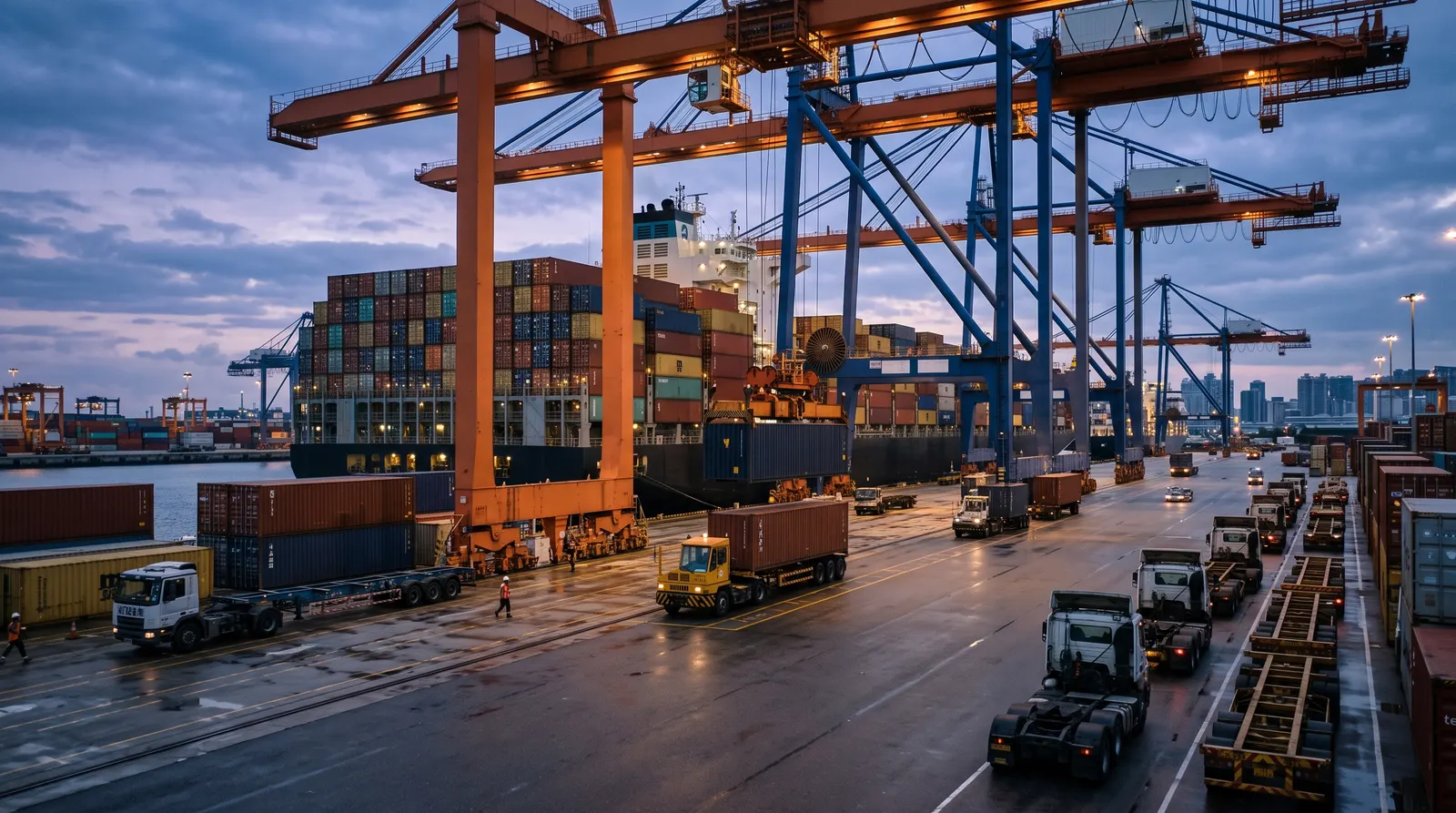
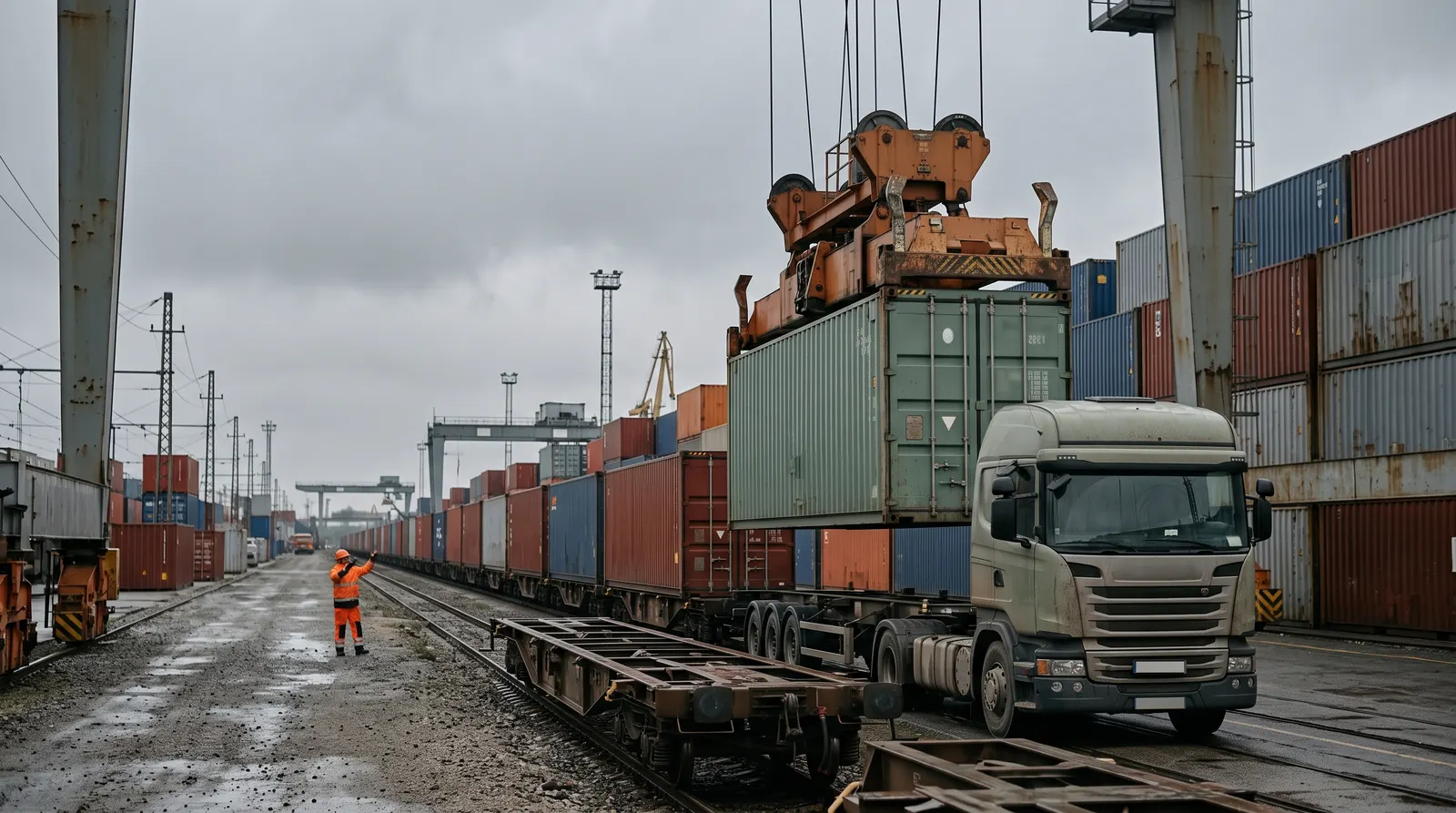
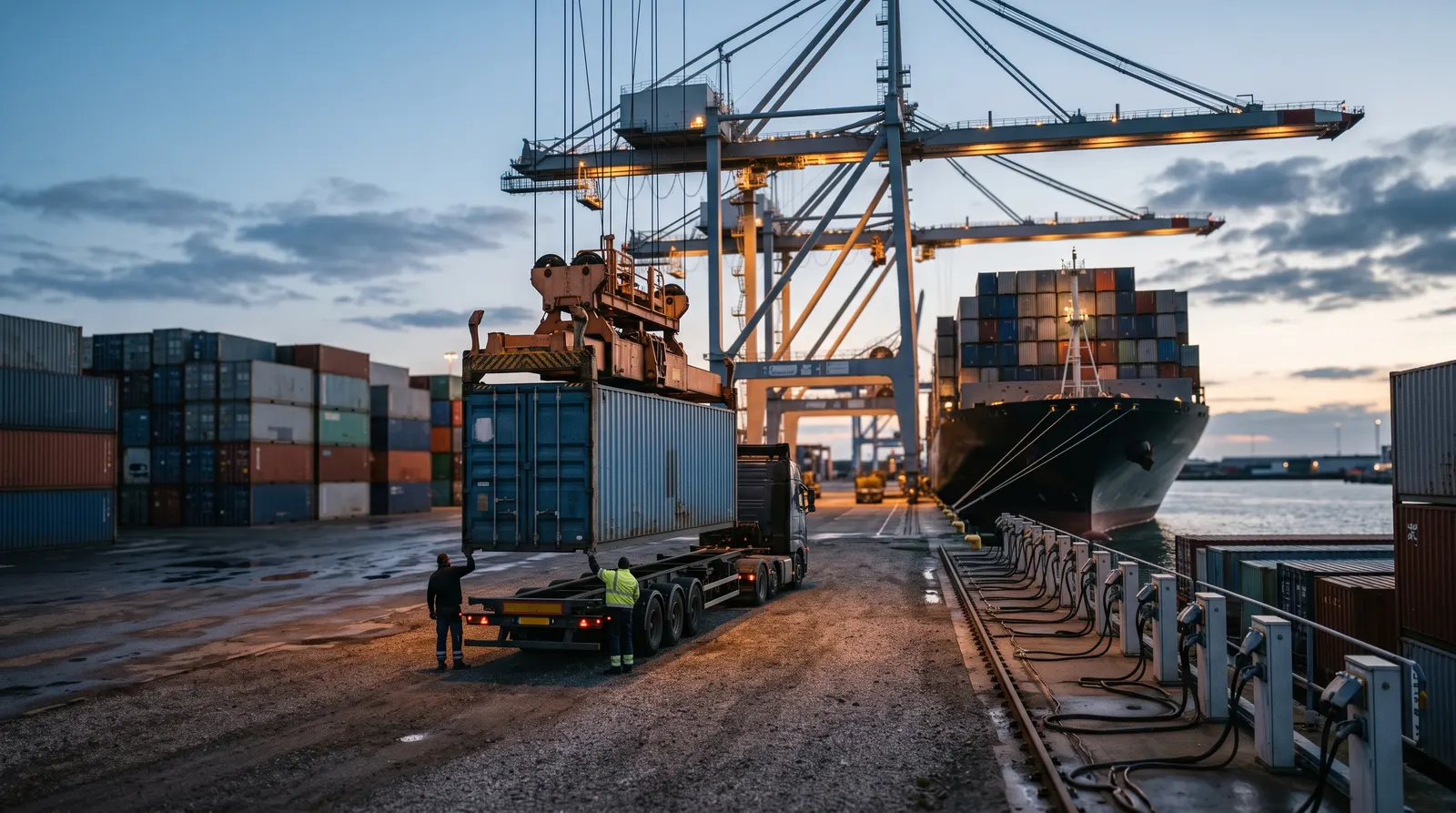
THC is the fee a port terminal charges to move a container between the ship and the gate — lifting it on or off the vessel, shifting it within the yard, and staging it for truck or rail pickup. It is billed separately from the Ocean Freight Rate (OFR) because the terminal operator, not the carrier, performs the work and sets the price, even though the carrier typically collects it on the terminal's behalf and passes it through on your quote.
Every container touches a terminal twice on a single voyage: once at the load port before it boards the vessel, and once at the discharge port after it comes off. That is why quotes show THC as two distinct lines — origin THC and destination THC — each priced independently and each payable by whichever party the Incoterm assigns to that leg.
What THC Actually Covers
Terminal handling is a bundle of physical yard operations, not a single task. On a typical port pass-through, the charge covers:
- Crane lift on/off the vessel — moving the container between ship and quay
- Yard handling and stacking — repositioning the container within the terminal until it's ready for the next leg
- Gate processing — the administrative and security check as the container enters or exits the terminal
- Short-term storage within free time — the terminal's own holding period before demurrage or storage charges apply
THC does not cover inland trucking, customs clearance, or the ocean voyage itself — those are separate quote lines (TRK, customs brokerage fees, and OFR respectively). It also does not include demurrage or detention, which only apply once a container overstays its free time; THC is charged regardless of how quickly the container clears the terminal.
Origin THC vs Destination THC
Origin THC is levied by the load-port terminal and reflects local costs — labour rates, crane productivity, and port congestion at that specific gateway. Destination THC works the same way in reverse, set by the discharge-port terminal. Because each port sets its own tariff, the two figures on a single quote are rarely equal, and there is no fixed ratio between them: a busy, high-cost gateway on one end of a lane can carry a materially higher THC than a smaller terminal on the other end.
| Origin THC | Load-port terminal fee — lift-on, yard handling, gate-out |
|---|---|
| Destination THC | Discharge-port terminal fee — lift-off, yard handling, gate-in |
| Basis | Per container (FCL) or per CBM (LCL, via the CFS) |
| Set by | The terminal operator at each port, not the ocean carrier |
Who Pays THC: It Comes Down to Incoterms
THC responsibility is one of the most common Incoterm disputes because both parties often assume the other is covering it. The rule of thumb: whoever is responsible for the freight leg touching a given port is responsible for that port's THC.
- EXW / FCA — the buyer arranges the ocean freight, so the buyer's forwarder quotes and pays both origin and destination THC (origin THC may be built into the seller's local delivery cost under some FCA variants — confirm which point of delivery applies).
- FOB — the buyer's forwarder books and pays the ocean freight, same as FCA, but because the seller's obligation under FOB runs through loading the container on board, origin THC is commonly billed to the seller's side as part of getting the box on the vessel — don't assume it follows the same split as FCA without confirming with the booking party.
- CFR / CIF / CPT / CIP — the seller arranges and pays the ocean freight through to the named port or place, which typically includes origin THC; destination THC generally falls to the buyer since the seller's cost responsibility ends at the vessel or named destination point, not the terminal gate-out.
- DAP / DDP / DDU — the seller is responsible for delivery to (or into) the buyer's location, so the seller's forwarder typically absorbs both origin and destination THC as part of the all-in door rate.
The incoterms guide breaks down exactly where cost and risk transfer for each of the ten terms — worth checking before you finalize a sales contract, because the terminal handling split is one of the most frequent line items that gets double-charged or missed entirely when both sides assume the other is booking it.
Why THC Varies So Much by Port
Unlike BAF or CAF, which move with global fuel and currency indices, THC is set locally by each terminal operator and does not move on a predictable schedule. Drivers of the variation include:
- Labour cost and port productivity — high-wage, high-automation terminals price differently than lower-cost gateways
- Terminal ownership and competition — ports with multiple competing terminal operators tend to see more price discipline than single-operator gateways
- Congestion and capacity — terminals running near capacity can carry structurally higher handling tariffs
- Equipment mix — reefer, oversized, or dangerous-goods containers often carry a THC premium for the additional handling and monitoring involved
Because the figure is port-specific and can be revised without the same advance-notice conventions carriers use for BAF, always confirm THC at both ends of the lane rather than assuming it will match a previous quote on the same route.
THC on FCL vs LCL Quotes
On FCL shipments, THC is quoted per container — a flat figure regardless of how full the box is, since the terminal is handling one physical unit either way. On LCL shipments, your cargo shares a container with other shippers' freight, so THC (along with the container freight station fee) is prorated per CBM based on your share of the box. That means a small LCL shipment absorbs a fraction of the same terminal handling cost that a full container pays outright — one of the reasons LCL pricing scales differently than FCL as volume grows.
THC Compared to Other Quote-Line Surcharges
THC sits alongside OFR, BAF, and CAF as one of the standard sections of an ocean freight quote, but it behaves differently from the fuel and currency surcharges:
| Charge | What it recovers | Moves with |
|---|---|---|
| OFR | Base ocean carriage | Carrier capacity and demand |
| BAF | Vessel fuel cost | Global bunker price index |
| CAF | Currency exposure | FX rates on the trade lane |
| THC | Terminal lift/yard/gate work | Local port tariff, set independently at each end |
Because THC is set by the terminal rather than the carrier, it does not automatically move when a carrier revises its BAF schedule, and it does not respond to currency swings the way CAF does. Treat it as a separate, port-specific line when comparing quotes rather than lumping it into the "freight" total.
How to Avoid THC Surprises
Three habits keep terminal handling from becoming a landed-cost surprise:
- Confirm the Incoterm and the THC split before booking. Ask explicitly which party's quote includes origin THC and which includes destination THC — do not assume symmetry.
- Request THC as its own line, not folded into "freight." A quote that bundles THC into a single all-in ocean freight figure makes it harder to catch a double-charge when both the buyer's and seller's forwarders think they've covered it.
- Re-confirm THC at booking, not just at quote stage. Because terminal tariffs are locally set and can change between a quote and the actual sailing, a confirmed booking sheet should restate the THC figure rather than carrying forward an estimate from weeks earlier.
The how shipping works guide walks through how the origin, freight, and destination sections of a quote fit together — including where origin and destination THC sit in each.