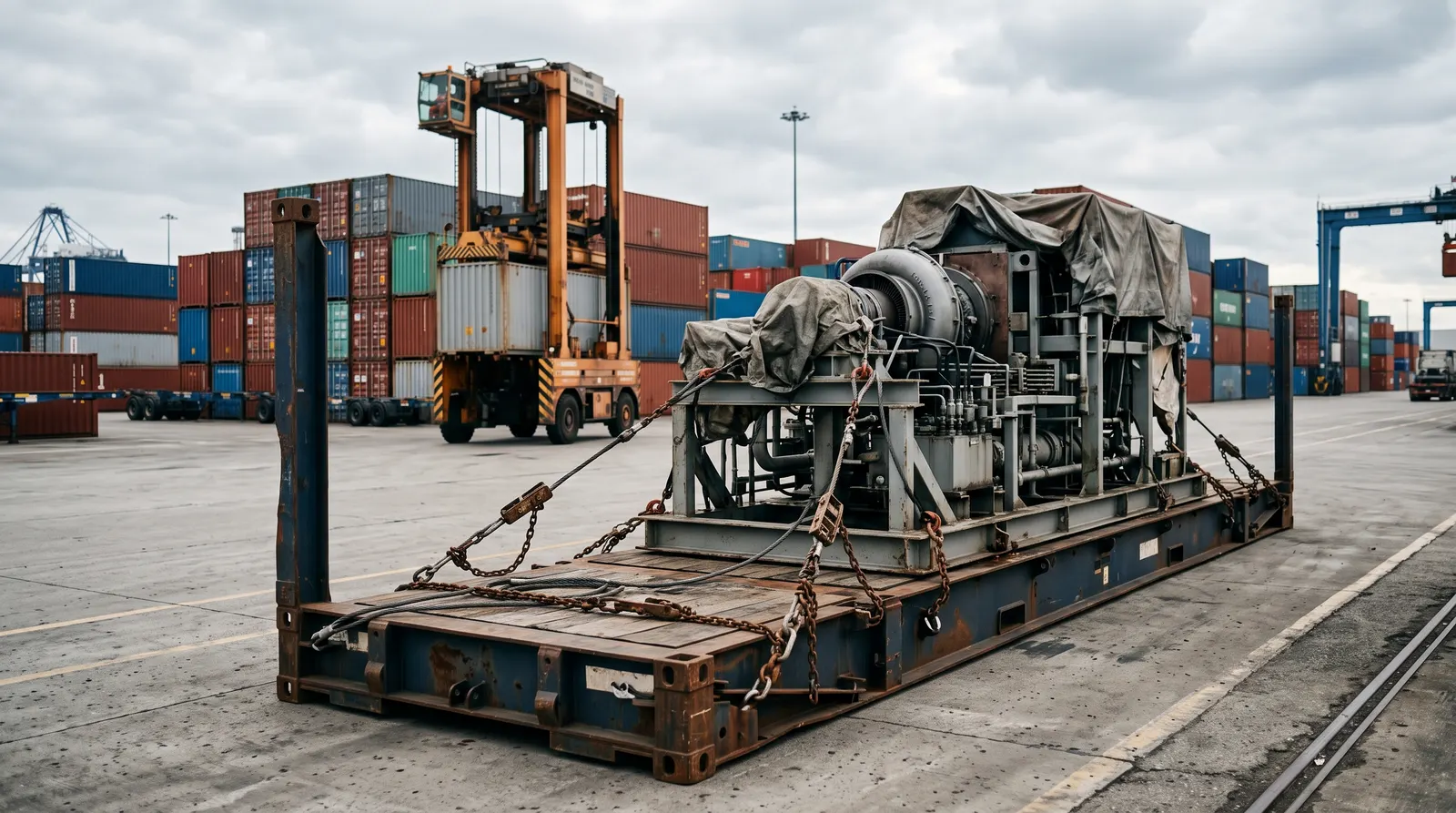
Most shippers pick a container size by habit, not by math: small order, book a 20ft; anything bigger, book a 40ft. That works often enough — until it doesn't. Dense cargo can hit a 20ft's weight limit long before the box is visually full, and light, bulky cargo can run out of cubic space in a 40ft while leaving payload capacity untouched. Getting the size wrong means paying for space you never use, or splitting a shipment you thought would fit in one box.
This guide walks through the actual specs, the weight-vs-volume trade-off that decides the call, and how to check your own cargo mix before you book.
20ft vs 40ft container specs at a glance
A 20ft container (20GP) holds up to 28,200 kg and 33.2 CBM. A 40ft container (40GP) holds up to 28,750 kg and 67.7 CBM — roughly double the volume for barely more weight capacity. That gap is the whole story: 40ft boxes are built for volume, not extra payload, so the right choice depends on whether your cargo is weight-limited or space-limited.
| 20GP (20ft) | 28,200 kg max payload / 33.2 CBM max volume |
|---|---|
| 40GP (40ft) | 28,750 kg max payload / 67.7 CBM max volume |
| 40HC (40ft High Cube) | 28,600 kg max payload / 76.4 CBM max volume |
The payload difference between a 20ft and a 40ft box is small — about 550 kg, under 2%. The volume difference is enormous — the 40ft holds more than twice the cubic space. A shipment that maxes out a 20ft's weight limit will rarely also fill its cubic space, and a shipment that fills a 40ft's cubic space will rarely also hit its weight limit. Almost no cargo does both at once, which is exactly why the decision needs a quick density check rather than a guess.
The weight-vs-volume trade-off, explained
Every commodity has a density — kilograms per cubic metre — and that density determines which limit you hit first: the container's weight cap or its volume cap. Heavy, dense cargo (machined parts, canned goods, tile, bagged minerals) runs out of payload allowance while the box still looks half-empty. Light, bulky cargo (furniture, textiles, empty packaging, insulation) fills the cubic space long before it gets anywhere near the weight limit.
A rough way to think about it: divide your total shipment weight by your total CBM.
- Above roughly 850 kg/CBM, you are likely weight-limited — a 20ft may max out on payload before the box fills, and splitting across two 20ft units can sometimes beat one overloaded attempt.
- Below roughly 300 kg/CBM, you are likely volume-limited — a 40ft (or 40HC) fills up on space with payload capacity to spare.
- Between those two figures, most general cargo fits comfortably into either size, and the choice comes down to cost per CBM and how much of the box you actually need.
The free cargo calculator turns your carton or pallet dimensions and weights into total CBM and total gross weight in one step — run your numbers through it before you book so you know which limit applies to your shipment, rather than guessing from habit.
When a 20ft container is the right call
Choose a 20ft when your cargo is dense enough to approach the weight limit before filling the box, or when your total volume simply doesn't justify paying for 40ft space you won't use. Typical cases:
- Dense, heavy commodities — machinery parts, metal stock, tile, canned or bottled goods, bagged construction material — where weight, not space, is the constraint.
- Shipments in the roughly 15–28 CBM range, where a 20ft fills efficiently and a 40ft would mean paying for unused cubic space.
- Lanes or carriers where the 20ft rate isn't proportionally cheaper per CBM than the 40ft rate — worth checking both, since pricing doesn't always scale linearly with size.
If your cargo is right at the edge of a single 20ft's weight limit, confirm axle and terminal handling weight limits at both ends too — a container can be within its own rated payload and still exceed a local road or crane restriction.
When a 40ft (or 40HC) container is the right call
Choose a 40ft when your cargo is light or bulky enough that cubic space, not weight, is the constraint — furniture, textiles, empty containers or packaging, low-density consumer goods. A 40GP gives roughly double the CBM of a 20GP for barely more weight allowance, which is the entire economic case for stepping up in size once your volume crosses the 20ft's practical fill point.
The 40ft High Cube (40HC) adds about 9 CBM over a standard 40GP — 76.4 CBM versus 67.7 CBM — from extra roof height, at a payload capacity only slightly lower (28,600 kg versus 28,750 kg). For light, bulky freight that stacks well, a 40HC is often worth requesting instead of a standard 40GP; the rate difference between the two is typically modest relative to the extra cubic space gained.
20ft vs 40ft: side by side
| Factor | 20GP (20ft) | 40GP (40ft) | 40HC (40ft High Cube) |
|---|---|---|---|
| Max payload | 28,200 kg | 28,750 kg | 28,600 kg |
| Max volume | 33.2 CBM | 67.7 CBM | 76.4 CBM |
| Best for | Dense, heavy cargo | Bulky, moderate-density cargo | Light, high-volume cargo that stacks well |
| Practical fill range | Up to ~28 CBM before weight typically becomes the limit | ~28–60 CBM range for most general cargo | Best when cubic space, not weight, is the binding constraint |
| Terminal handling | One THC per box | One THC per box (rate varies by terminal) | One THC per box |
Neither size is categorically "cheaper" — the ocean FCL rate for a 40ft is higher than a 20ft in absolute terms, but usually lower per CBM once you're shipping enough volume to justify the bigger box. That crossover point varies by lane, carrier, and season, so the only reliable way to confirm it is to request rates for both sizes on your actual lane rather than assuming.
What if your shipment doesn't fill either size well?
If your cargo is well under a 20ft's practical capacity, a full container of either size is likely the wrong call — LCL or consolidation gets you a per-CBM rate instead of paying for empty space. Shipments in the roughly 10–20 CBM range sit in a genuine grey zone: too large to be a clearly cheap LCL move, not quite enough to comfortably fill a 20ft.
In that grey zone, consolidation — buying a defined slice of a shared container at a negotiated flat rate — can land between open-market LCL pricing and a full 20ft booking, without paying for cubic space or payload allowance you don't need. The right move depends on your exact CBM and weight, which is why running the numbers through the cargo calculator before requesting quotes matters more than defaulting to whichever size "sounds right" for the order.
How to decide for your shipment
- Get your total weight and CBM. Use the free cargo calculator on your actual carton or pallet counts — don't estimate from memory.
- Check your density. Divide weight by CBM. High density points toward 20ft (or splitting across multiple 20ft units); low density points toward 40ft or 40HC.
- Compare cost per CBM, not just the headline rate. A 40ft costs more in absolute terms but is often cheaper per CBM once volume justifies it — request rates for both sizes before deciding.
- Confirm local handling limits. Road weight limits, crane capacity, and consignee dock restrictions can matter as much as the container's own rated payload.
- If neither size fits well, ask about LCL or consolidation rather than booking a container you'll under-fill either on weight or on space.
Getting the container size right the first time avoids paying for space you don't use and avoids the scramble of rebooking equipment after a shipment is already staged. Holo Cargo's operators confirm weight and volume against the right equipment before the quote is finalised, so the size on the booking is the size that actually fits.