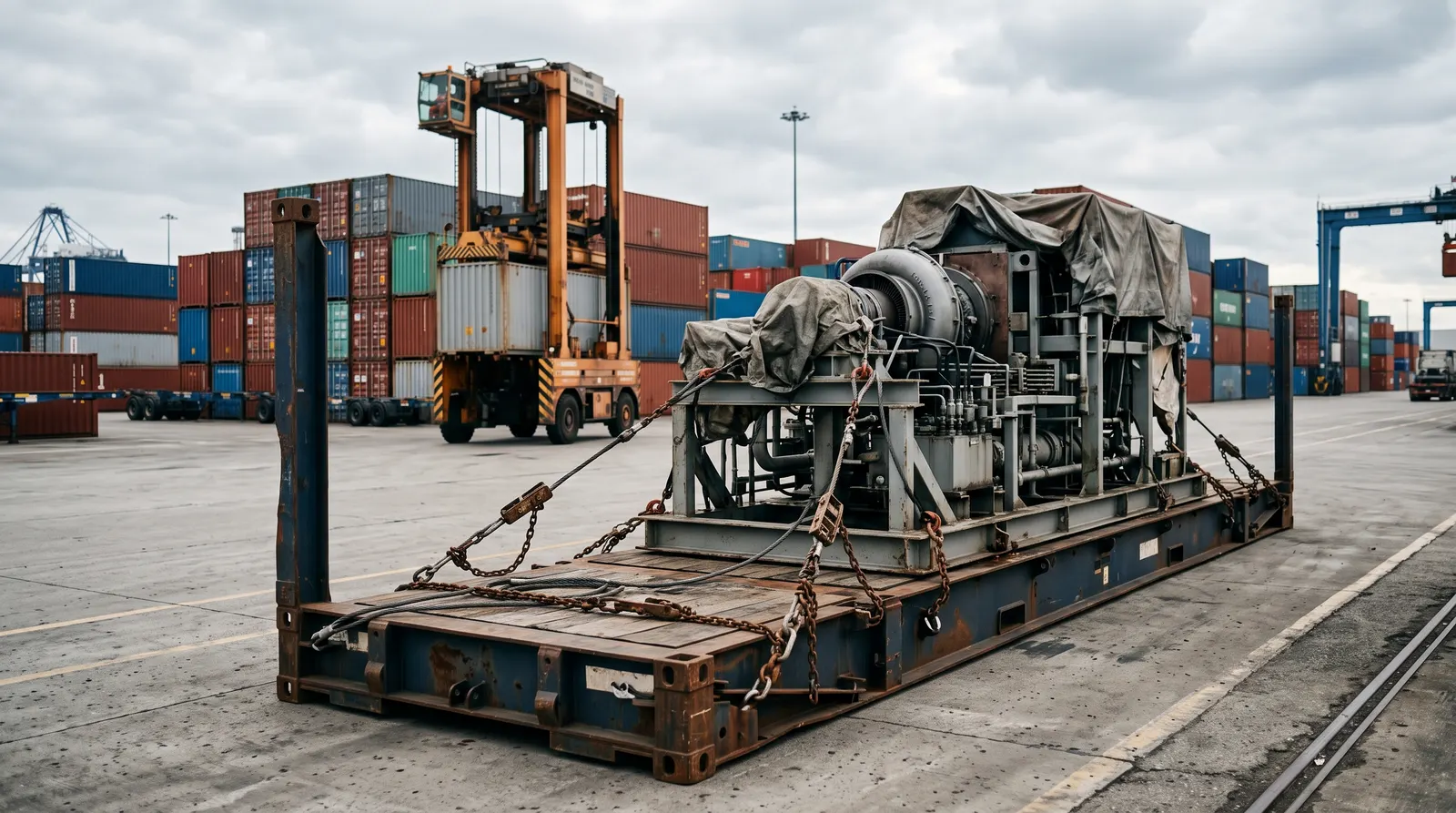
Ask any importer who has had cargo stuck at destination and the story usually traces back to one document: the bill of lading. It is not paperwork you file and forget — it is the contract, the receipt, and in most cases the only thing that lets you legally take possession of your goods. Get the type wrong or the details wrong, and the cargo can sit at the terminal while everyone argues over a document that should have taken five minutes to check.
What is a bill of lading?
A bill of lading (B/L) is a legal document issued by the carrier that does three jobs at once: it's a receipt for the cargo, evidence of the contract of carriage, and — for most types — the title document needed to claim the goods. Whoever holds a valid, properly endorsed original bill of lading is the party entitled to collect the cargo at destination, which is why banks, buyers, and sellers treat it as a financial instrument, not just a shipping form.
The B/L is issued once the carrier (or a co-loader on an LCL shipment) takes custody of the cargo, and it travels — physically or electronically — from shipper to consignee, often through a bank if the sale is on a letter of credit. Everything downstream, from customs clearance to release at the destination port, depends on the information printed on it matching reality.
The three roles a bill of lading plays
A single B/L simultaneously proves the carrier received the cargo in the stated condition, sets the legal terms of carriage, and — depending on type — controls who can claim the goods. Understanding which role is active in a given shipment explains most of the confusion shippers run into.
| Role | What it means in practice |
|---|---|
| Receipt | Confirms quantity, weight, and apparent condition of cargo at load |
| Contract evidence | References the carrier's terms and conditions of carriage |
| Document of title | For negotiable B/Ls, possession of the original controls release of cargo |
Only the third role — title — is what makes a bill of lading different from an invoice or a packing list. It is also the role that causes the most delay when something is off, because a carrier will not release cargo against a document that does not clearly establish who is entitled to it.
Types of bill of lading: straight, order, and bearer
The three core B/L types differ in who can claim the cargo: a straight B/L names one consignee only, an order B/L is negotiable and can be endorsed to a new party, and a bearer B/L can be claimed by whoever physically holds it. Choosing the right type is a commercial decision, usually driven by whether the shipment is financed through a bank.
- Straight bill of lading — consigned to a named party only; not transferable. Common for direct sales where no letter of credit or resale is involved, or between related companies.
- Order bill of lading — consigned "to order" (often "to order of shipper" or "to order of [bank]"); negotiable by endorsement. This is the standard form for letter-of-credit trade, since the bank holds the original until payment terms are satisfied.
- Bearer bill of lading — payable to whoever holds the original document, with no named consignee at all. Rare in practice because of the risk if the document is lost, but it exists as a form.
Most containerised cargo moves on an order B/L when a bank is involved in payment, or a straight B/L when the buyer and seller already trust each other and no negotiability is needed.
Master bill of lading vs house bill of lading
A master bill of lading is issued by the ocean carrier to the freight forwarder or NVOCC; a house bill of lading is issued by that forwarder to the actual shipper, and the cargo details on both must match exactly. On consolidated LCL shipments, the master B/L covers the whole container while individual house B/Ls cover each shipper's portion inside it.
This two-layer structure is normal and not a red flag by itself — but it does mean two documents have to agree on weights, marks, and descriptions. A mismatch between a house B/L and its master B/L is a common cause of confusion at destination customs, because the authorities are reconciling against the master manifest first.
Original B/L, telex release, and seaway bill
An original bill of lading must be physically surrendered (or a telex/express release issued) before the carrier hands over cargo; a seaway bill skips that step entirely because it was never issued as a negotiable document. Which one applies changes how fast — and how — you can collect your shipment.
- Original (paper) B/L — physical originals must travel to the consignee and be surrendered at destination before release. Slowest option, but required whenever the document needs to be negotiable (bank-financed trade).
- Telex release / express release — the shipper surrenders the original at origin, and the carrier's destination agent releases cargo without needing a physical document to arrive. Widely used to avoid original documents racing (or losing to) a fast vessel on short lanes.
- Seaway bill — issued as non-negotiable from the start; the named consignee can collect on proof of identity alone, no surrender required. Works well for repeat shipments between trusted parties where title transfer isn't a concern.
Choosing telex release or a seaway bill over an original B/L is one of the simplest ways to avoid destination delays on lanes with short transit times, where paper documents genuinely cannot outrun the vessel.
Why the details on a bill of lading matter
Every field on a bill of lading is a data point customs, the carrier, and the consignee all rely on — a mismatch in weight, description, or consignee name is one of the most common reasons cargo gets held rather than released. The B/L is not just correspondence; it's checked against the manifest, the commercial invoice, and the customs entry.
Fields worth double-checking before the vessel sails:
- Consignee and notify party — must match the entity actually authorised to collect and be notified of arrival; a wrong name can block release entirely
- Cargo description and HS-relevant detail — vague or inconsistent descriptions between the B/L and the commercial invoice are a common trigger for a customs exam
- Weight and measure — should reconcile with the container's VGM (verified gross mass) and the packing list
- Freight terms (prepaid vs collect) — determines who the carrier expects to collect payment from before release
- Incoterm referenced — clarifies where risk and cost transfer, which matters if a dispute arises over delay or damage; see our incoterms guide for how the ten terms group by handoff point
Because the B/L doubles as a legal and financial instrument, corrections after issuance usually require a formal amendment from the carrier — which costs time and sometimes a fee. Getting it right before the document is issued is far cheaper than fixing it after.
Common bill of lading mistakes that cause delays
Small errors compound because the B/L is referenced by multiple parties independently. The most frequent issues we see:
- Shipper name on the B/L doesn't match the letter of credit exactly, triggering a bank discrepancy
- Consignee address abbreviated or truncated, causing a notify-party mismatch at destination
- Cargo description too generic ("general merchandise") when customs expects commodity-level detail
- House and master B/L weights that don't reconcile on an LCL consolidation
- Original B/L requested when a telex release would have cleared cargo faster and cheaper
Each of these is preventable with a careful pre-issuance review — the earlier a discrepancy is caught, the cheaper it is to fix.
How Holo Cargo handles bill of lading data
On an ocean FCL or LCL booking through Holo, B/L details are captured once and checked against the commercial invoice, packing list, and customs entry before the document is issued — not after it's already circulating. That single point of data entry is what keeps consignee names, weights, and descriptions consistent across every downstream document.
When a customs question does come up, our customs brokerage partners work from the same verified data set, so there's no reconciling three versions of the same shipment under time pressure. If you want to see how a bill of lading fits into the rest of the shipment lifecycle, our how shipping works guide walks through the full door-to-door sequence.