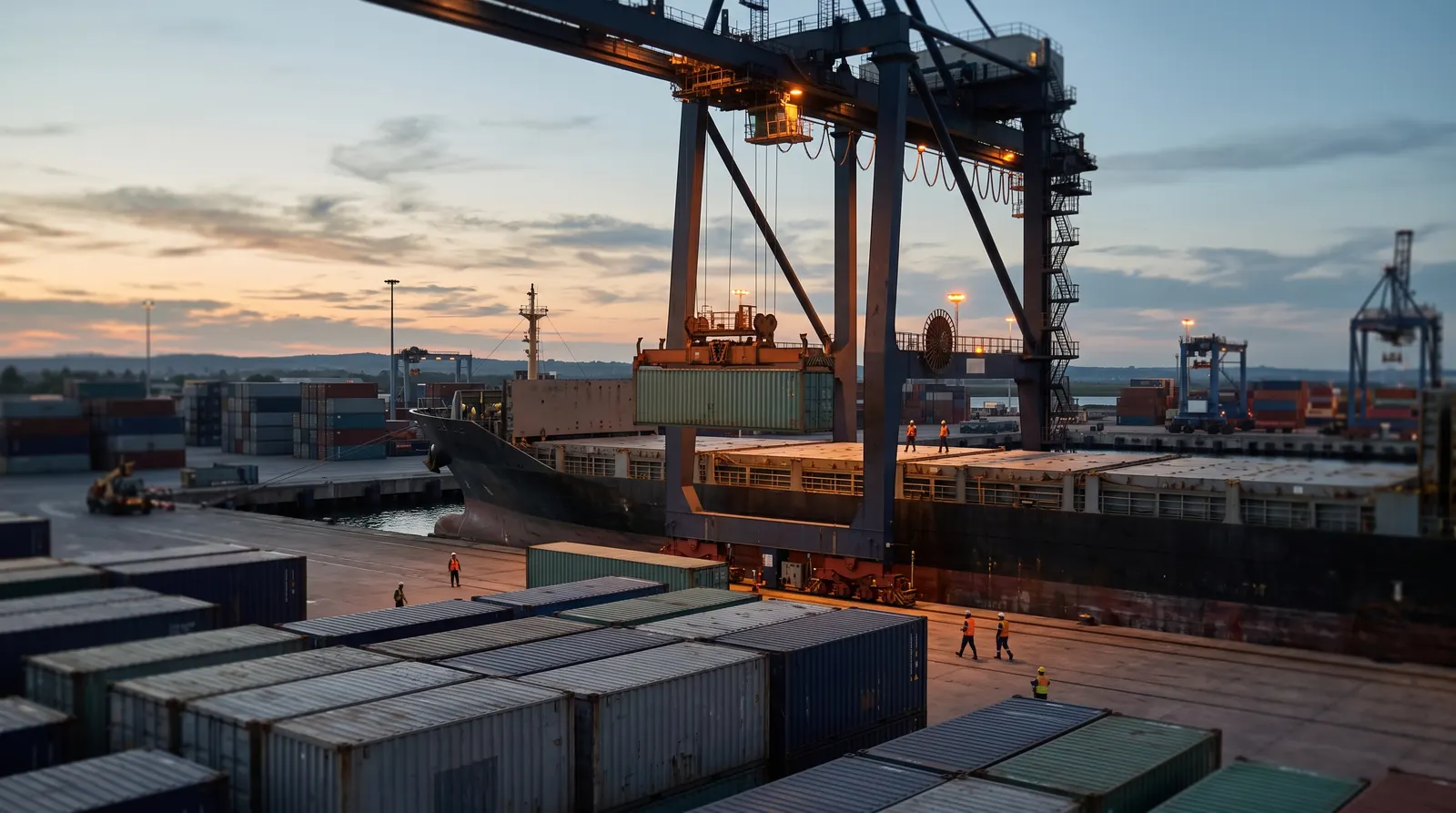
Most shippers assume that if a container is lost overboard or an air shipment is damaged in handling, the carrier makes them whole. That assumption is wrong far more often than it's right. Carrier liability is capped by international convention, not by the value of your goods — and the gap between what a carrier owes you and what your cargo is actually worth is exactly what cargo insurance closes.
What does cargo insurance actually cover?
Cargo insurance protects the value of your goods against loss or physical damage in transit — separately from, and in addition to, whatever limited liability the carrier accepts under the bill of lading or air waybill. It typically covers total loss, partial damage, theft, and general average contribution, subject to the policy's terms.
A cargo insurance policy is underwritten by an insurer, not by the freight forwarder or the carrier. The terms — coverage scope, deductible, exclusions, claims process — are set by the insurer. A forwarder like Holo Cargo can arrange cargo insurance as part of a quote, but the forwarder is never a party to the policy itself; the contract sits between you (or your insurer of record) and the underwriter.
Cargo insurance is separate from marine/aviation liability insurance the carrier itself carries, which exists to cover the carrier's own limited legal exposure — not the full commercial value of your shipment.
Why carrier liability isn't the same as insurance
Ocean and air carriers operate under liability regimes set by international convention (for ocean, instruments like the Hague-Visby Rules; for air, the Montreal Convention), and those regimes cap what a carrier owes per package or per kilogram — figures that were never designed to track the replacement value of modern cargo. A pallet of electronics or a container of finished goods can easily be worth many multiples of what the carrier's liability limit would pay out.
Carrier liability also comes with broad exceptions. Carriers are typically not liable for loss caused by:
- Inherent vice (the nature of the goods themselves, like spoilage)
- Inadequate packing
- Acts of God, war, or piracy in many policy forms
- General average — where you may owe a contribution toward jointly incurred losses, even if your own cargo wasn't damaged
None of that liability gap disappears because you didn't buy cargo insurance — it just means you carry the risk yourself.
When cargo insurance is worth it
| High cargo value relative to carrier liability cap | Electronics, machinery, branded goods — value routinely exceeds per-kg liability limits |
|---|---|
| Long or multi-leg routings | More handoffs (ocean + inland trucking, transshipment) mean more points where damage can occur |
| Fragile or sensitive cargo | Reefer, glass, precision equipment — physical damage risk is higher than average |
| New or single-source suppliers | No safety stock elsewhere means a lost shipment stops your operation, not just your balance sheet |
| Contractual or lender requirement | Some buyers, banks, or letters of credit require proof of cargo cover before funds release |
If your cargo is low-value, replaceable quickly, or the loss of a single shipment wouldn't materially affect your business, self-insuring (accepting the carrier's default liability) is a defensible choice. Most shippers moving anything of meaningful commercial value don't take that bet.
How cargo insurance is priced and quoted
Cargo insurance (line item INS on a Holo Cargo quote) is priced separately from ocean freight (OFR), air freight (AFR), and the other freight and handling charges on your quote — it sits in its own section because the insurer, not the freight rate, sets the premium and terms. Premiums are typically calculated as a small percentage of the declared cargo value, and the declared value is something you provide, not something a freight quote estimates for you.
Because the insurer determines the terms — deductible, exclusions, claims documentation requirements — a forwarder arranging the cover is passing through what the insurer offers, not setting the policy itself. That's worth knowing before a claim happens: read what you're buying, not just the premium line.
If you're comparing quotes across the ocean and air freight modes for the same cargo, ask whether insurance is included in each quote or priced separately — bundling practices vary by forwarder, and an apples-to-apples comparison needs to account for it.
What happens if you skip it and something goes wrong
Without cargo insurance, a claim against the carrier is capped at the liability limit set by the applicable convention — often a fraction of what the goods are worth — and you're the one absorbing the difference. Filing that claim also means proving the carrier was at fault and navigating the carrier's own claims process, which can take months and still resolve at the liability cap regardless of actual loss.
With cargo insurance in place, the claim runs through the insurer against the declared value (less any deductible), independent of what the carrier's liability cap would have paid. It's a materially faster and more complete path to being made whole, which is the entire point of buying it.
Who's responsible for insurance under your Incoterms?
Whether insurance is your responsibility or your counterparty's depends on the Incoterm on the deal — and only two of the ten shift that duty explicitly. Under CIF (Cost, Insurance, Freight) and CIP (Carriage and Insurance Paid To), the seller is obligated to procure cargo insurance covering the buyer's risk from the point of transfer onward. Under every other Incoterm — the origin-handoff terms (EXW, FCA, FOB) and the other port-arrival and door-delivery terms (CFR, CPT, DAP, DDP, DDU) — insurance is optional and left to whichever party wants the cover.
That distinction catches importers out more often than it should. CIF only obligates the seller to buy minimum market-clause coverage, and CIP's default requirement is broader — but "broader" still isn't the same as a level matched to your goods' full value or your risk tolerance. If you're the buyer on a CIF or CIP deal, read what the seller's policy actually covers before assuming you're protected; topping up with your own cover is common practice, not a red flag. Our guide to Incoterms breaks down where risk transfers under each of the ten terms, which is the first question to answer before deciding who needs to insure what.
Special cargo and higher-risk moves
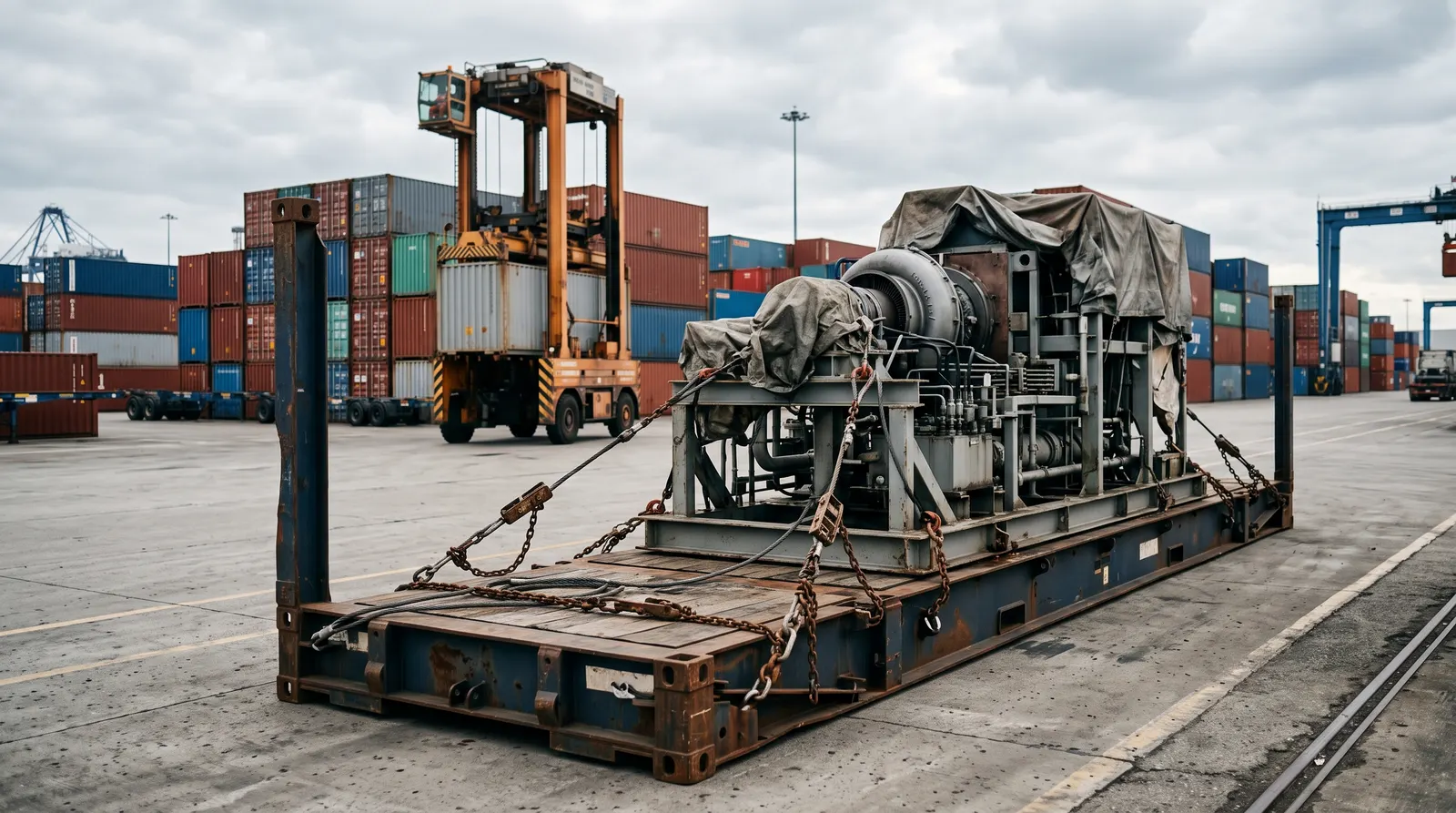
Reefer cargo, dangerous goods, and oversized or project cargo carry risk profiles that make the insurance conversation more urgent, not less. Temperature-sensitive goods can suffer total loss from equipment failure without any visible external damage; oversized cargo moved on open-top or flat-rack equipment has more exposure during handling. If you're moving special cargo — reefer, DG, or out-of-gauge freight — it's worth confirming coverage before booking, not after.
How Holo Cargo helps
Holo Cargo arranges cargo insurance as a distinct, itemised line on your quote alongside freight and handling charges, so you can see the premium before you book — the insurer sets the policy terms, and Holo is never a party to that policy. Our operations team can walk through the insurance line against your cargo's value and routing before you commit to a booking.