Cargo insurance pays out on losses that fit specific, defined categories — and denies claims that fall outside them, no matter how genuine the loss feels to the shipper holding it. Two structural choices decide which side of that line a claim lands on: whether the policy is named-perils or all-risk, and the standard exclusions that apply either way, regardless of which one you buy. Here's what's actually inside a typical cargo policy, what's carved out, and how a deductible changes the number that lands in your account after a claim.
Named perils vs. all-risk: two different shapes of cover
Cargo insurance is sold in two structural forms. Named-perils cover pays only for loss caused by a specific list of events written into the policy — fire, sinking, collision, stranding. All-risk cover, the market default for most commercial cargo, pays for physical loss or damage from any external cause except the exclusions written out explicitly.
Named-perils policies flip the burden onto the shipper: if the cause of loss isn't on the list, there's no claim, regardless of how real the damage is. All-risk cover flips that logic — everything is presumed covered unless the policy specifically carves it out — which is why the exclusions list below carries more practical weight than the list of what's covered. Most commercial shippers moving finished goods buy all-risk, because in-transit causes of loss like mishandling, wetting, or breakage during transshipment are common enough that proving which named peril applies isn't worth the narrower cover. Cargo insurance arranged on a Holo Cargo quote follows whichever structure the underwriter offers for your cargo and route.
What all-risk cargo insurance typically pays for
A standard all-risk marine cargo policy covers physical loss of or damage to the insured goods from an external cause during transit — total loss, partial damage, theft, and non-delivery — plus your contribution toward general average, subject to the policy's deductible and exclusions.
In practice, that typically includes:
- Total loss (vessel loss, aircraft loss, container overboard)
- Partial physical damage — breakage, crushing, water damage, contamination
- Theft, pilferage, and non-delivery of part of a shipment
- Damage during loading, unloading, or transshipment handling
- General average contribution and salvage charges (see below)
None of this is guaranteed by the carrier's own liability — carrier liability is capped by international convention and comes with its own broad exceptions, which is a separate question from what a cargo policy pays.
General average: the contribution you can owe even if your cargo wasn't touched
General average is a maritime-law principle: if the vessel and all cargo aboard face a common peril and the master takes deliberate action to save the voyage — jettisoning cargo, extinguishing a fire with seawater — every cargo owner aboard contributes proportionally to that loss, whether or not their own goods were the ones sacrificed.
This is standard ocean shipping practice, not an unusual clause buried in fine print. If a vessel declares general average, undamaged cargo can be held until its owner posts a general average bond or cash deposit — even when nothing happened to that specific container. A cargo insurance policy typically covers your general average contribution and associated salvage charges as part of the base cover, which is one of the more consequential reasons to carry it on an ocean FCL move: it's a cost you can owe with zero physical damage to your own cargo.
Deductibles: what actually lands in your account
A deductible (sometimes called an excess) is the portion of a claim the policyholder absorbs before the insurer pays anything — a flat amount, or a percentage of the claim or declared value, set by the underwriter per policy and per commodity.
A higher deductible lowers the premium; a lower deductible raises it. Some underwriters apply a higher percentage deductible to commodities with elevated handling risk — reefer, glass, precision equipment — than to general dry cargo. Read the deductible structure before comparing premiums across quotes: a cheaper premium with a steep deductible can cost more on an actual claim than a higher premium with a modest one.
Common exclusions — what cargo insurance won't pay for
| Inadequate or insufficient packing | Damage traceable to packing that wasn't fit for the mode and route is excluded — the insurer treats this as a shipper-controlled risk, not a transit peril |
|---|---|
| Inherent vice | Loss caused by the nature of the goods themselves — spoilage, natural shrinkage, self-heating — rather than an external cause |
| Ordinary wear, leakage, or gradual deterioration | Normal wear and tear over a routine transit isn't a covered loss event |
| War, strikes, riots, civil commotion | Excluded from standard all-risk cover; available only as a separate rider in most markets |
| Willful misconduct by the insured | Deliberate acts or fraud void the claim regardless of policy type |
| Delay | Loss caused by delay — even when the delay itself is the direct cause of financial loss — is excluded from standard cargo cover |
Delay is worth calling out on its own: standard cargo insurance covers physical loss or damage to goods, not the shipper's downstream business loss from a late arrival — a missed seasonal sell-through window, a contractual penalty, or demurrage racked up while a shipment sat waiting for customs. Even an all-risk policy generally won't pay for those unless the delay itself caused physical deterioration of the goods (spoiled reefer cargo held too long, for instance) — and even then, the insurer will look closely at whether the root cause is a covered peril or an operational one. If you're moving special cargo like reefer or DG, where delay and inherent vice sit close together, it's worth asking the underwriter directly how that boundary is drawn for your commodity.
What you need on hand to prove a claim
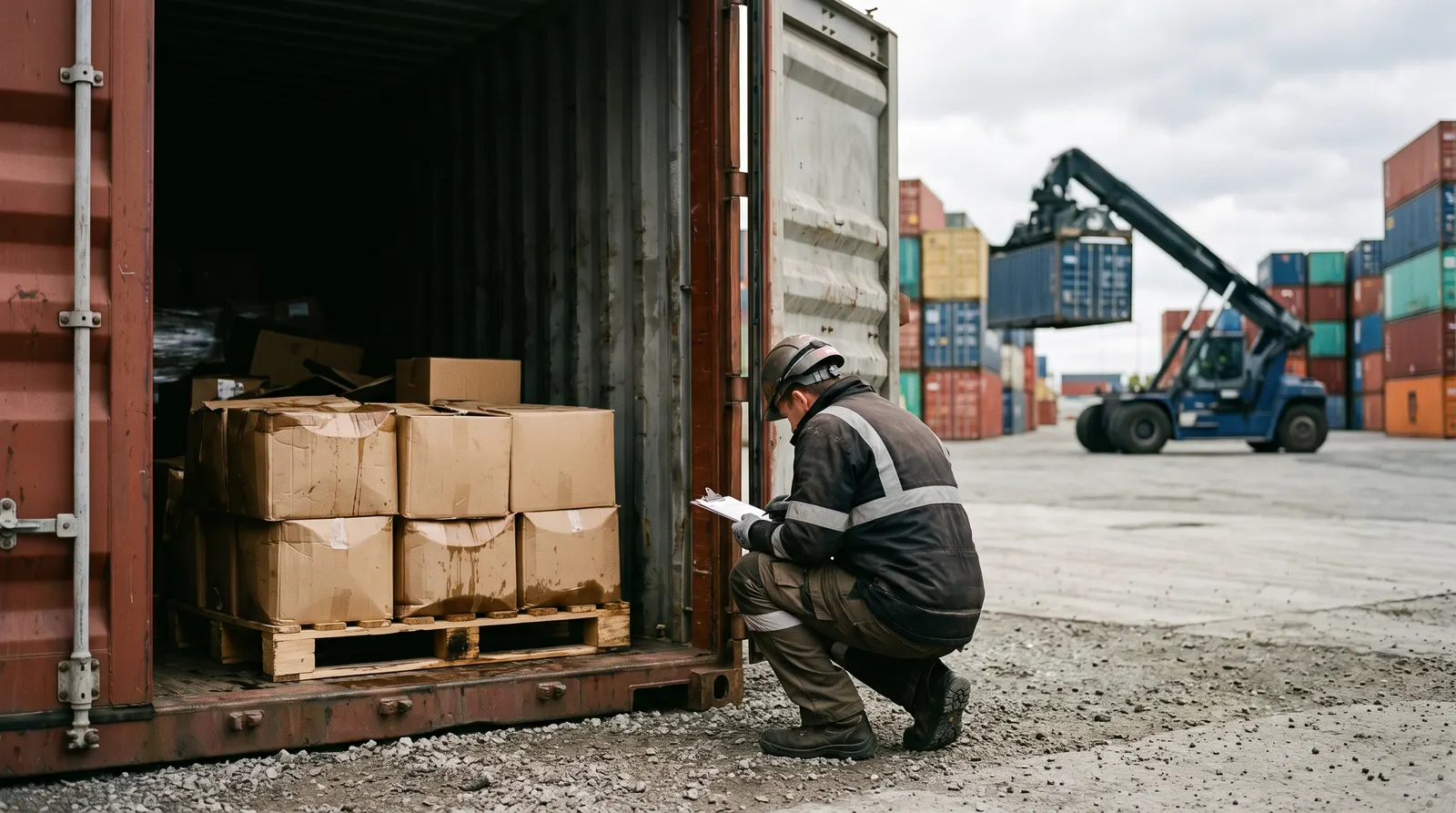
Filing a cargo insurance claim goes faster with four things ready before the loss is discovered: the commercial invoice and packing list showing declared value, the bill of lading or air waybill, a damage or survey report from delivery, and photos taken before the cargo is moved or repacked.
Under all-risk cover, the burden generally sits with the insurer to show an exclusion applies, rather than with you to prove which named peril caused the loss — but that only works in your favor if the documentation supports the claim in the first place. Packing documentation matters twice over: it's evidence for the claim, and it's also what an insurer checks first if inadequate packing is the exclusion in question. Who was responsible for packing and insurance procurement on the shipment often traces back to the Incoterm on the deal — our Incoterms guide breaks down where that responsibility sits under each of the ten terms.
How Holo Cargo helps
Holo Cargo arranges cargo insurance as an itemised line on your quote, separate from freight and handling charges, so the premium is visible before you book. The policy terms — cover type, deductible, exclusions — are set by the insurer, not by Holo Cargo, and our operations team can walk through what's in and out of a specific policy against your cargo and routing before you commit.