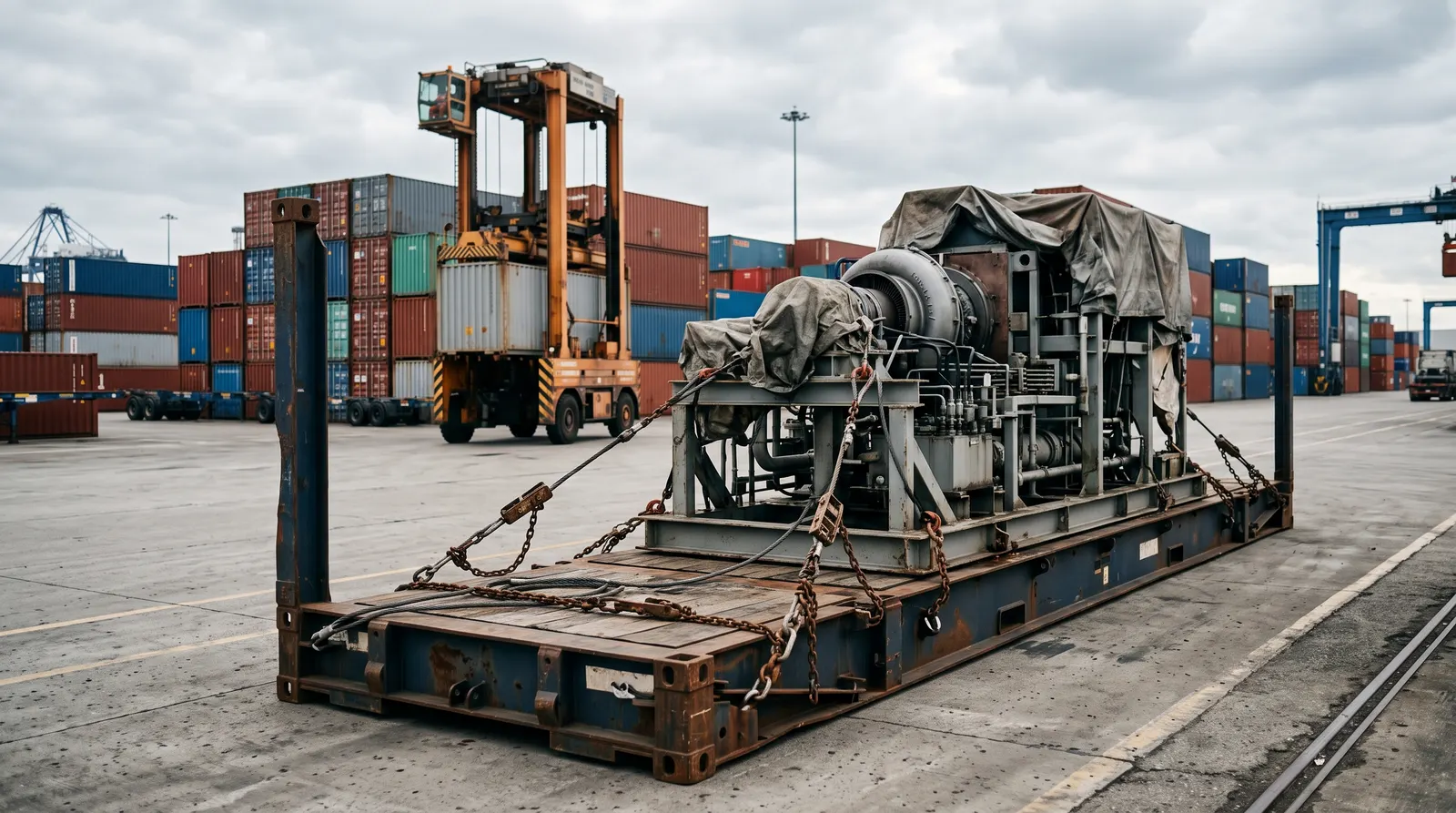
A demurrage invoice feels like it came out of nowhere, but the clock never starts the moment your vessel docks. Every carrier grants a window of free days first — the charge only kicks in once that window closes. The trouble is that the window itself isn't fixed. It shifts by carrier, port, trade lane, and even by season, which is why so many importers get caught off guard by exactly how little time they actually had.
How many free days do you typically get?
Free time before demurrage commonly runs 3–7 calendar days, counted from the day the container is discharged off the vessel. That's a typical range, not a guarantee — some carriers and ports offer less on congested lanes, and a handful extend more on longer-haul or lower-volume routes. Treat any number you haven't confirmed with the carrier as provisional.
The range matters because it's genuinely carrier- and port-specific, not something set by regulation. Two containers arriving on the same vessel, consigned to different importers who booked with different carriers, can have different free-time allowances even though they sit in the same terminal. Always confirm the figure that applies to your specific booking rather than assuming a standard.
What determines your free time window
Free time isn't arbitrary — it reflects how much congestion risk the carrier is pricing into a given port and trade lane. Busier terminals and peak-season bookings tend to come with shorter windows because yard space is scarcer; carriers use tighter free time to keep boxes moving. Quieter ports and off-peak periods often carry more generous allowances.
Factors that typically influence the window:
- Carrier policy — each shipping line sets its own default free-time tariff, and it can differ meaningfully between carriers on the same lane
- Destination port congestion — ports running near capacity tend to shorten free time to discourage container dwell
- Trade lane and season — peak-season bookings (pre-holiday import surges, for example) often see tighter windows across the board
- Contract or volume agreements — some shippers negotiate extended free time as part of a service contract, though this is the exception rather than the rule
- Special equipment — reefer containers in particular can carry shorter free-time windows because plugged-in yard space is limited
None of this is guesswork you should be doing after the vessel has already sailed. The free-time terms should be part of what you confirm at booking, not something you discover from an invoice.
Combined free time vs split free time
Free time can apply as one shared pool covering both demurrage and detention, or as two separate counters — and which structure applies changes how much buffer you actually have. Knowing which one governs your shipment before cargo arrives is the difference between planning with confidence and running out of runway mid-move.
| Typical demurrage free time | 3-7 calendar days from vessel discharge (illustrative — confirm with carrier) |
|---|---|
| Combined free time | One shared pool of days covering both demurrage and detention together |
| Split free time | Separate clocks for demurrage and detention, each with its own allowance |
| Day counting | Most carriers count calendar days, including weekends and holidays — not business days |
| Confirmation source | Carrier tariff or booking confirmation — always the authority over general guidance |
Under combined free time, every day the loaded container sits in the terminal eats into the same pool you'd otherwise use for returning the empty box after pickup. Move the cargo out of the port quickly and you preserve more days for the return leg — and vice versa. Split free time is more forgiving in one sense (a slow pickup doesn't shrink your return window) but gives you two separate clocks to track instead of one.
How to find your exact free time before you book
The number that matters is the one in your specific carrier's tariff for your specific port and booking — not an industry average. Ask for it in writing before the vessel departs origin, not after it arrives at destination.
Practical steps:
- Request the free-time allowance in writing as part of the booking confirmation, not verbally
- Confirm whether the terminal counts calendar days or working days — this single detail changes your real deadline
- Ask specifically whether demurrage and detention share a combined pool or run on separate clocks
- If you're moving LCL cargo, confirm free time applies from the point your portion is available for pickup, not just from vessel discharge
- Flag reefer or special-cargo bookings early — their free-time terms are more likely to diverge from the standard dry-container allowance
What happens when free time runs out
Once the free-time window closes, demurrage accrues per container, per day, on a tiered rate that escalates the longer the box stays. The first days after expiry are typically priced as a nudge; extended dwell is priced as a real penalty. A container sitting well past its free time can rack up charges that rival the freight cost itself on a short-haul lane.
The most common cause isn't slow trucking — it's document readiness. Customs holds, a delayed bill-of-lading release, or an arrival notice that surfaces late all eat into the free-time window before you've even arranged pickup. That's why fast, accurate customs documentation functions as a cost-control lever, not just a compliance step. Working with a customs brokerage partner who can pre-file entry and chase releases early gives you a real shot at clearing within the window instead of after it.
Can you extend your free time?
Sometimes — carriers will occasionally grant an extension if you ask before the window closes, but approval is far less likely once the clock has already run out. Extensions are a discretionary courtesy, not a right, so treat any granted extension as a bonus rather than something to plan around.
A few situations where carriers are more likely to work with you:
- You have a service contract or volume relationship with the carrier and request the extension proactively
- The delay is clearly outside your control — a customs examination order, a documented port shutdown, or a carrier-caused vessel delay
- You ask early, ideally a day or two before the free-time window closes, rather than after demurrage has already started accruing
None of this is a substitute for confirming your actual free-time allowance up front. Extensions are unpredictable by nature; the free-time figure in your booking confirmation is the number you should plan around.
How to protect your free time
- Pre-file customs entry as soon as shipping documents are available, rather than waiting for the vessel to arrive
- Confirm telex release or B/L surrender well ahead of the vessel's ETA so document delay doesn't eat into the clock
- Book drayage and warehouse receiving in advance so pickup can happen the moment cargo is released
- Track the vessel's actual ETA — an early arrival compresses your preparation window just as much as a late one erodes patience
- Treat the free-time figure as a hard deadline in your own planning, with buffer built in for at least one unexpected delay
How Holo Cargo helps
An itemised ocean FCL quote from Holo shows destination charges and terminal handling separately, so free-time risk is visible before you book rather than discovered on an invoice. Our operations team flags shipments with tight free-time windows and coordinates with customs-brokerage partners to keep clearance on track.