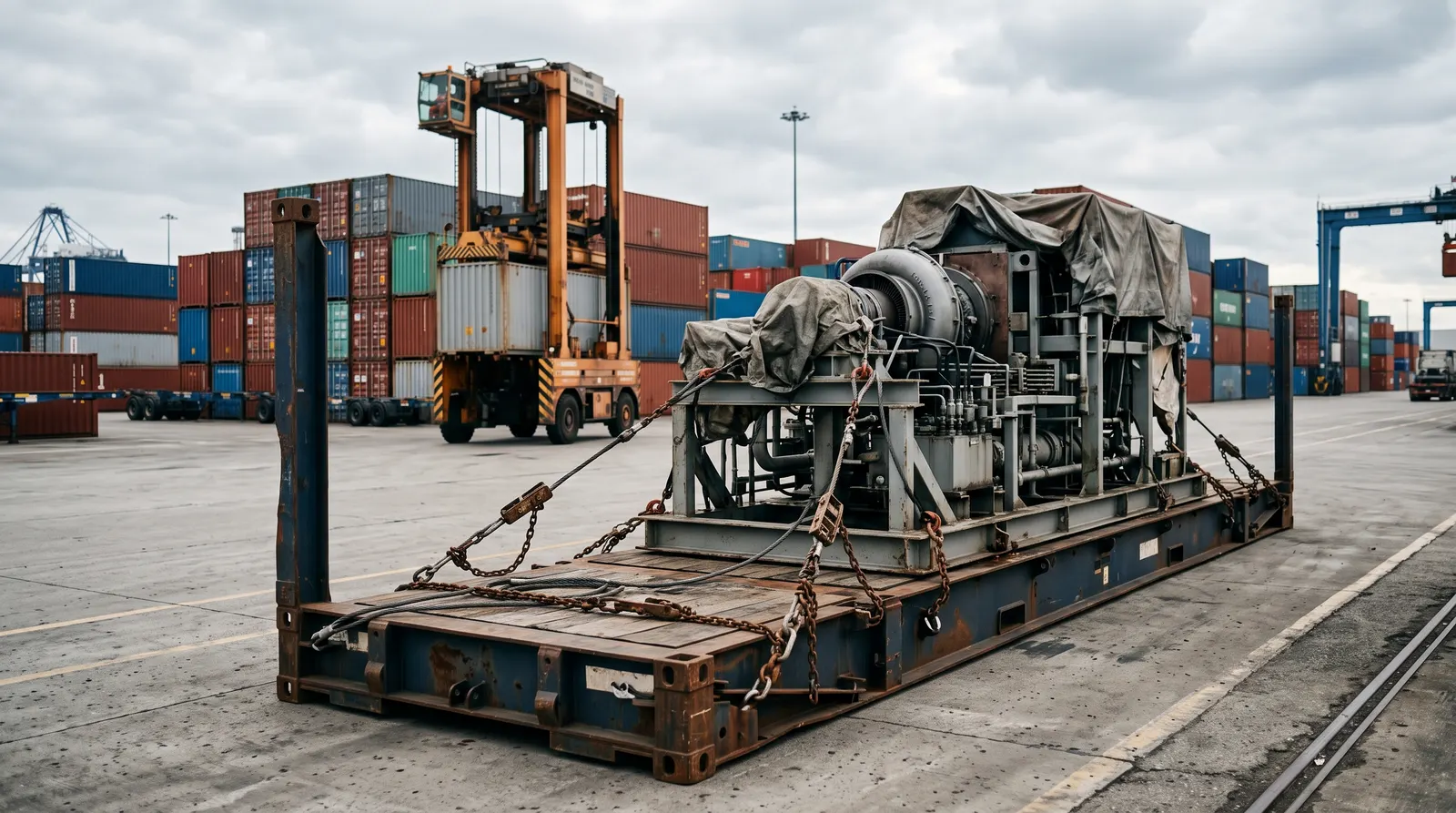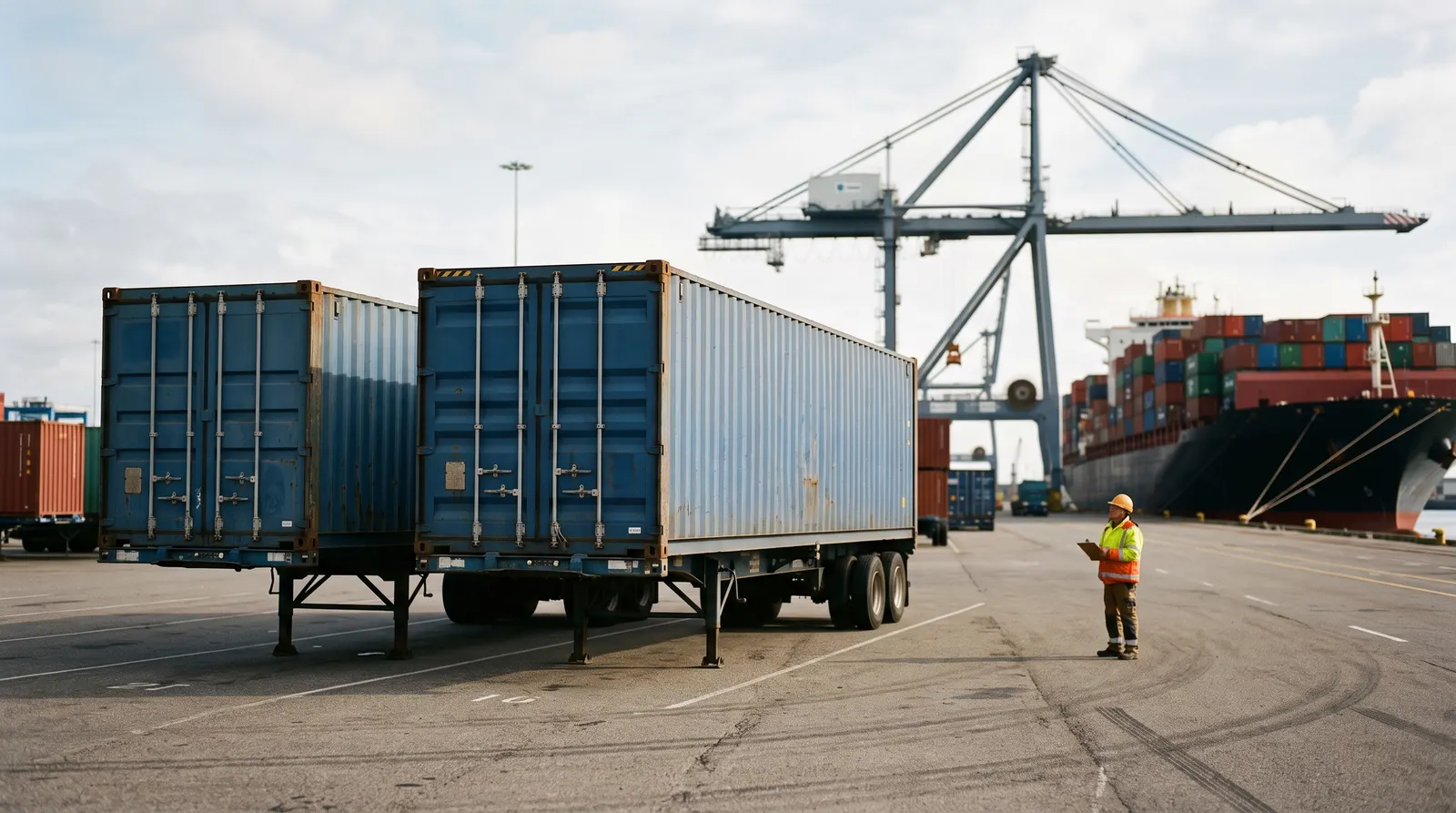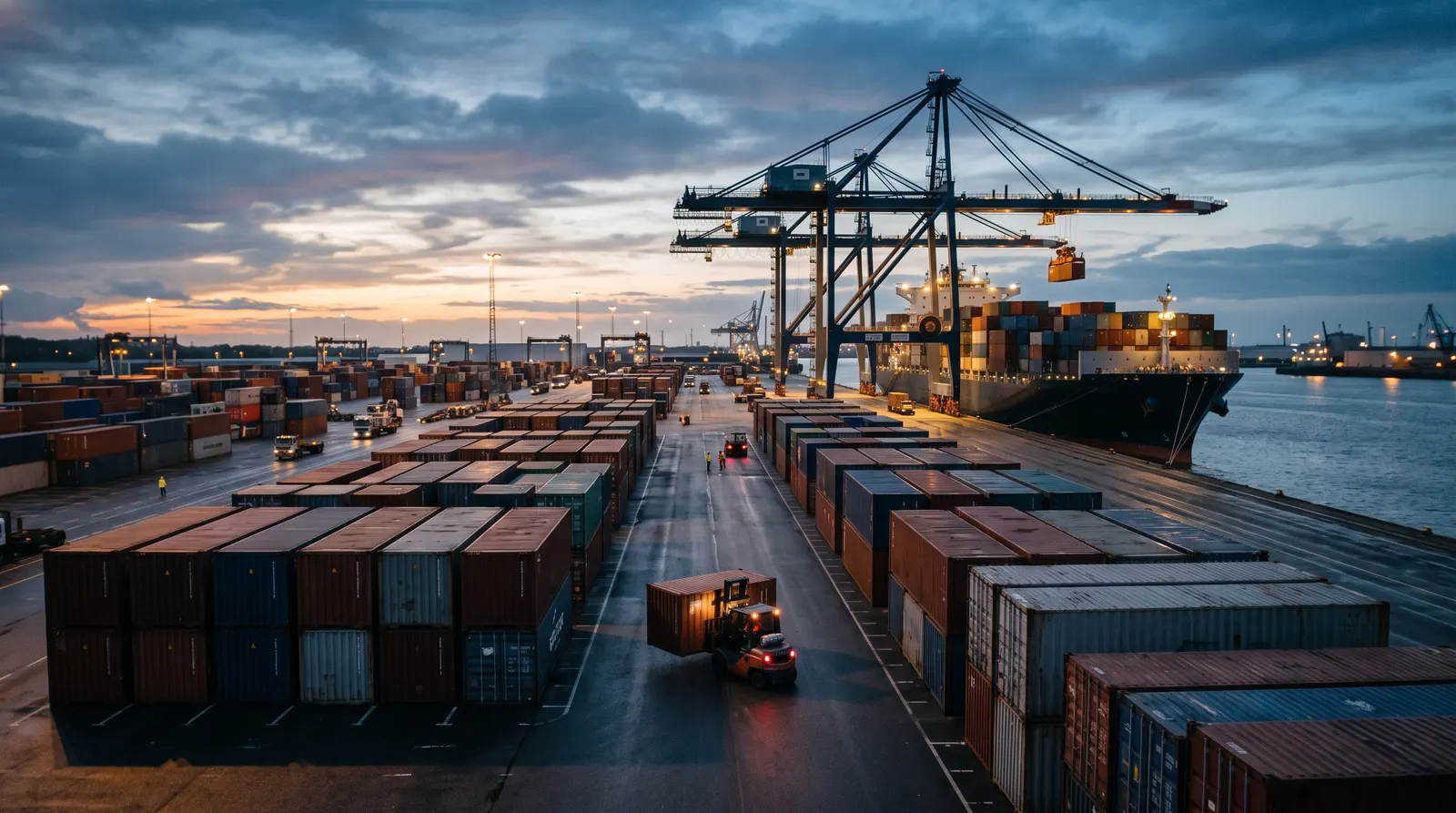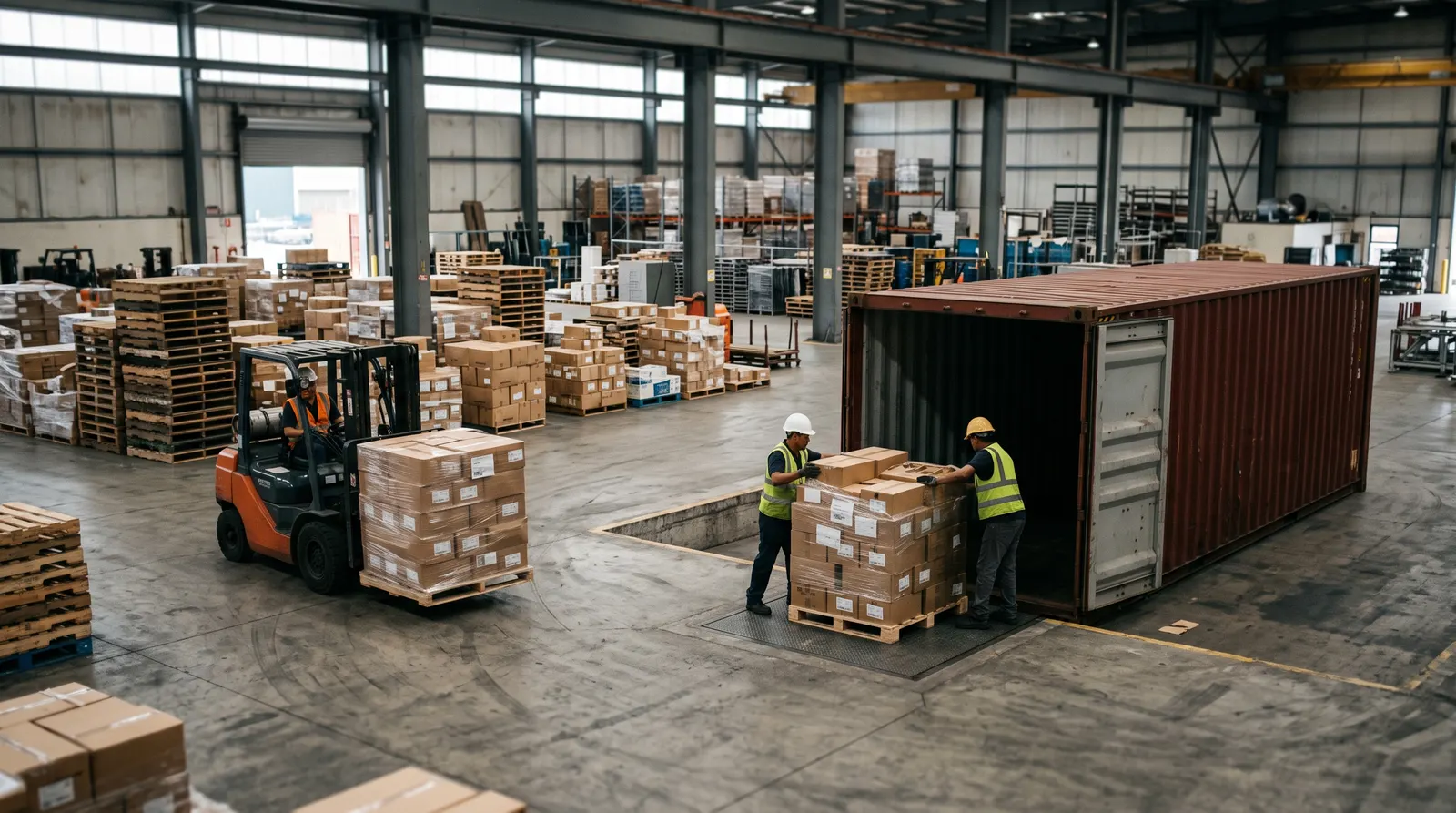
Book an LCL shipment and two line items will show up on the quote that never appear on an FCL one: origin CFS and destination CFS. Neither is the ocean freight rate, neither is THC, and neither is optional — every shipment that shares a container with other shippers' cargo passes through a container freight station twice, and both passes are billed. Here's what the facility actually does and what you're paying for at each end.
What Is a CFS (Container Freight Station)?
A CFS is a bonded warehouse, usually inside or adjacent to a port, where cargo from multiple shippers is physically consolidated into (or unloaded out of) a shared container. It exists because LCL (Less than Container Load) cargo can't go straight from a truck onto a vessel the way a full container can — someone has to combine several shippers' freight into one box first, and later split it back apart.
Every LCL shipment touches a CFS twice: once at origin, where a consolidator receives cargo from multiple shippers and stuffs it into a shared container, and once at destination, where that container is unstuffed and each shipper's freight is sorted out for delivery. FCL cargo skips this entirely — a full container moves from the shipper's dock to the port's container yard and onto the vessel without being opened, which is one reason FCL quotes carry no CFS line at all.
What Happens Inside a CFS
A container freight station isn't just short-term storage — real handling work happens there, and it's what the CFS fee pays for:
- Receiving and staging — incoming cargo is checked in against the shipper's paperwork and staged by outbound container/vessel
- Palletizing and stuffing — multiple shippers' cargo is arranged and loaded into a shared container to maximize space and prevent shift damage in transit
- Bonded storage — cargo sits under customs bond while awaiting consolidation or awaiting collection, since it hasn't cleared home-country customs yet
- Unstuffing and sorting — at destination, the container is opened and each shipper's freight is separated and staged for delivery-order release
- Customs examination access — if a shipment is flagged for inspection, the CFS is typically where that exam happens, since the cargo is already under bond there
Because this is physical labour on a shared container, not automated equipment moving one sealed box, CFS handling tends to take longer and involve more touch-points than an FCL pass-through — one reason LCL transit is typically a few days slower door-to-door than FCL on the same lane.
CFS Charges: What LCL Shippers Actually Pay
| Origin CFS | Receiving, palletizing, and stuffing at the origin consolidation warehouse |
|---|---|
| Destination CFS | Unstuffing, sorting, and delivery-order release at the destination warehouse |
| Basis | Priced per CBM (or weight/measure, whichever is greater), frequently with a flat minimum per shipment |
| Set by | The CFS/consolidator operator, billed separately from OFR and THC |
The CFS charge is distinct from THC (terminal handling) even though both are handling fees on an LCL quote — THC covers the container's lift on/off the vessel and its move within the port, while CFS covers the labour of building or breaking down the shared box itself. On an LCL quote you'll typically see both, at both ends: origin THC and origin CFS, destination THC and destination CFS.
Why CFS Charges Rarely Scale the Way You'd Expect
The published rate basis for CFS is per CBM, but in practice most consolidators apply a flat minimum charge per shipment regardless of how small the cargo is — the receiving, paperwork, and staging work is nearly identical whether a shipment is 1 CBM or 8 CBM. That minimum is why a very small LCL shipment can see its CFS fee make up a large share of the total quote, while a larger LCL shipment's CFS cost grows much more slowly per CBM shipped. It's the same reason LCL pricing overall doesn't scale in a straight line with volume — the free cargo calculator computes your CBM, gross weight, and chargeable weight from carton or pallet dimensions, which is the first number you need before comparing an LCL quote's CFS line against the flat-rate alternative.
CFS Free Time and Storage
Most CFS operators allow a short free-time window — commonly a handful of calendar days — during which the handling fee covers holding your cargo while it awaits consolidation (at origin) or collection (at destination). Once that window closes, storage charges start accruing separately from the CFS handling fee itself, similar to how a terminal's own storage tariff runs independently of demurrage on an FCL container. This is one reason cargo that sits waiting on a delivery order, or waiting for enough compatible freight to fill a consolidation slot, can pick up extra cost that never appears on the original quote.
The practical takeaway: free time at a CFS is a real deadline, not a soft guideline. A consignee who is slow to arrange final-mile pickup, or a shipper whose cargo arrives at origin ahead of the consolidator's planned sailing, can turn a flat CFS fee into a CFS fee plus several days of storage — confirm the free-time window with your forwarder before cargo is delivered to either warehouse.
CFS vs Container Yard (CY): Why FCL Skips It
FCL containers move through the terminal's container yard (CY), where the box is lifted, stacked, and staged as a single sealed unit — no one opens it, so there's no palletizing, no sorting, and no per-shipper handling labour. That's the structural reason FCL quotes carry no CFS charge at all: the fee only exists because LCL cargo requires a physical consolidation step that FCL cargo never needs. If your volume is trending toward filling most of a container, consolidation (buying a defined, negotiated portion of a box) can reduce or eliminate CFS handling compared to open-market LCL, since your freight may bypass a full multi-shipper stuffing operation.
CFS and Customs Holds
Because CFS cargo is held under bond until it clears, the facility is also where customs exams typically happen if a shipment gets flagged — a hold at the CFS extends the time your cargo sits there and can trigger additional exam or storage fees on top of the standard CFS charge. This is one of the reasons accurate documentation and HS classification matter as much for LCL as for FCL: a shipment held for exam at the CFS doesn't just wait longer, it can accumulate extra charges while it does. Coordinating with customs brokerage partners who verify paperwork before the container reaches the CFS reduces the odds of an exam-driven hold turning into an unplanned line item.
How to Avoid CFS Surprises
Three habits keep CFS charges from becoming a landed-cost surprise on an LCL quote:
- Ask whether the CFS fee is per-CBM or a flat minimum. For small shipments, a flat minimum can be the largest single line on the quote — know which basis applies before you compare quotes across forwarders.
- Confirm CFS is quoted separately from THC. A quote that bundles both into one "handling" figure makes it harder to see what you're actually paying for at each end.
- Get your CBM number right before comparing quotes. Since CFS is priced on CBM (or weight/measure), an inaccurate dimension count on your side can throw off every downstream comparison — confirm cargo dimensions before requesting quotes, not after.
The how shipping works guide walks through where CFS and THC sit relative to the rest of an LCL quote, from origin pickup through destination delivery.
Holo Cargo itemises origin and destination CFS separately from THC and ocean freight on every LCL quote, so there's nothing bundled to untangle later, and the quote you accept is the invoice you get on the charges we quote. Operators track each shipment's status through consolidation, transit, and destination sorting so you know when your cargo has cleared the CFS rather than finding out after the fact.